
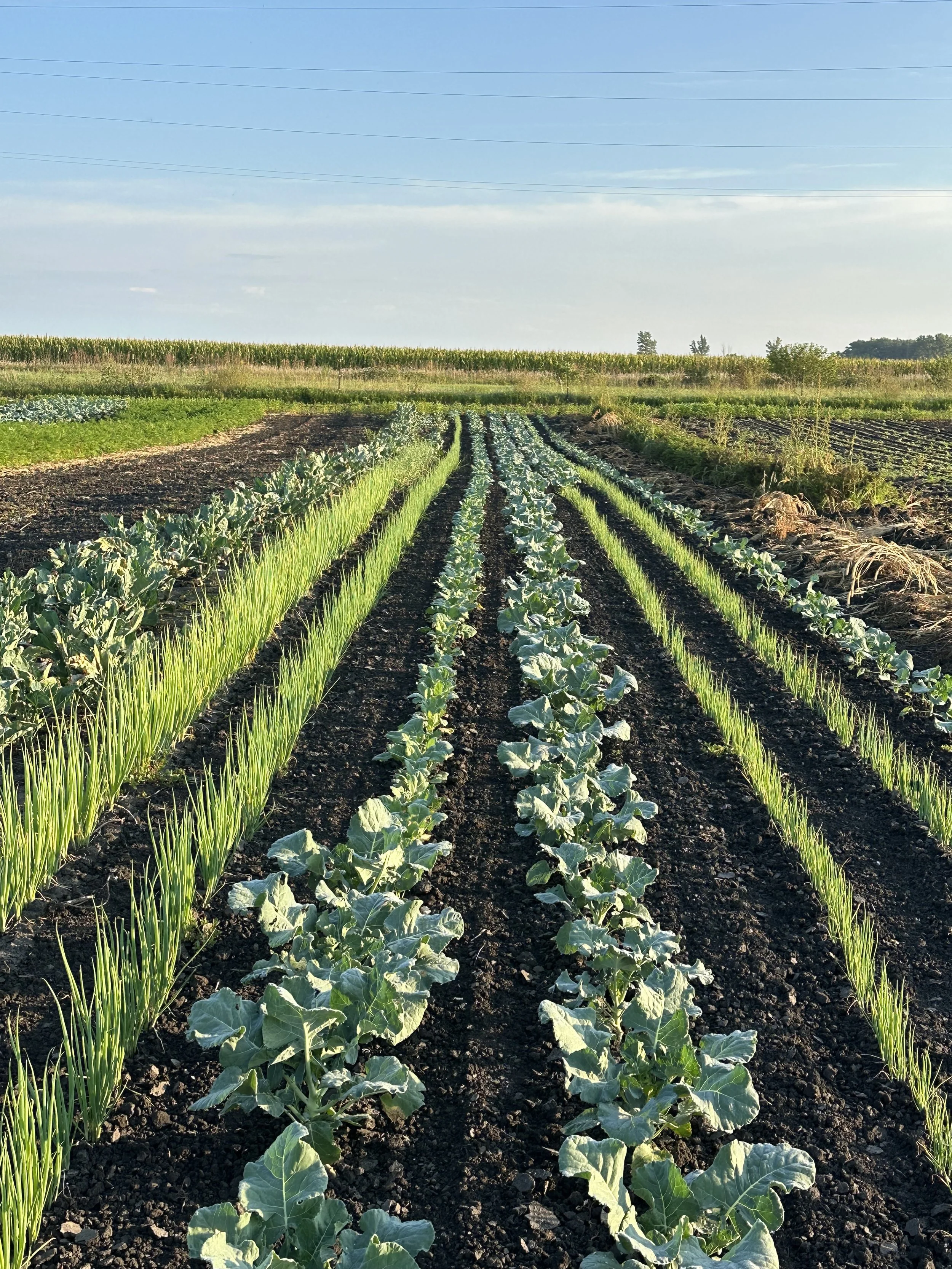
Why Cover Crops Are Important: 2026 Revision
Farming in a sustainable and earth friendly manner is one of our primary farming values on our farm. We seek to not only maintain but improve the land we farm on over time. In the grand scheme of things, the time we spend farming this land is pretty small and we want the next generation of farmers to be able to succeed. Not only that but we also want to protect the soil, air and water so that our farming footprint stays confined to the acres we farm. One of the key ways we work towards this goal is by planting cover crops. Today we’ll go over why cover crops are important and what cover crops we plant on our farm.
First, we should define what a cover crop is. For us, a cover crop is a crop that we plant whose primary purpose is to improve our land. Further, a cover crop is not planted with intent to harvest and sell a product.
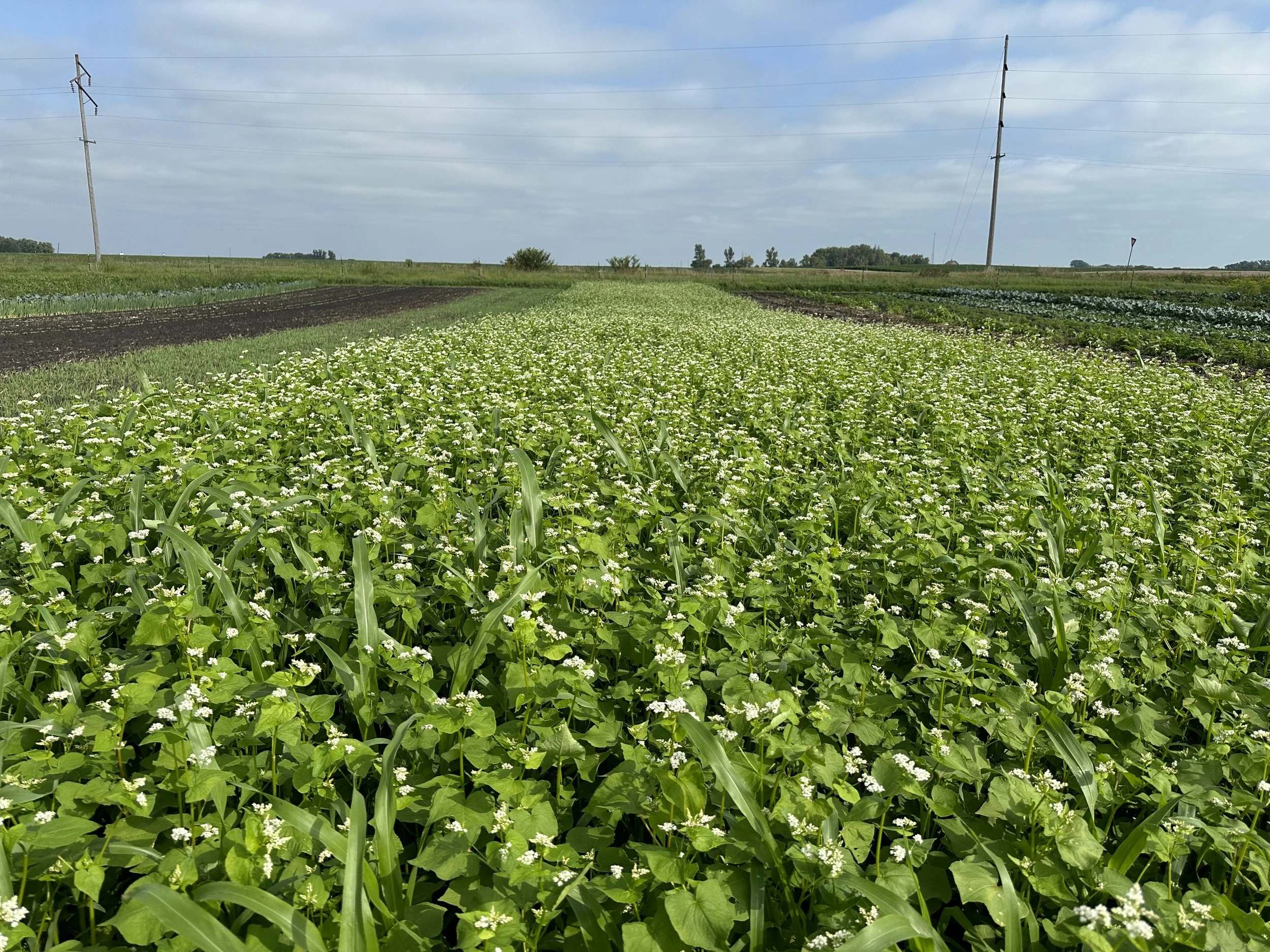
Our summer cover crop mix. The plants with white flowers are buckwheat. The long slender leaves that resemble corn are millet.
Cover crops serve a variety of purposes on our farms and many farms in general. Their benefits include reducing soil erosion, suppressing weed growth, providing habitat for beneficial insects, and improving soil health. Our primary goals for our cover crop mixes are to suppress weed growth and improve soil health. That’s not to say the other benefits are not important - they are. It’s just that when we look at which cover crops to plant we are seeking to achieve those goals primarily and the other benefits secondarily.
We have two mixes of cover crops that we use on our farm to achieve the goals of improving soil health and suppressing weeds. In summer we plant a summer mix of cover crops. That is, crops that grow well in the heat of the summer. This mix includes species like buckwheat, soy beans, sun hemp, sun flowers, millet & more. In the fall we plant a mix of peas, oats & phacelia. These crops grow better in the cooler temperatures of fall and can grow later into the season than our summer mix. Our winter mix is capable of withstanding frosts.
To suppress weeds we seed our cover crops pretty densely and lightly incorporate the cover crop seeds into the soil. With a little rain the cover crop comes to life creating a thick mat of vegetation that crowds out weeds. In our experience, we’ve observed that the areas where we plant cover crops are generally much easier to weed the following season.
Cover crops improve soil health in a few primary ways. First, some cover crops like peas can pull nitrogen (a primary plant nutrient) out of the air and store it in the soil for future crops to use. Cover crops in general also contribute to soil organic matter which microorganisms in the soil feed on. These micro organisms then metabolize the cover crops and leave behind nutrients future crops can use.
Many of our cover crops also achieve our secondary goals of reducing soil erosion and providing beneficial insect habitat. Because we’re planting pretty densely and minimizing fallow ground by using cover crops we are reducing soil erosion. Additionally, buckwheat - one of our primary summer cover crops - flowers quickly and the bees love it. Buckwheat provides habitat and forage for the bees!
Cover crops are an important part of sustainability on our farm. We’re always looking for new species and new mixes of cover crops to help improve our soil and improve our farm!

Addie (about 2yrs old) and I sitting in our oats & peas cover crop mix!
Bugs: Friends or Foes?
When we see a new bug on the farm the first question I ask is “Is this bug a friend or a foe?” As I was pruning tomatoes yesterday I saw these little red bugs/eggs pictured below. A bug I haven’t seen before. To determine if this was the beginning of a problem or something else I used Google’s image search and found that these are predatory stink bug nymphs.
Typically, stink bugs are a pest but in this case this type of stink bug is beneficial. They will eat other bugs.
Can we take a moment to just consider how crazy it is that I can snap a photo as detailed as below, upload it to Google and have an answer back in seconds? My phone camera picked up details my eyes could barely make out like the spines around the tops of the brown eggs. The nymphs are about 1mm in diameter - so tiny! Crazy and amazing. I’m not the biggest fan of big tech but this was one very useful image search!
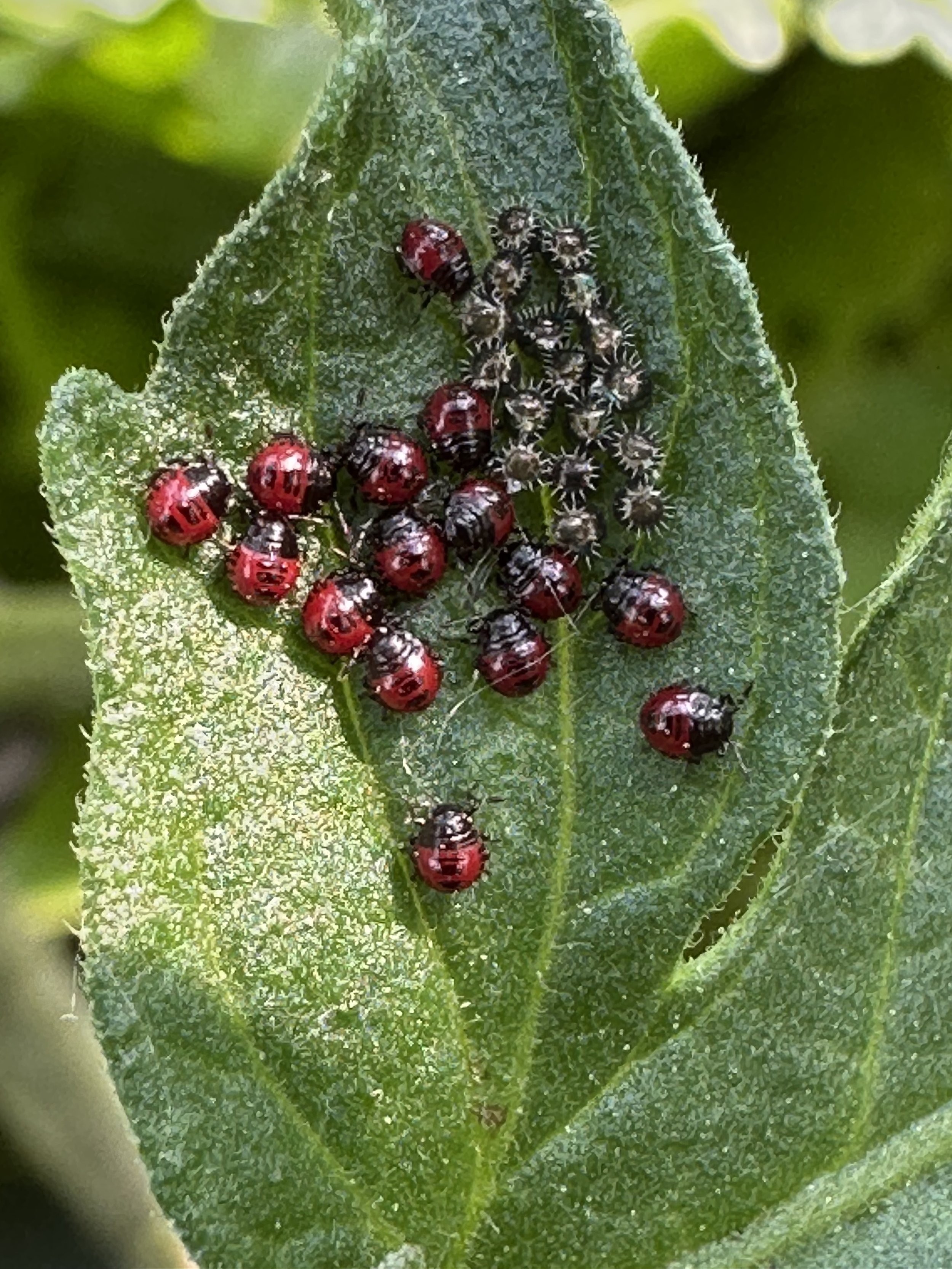
Predatory stink bug nymphs/eggs on a tomato leaf.
Weed Control 101 2026 Version
Weed control is something every farmer has to deal with. On our farm, we don’t spray chemicals on our crops or use pre emergent herbicides to control weeds which means we have to work really hard to control weeds on the farm. It doesn’t take long for weeds to get out of control and choke out the crops you’re trying to grow. Here’s how we do it.
Flameweeding
We use our flame weeder to burn small weeds just as they’re emerging from the soil and before our crops emerge. Because many weeds will germinate and sprout before our crops come out of the soil we can give our crops a head start by burning the weeds off. It’s been an effective tool for us especially in carrots and cilantro which have relatively long germination periods.

Our flame weeder.
Finger Weeding
No, not your fingers (although we do hand weed too). Finger weeders are discs with polyurethane “fingers” that spin and flick weeds out of the soil when they are young and vulnerable. This tools works particularly well on transplanted crops where the crop is vastly bigger than the weeds. This tool is highly adjustable and customizable for the varying crop stages we use it in. While the adjustments do take time, it’s very satisfying when it works perfectly!

Finger weeders in yellow. Notice how the fingers penetrate into the soil in the row.
Tine Weeding
Tine weeding is a type of blind cultivation - that is, cultivation that is “blind” to the crop rows - that uses many small wires that vibrate in the soil and help to uproot very small weeds.
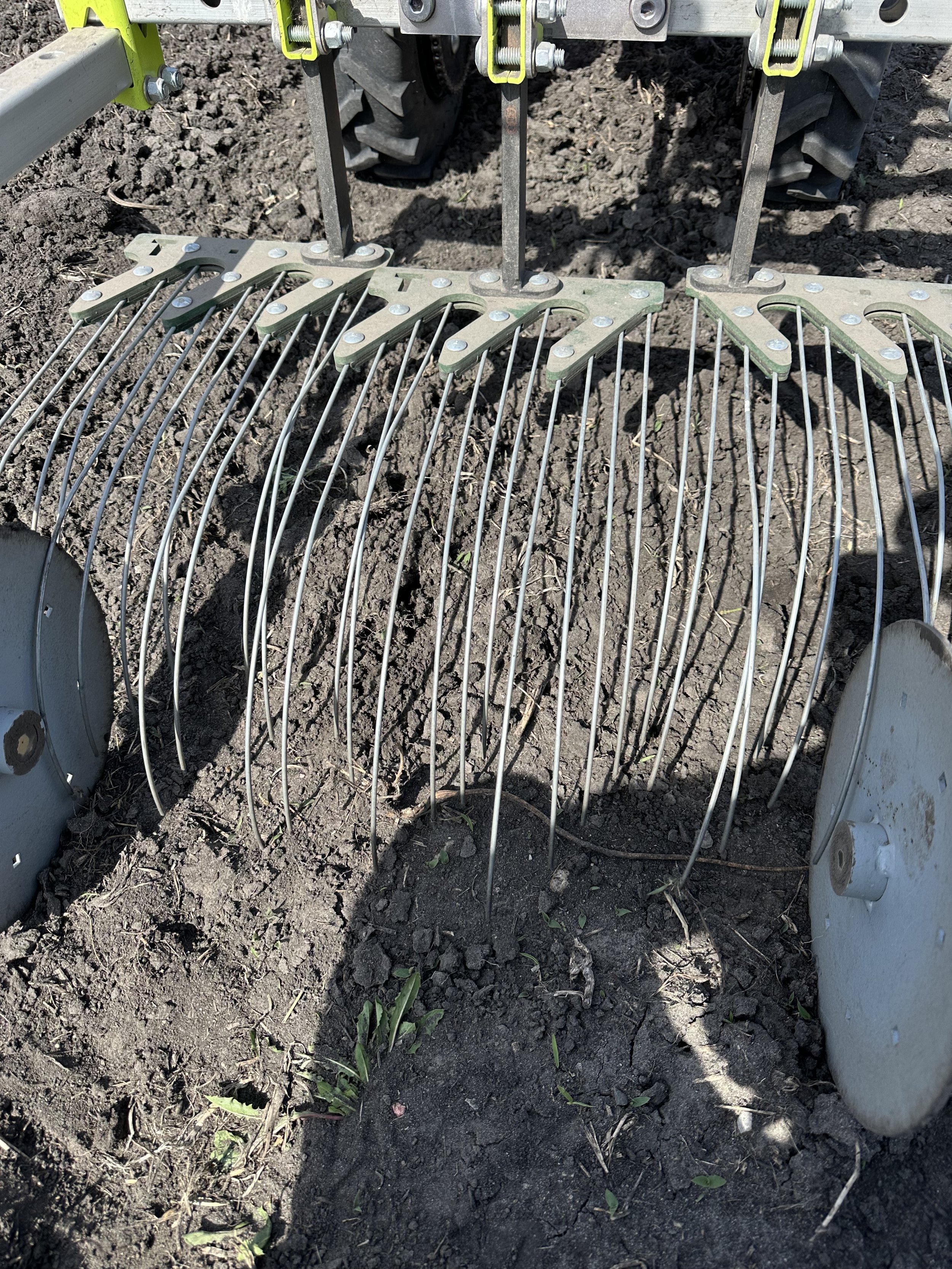
Closeup of the tine weeder.
Hand Weeding
Hand weeding is the most expensive and slowest weeding on the farm. All of the tools above help us reduce the hand weeding we have to do. We won’t completely eliminate hand weeding but in many cases we can reduce the time we spend hand weeding by 70% to 90% by using the tools above at the right time.
Finally, we take all of these tools together and apply a couple principles to them and we arrive at our weed control methodology.
Cultivate after every rain/irrigation session.
If you can see the weeds, it’s already too late to be most effective.
Stack cultivation tools as much as possible. Stacking tools means you use more than one method on each crop as often as possible.
Never let a weed go to seed.
Plant cover crops in fallow ground.
Winter Tunnel Complete!
How we’re preparing it for it’s first crop.
The crew at Quality Structures who built our new winter tunnel wrapped up construction about a week ago. All that remains is a bit of dirt work around the outside perimeter of the tunnel. That means it’s time to get this tunnel ready for it’s first crop: paradoxical summer lettuce. I’ll explain why summer lettuce and what we are doing to prepare this tunnel for production.
When we designed the winter tunnel we knew we wanted a space that we could use for both winter and summer production. We’ve seen other deep winter greenhouse designs and they are basically unusable in the summer because they get too hot. We are pretty confident our winter lettuce will be successful and cost-effective but we’re not 100% sure about that. We thought that if we’re going to invest this much money then we need to be able to utilize it like our other tunnels. So, because this tunnel is also capable of producing summer crops and due to some space limitations in our other tunnels the first crop in this tunnel will be summer lettuce. In future seasons we will rotate this tunnel between summer peppers/cukes/tomatoes and winter crops.
To prepare the growing space we planted a cover crop mix of annual rye grass and clover. These cover crops will grow for about a month before we terminate them and prepare beds for summer lettuce. The annual rye grass and clover will help loosen the soil and add some nutrients back into the soil. Both will also suppress weeds and add organic matter to the soil.
We can’t wait to start growing in this new winter tunnel!
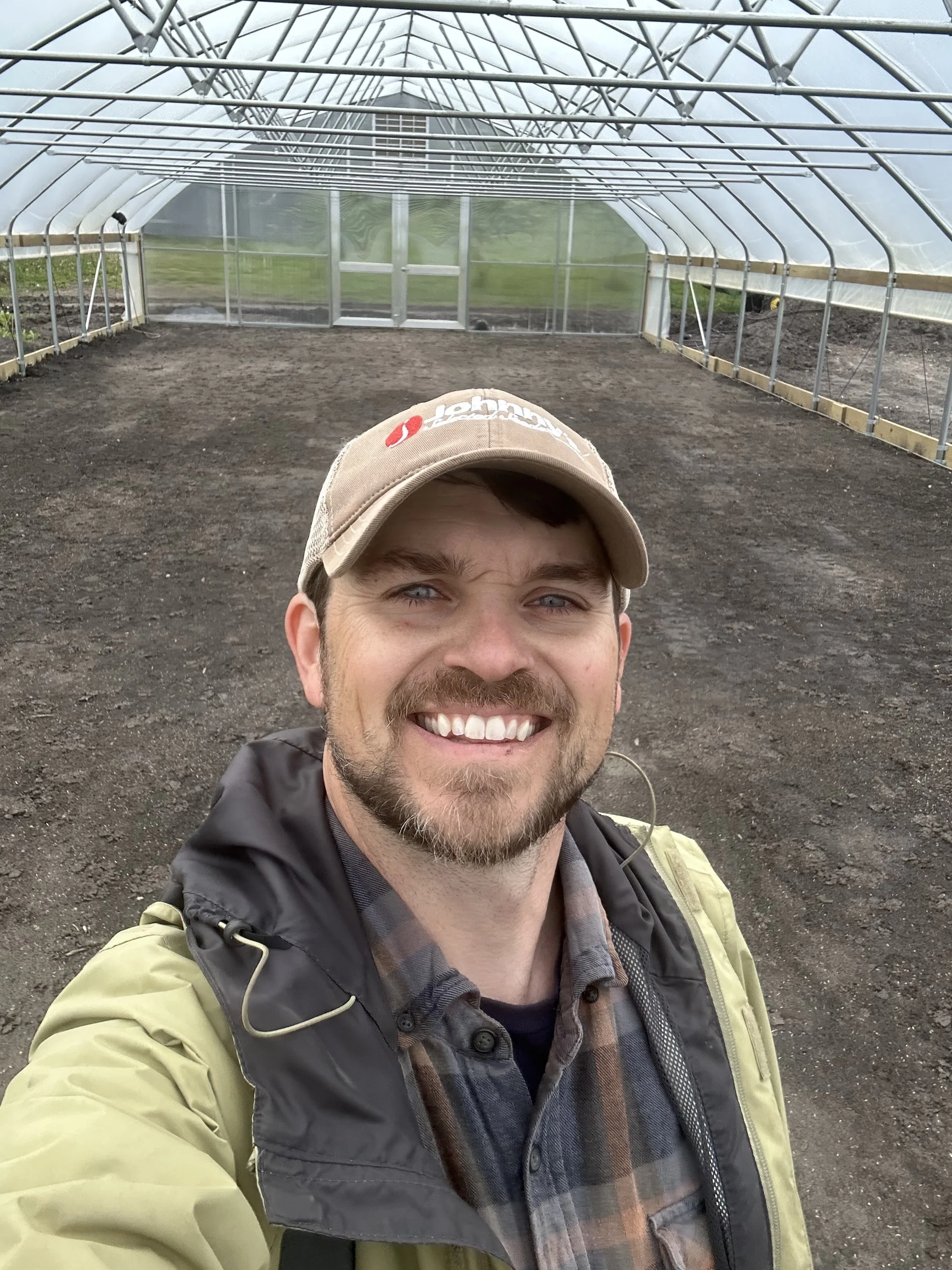
In the new winter tunnel!
Landscape Fabric: The Good, The Bad, The Ugly
I have a bit of a love-hate relationship with landscape fabric. I love that it dramatically reduces weed pressure AND keeps our crops clean. I hate that it’s plastic and managing it can be difficult to say the least. Last week, we laid down landscape fabric in our field pepper & tomato beds so it’s the perfect time to talk about how we manage it, why we use it, and some tricks we use to make it easier to deal with.
Landscape fabric is made from woven plastic strands that allow air and water to pass through but block weeds from growing (for the most part). We use it for two main types of crops lettuce & long season crops like tomatoes, peppers, eggplant & kale. While lettuce is a very short season crop, it’s still really nice to suppress weeds so they don’t end up in your salad and keeping our lettuce clean is another big plus. On our longer season crops the main benefits are weed suppression and reduced disease pressure. Many diseases that would affect our tomatoes are soil-borne so reducing soil splash up from rain events helps reduce disease pressure.
Landscape fabric can be re-used for around 5-7 seasons in our experience with careful management. We typically fold landscape fabric up neatly, tie it with twine so it stays neat, label it so we know what length, hole spacing and the date it was last used and store it in our storage shed until the next season. To keep landscape fabric fastened down to the soil we use hundreds of staples about 8” in length spaced every 2-3’ to keep the fabric in place.
When brand new, landscape fabric doesn’t have any holes. We created these custom plywood templates with different hole patterns and spacing. This allows us to quickly and accurately burn holes into the fabric at optimal spacing for the crops were growing.
The Good
Weed suppression, disease reduction, cleaner crops
The Bad
Labor to manage, lots of staples, you need a calm day to install it.
The Ugly
Plastic :-(
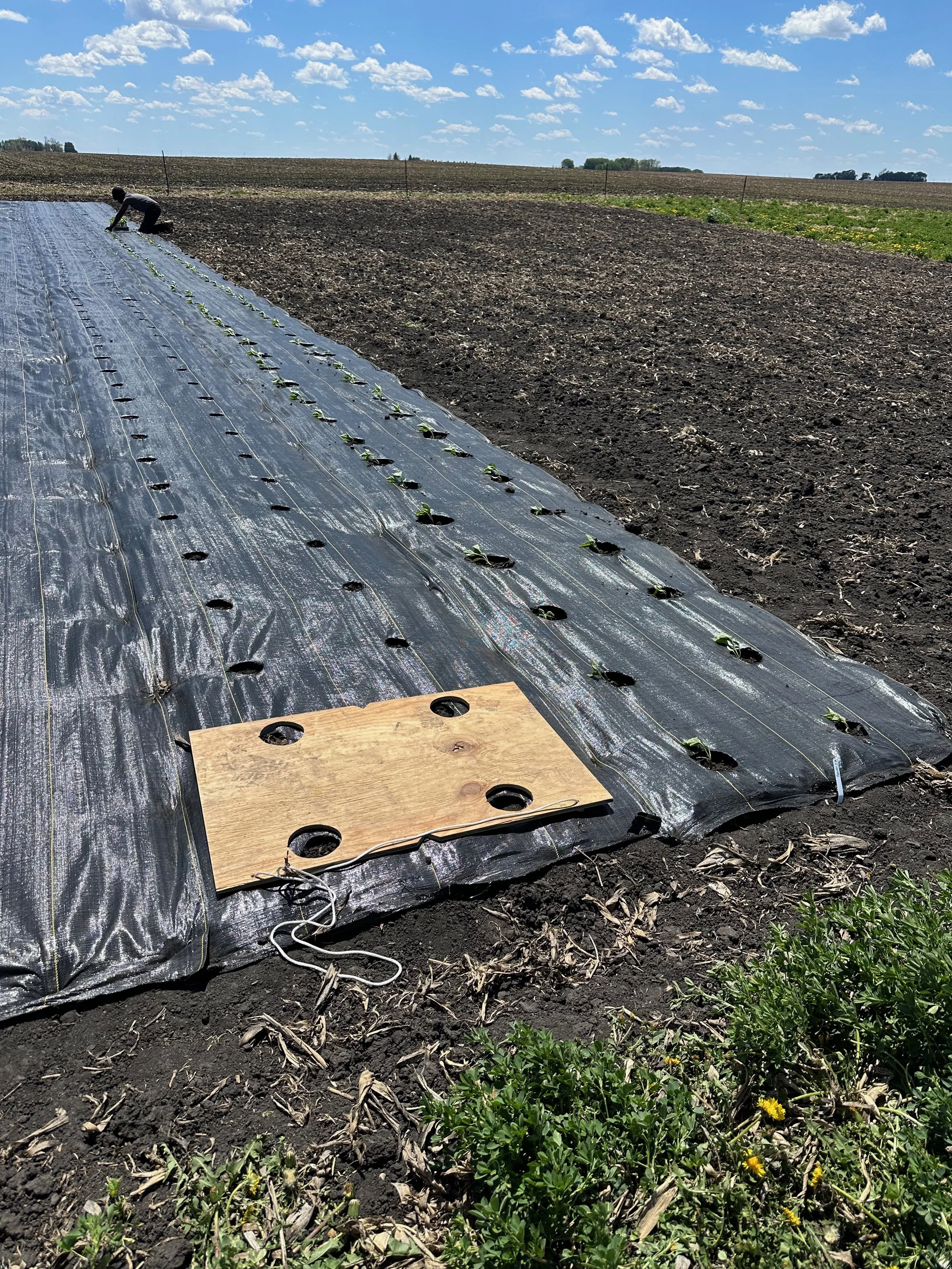
Burning holes for crops into landscape fabric with this template.
Vacuum Seeder Explained
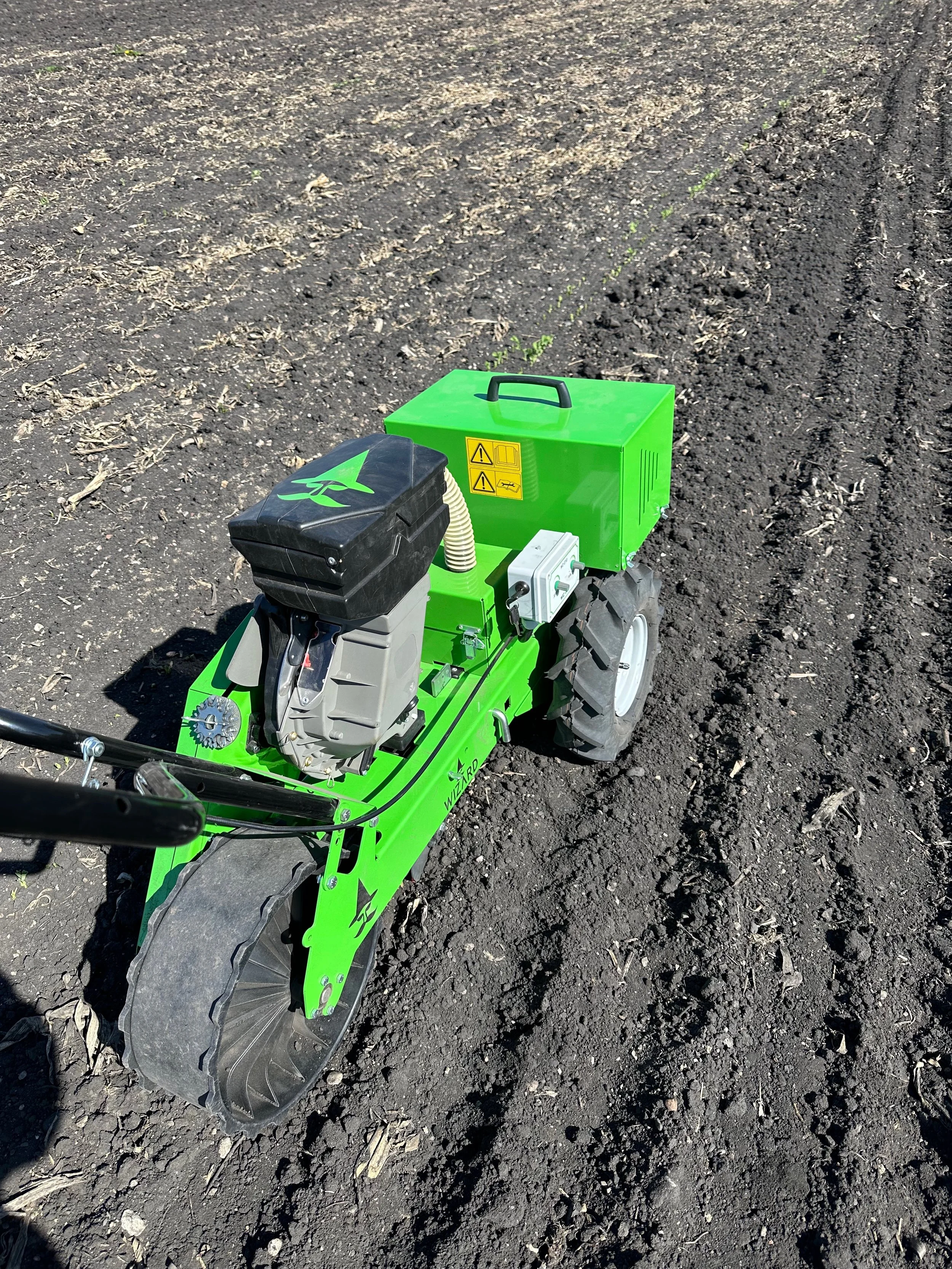
Last year we made a big (and expensive) upgrade to our direct seeding equipment with the purchase of a Wizard Electric Vacuum Seeder. A vacuum seeder is going to help us solve some of the biggest problems we have with our direct seeded crops like sweet corn, peas, beans, beets & more. This weeks blog post will go over how the vacuum seeder works and the problems it helps us solve.
The name gives it away: vacuum seeder. The seeder uses vacuum to pull seeds up against a plate. The plate rotates at a configurable rate to allow for variable spacing for different crops. For example, peas like to be really close together at 1”-2” between plants whereas sweet corn and popcorn need more space at 9”-12” between plants. Once the seed held against the plate is at the precise location it needs to be the vacuum is cut and the seed drops down into the soil.
The biggest advantage of a vacuum seeder over our existing gravity based seeders is seed singulation. That is, making sure a single seed drops into the soil at the spacing it’s supposed to. This solves two problems at once for us: jams and double/triple seed drops. Our gravity based seeders often jam which means we’re no longer dropping seeds at the right spacing. The other double/triple problem is when multiple seeds are dropped at one time when there should just be one. That means we have to go back and thin the plants. More time, more work and worse yield.
We’re happy to have this new seeder and we’re excited to share the results with you later on this summer!
The Frost Dance
Hot, then cold. Hot, then cold. Repeat for April and the first 10 days of May. It’s been a roller coaster ride for weather so far this spring. Not so much of an issue in the first half of April but once we have our tomatoes and peppers planted in our tunnels we need to take extra precautions to make sure these cold-sensitive crops survive the chilly nights.
You might be surprised to know that in the early morning hours that the inside temperatures of the tunnels basically matches the outside temperature. That’s because the single layer of 4 mil plastic doesn’t have much of anything for R-value. Anytime it gets close to 32* F we worry.
If we know it’s going to be below 32* F we move our trays of not-yet-transplanted peppers, tomatoes, cucumbers, basil & eggplant from our greenhouse to our pack shed. That’s not an option for the tomatoes, peppers and basil already transplanted into our tunnels.
To ensure these cold-sensitive crops survive we use row covers, pictured below, to help trap the heat of the soil under the row cover. We typically see about 3-7* F temperature difference under the row cover which is enough to get us by these chilly nights.
We’re in our 12th season farming and I don’t remember a spring where we had so many frosty nights between April 20 and today. Sure, we expect a 2-3 frosty nights in that time frame but not the 10+ nights and counting.
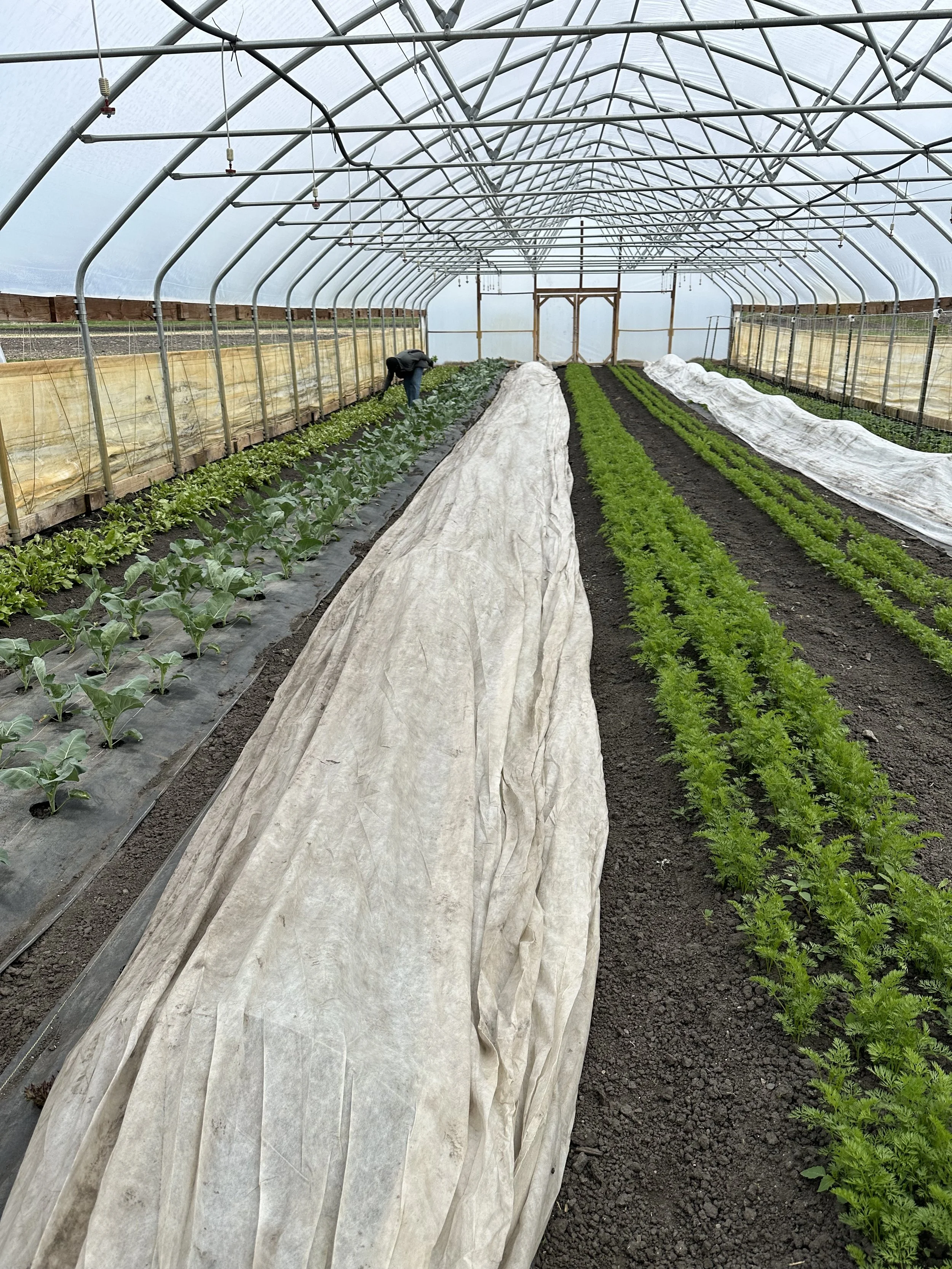
Tomatoes tucked under row cover for another frosty night.
Improving Soil Health
It’s hard to describe the excitement, hope and anticipation leading up to the first day of planting out in the field. It’s true that I’ve been planting seeds indoors, in the tunnels, and in trays since February but it really feels like the season has begun when we get outside in our fields.
This year brought a heightened sense of excitement, hope and anticipation. We purchased a new attachment for our tractor called a field cultivator pictured below. It’s purpose is to loosen, smooth, and make the soil soft and easily workable for both our direct seeders and for transplanting into.
One of our biggest goals from a soil health perspective is to reduce our reliance on our rototiller. Rototillers are notoriously destructive to the soil and since healthy soil means healthy plants means healthy people then anything we can do to reduce rototiller use will be a huge benefit for our soil, our farm and ultimately you. I’m happy to share my initial impression of our field cultivator is that it does a MUCH better job in less time and using less fuel while also being less destructive than our rototiller.
Once our fields were prepped it was onto seeding. I planted sweet corn, snap peas, snow peas, radish, salad turnips, spinach, potatoes & cilantro. The next day, we transplanted cabbage, broccoli, scallions, broccolini, shallots, pearl onions, kohlrabi, lettuce, & bok choy.
We’re off to the races as they say and we are SO excited to be bringing healthy, sustainable produce fresh from our farm to your table!
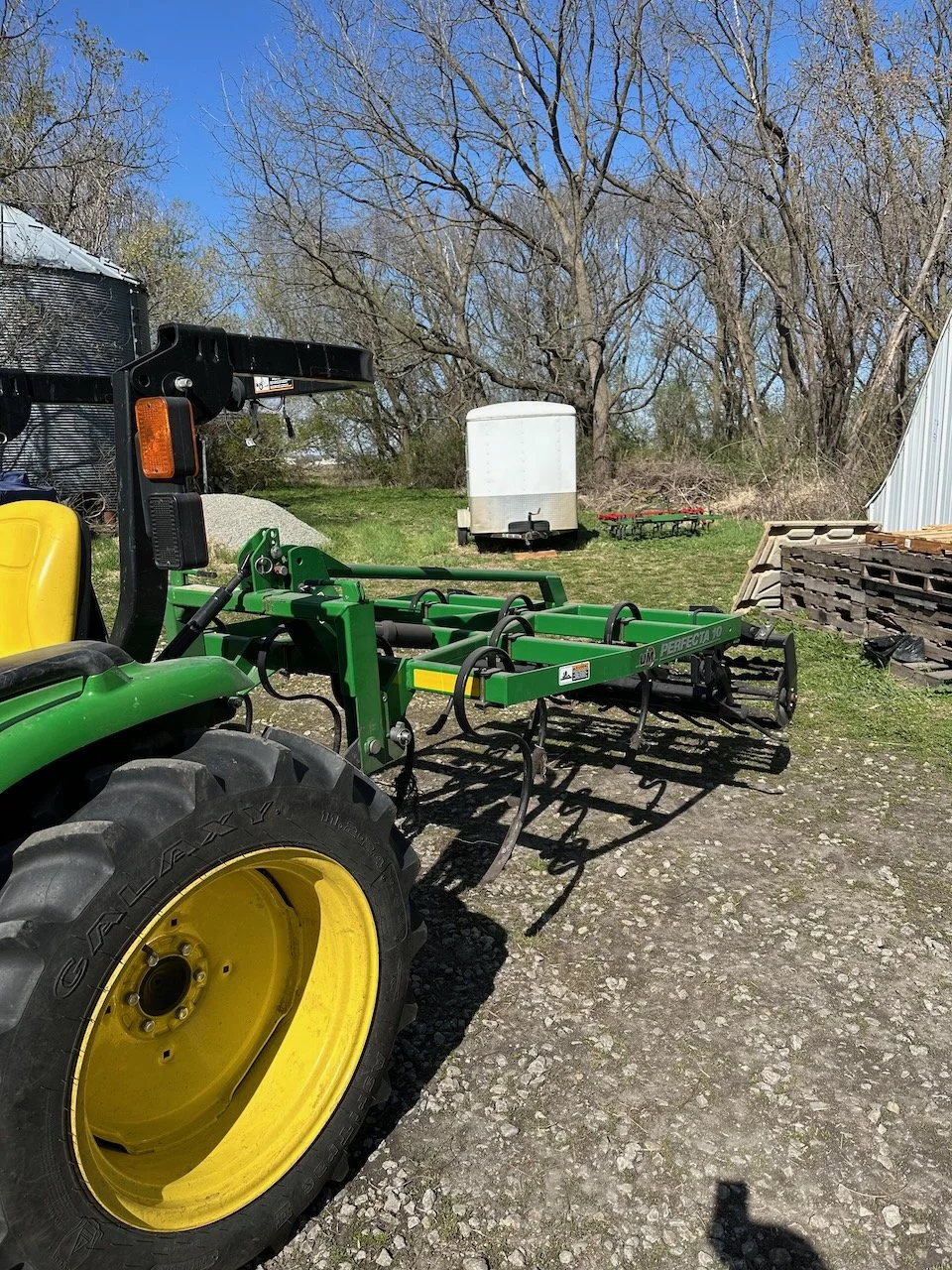
This tool, called a field cultivator, is our primary seedbed prep tool.
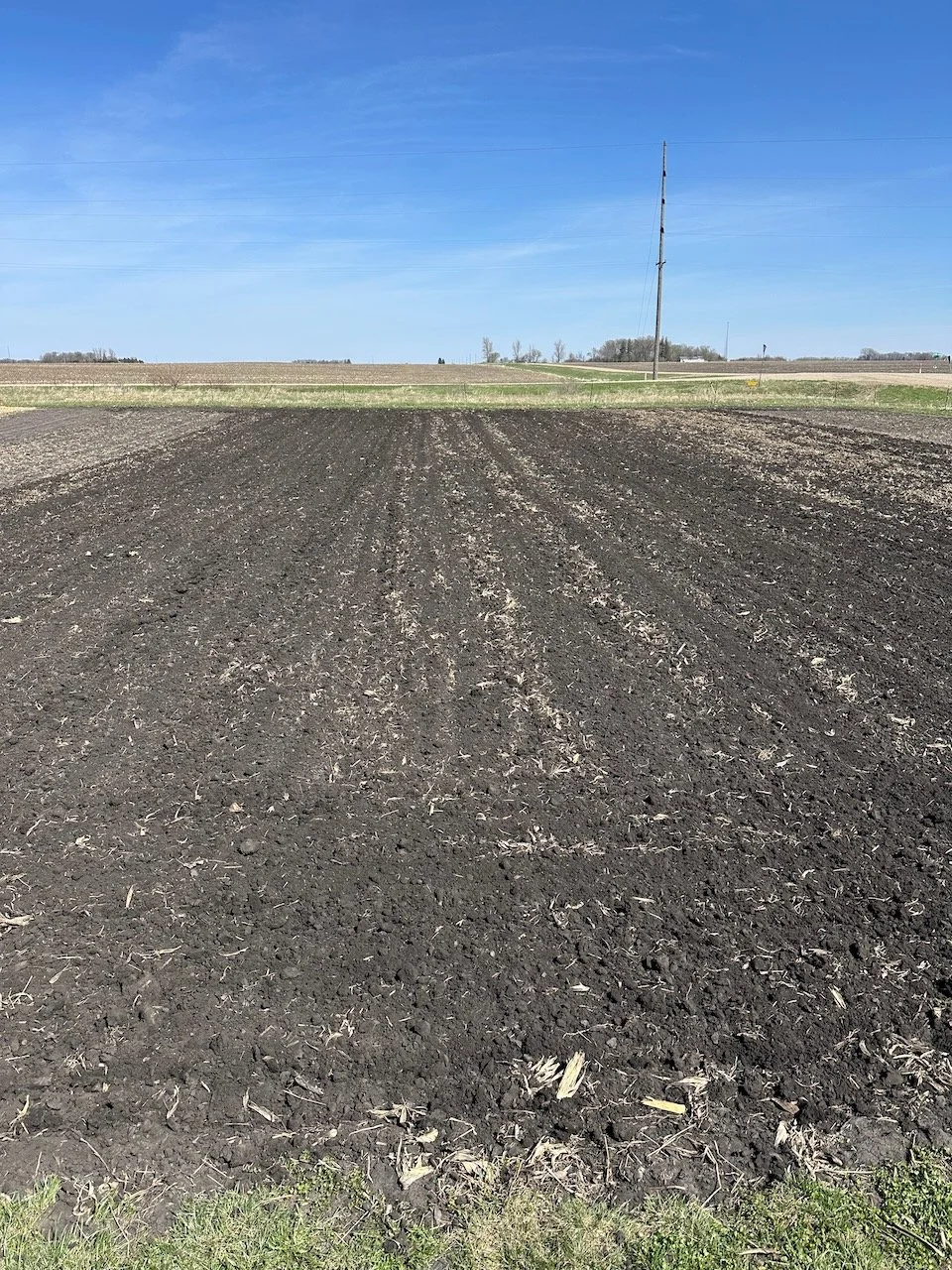
After using our field cultivator we have loose, smooth, soft soil that’s easy to work with for both planting and transplanting.
Winter Tunnel: One Step Closer
Long time farm fans will know we’ve been working towards buying and building a new high tunnel with winter growing in mind. It’s been a process. Initially, we were waiting to see if we’d get funding through a USDA program called EQIP (Environment Quality Incentives Program) but that path seems unlikely with the goals of the current administration. We spent about a year in limbo on this before we decided that it wasn’t going to work out. Fun fact: we had actually put in our application for EQIP in December 2024.
We decided we just needed to go for it and secure our own financing through Compeer Financial. We know that even if the winter growing fails (we don’t think it will), that the tunnel would still be valuable for growing other summer crops like tomatoes and cucumbers. Then, we were met with long wait times for building and big cost increases. The whole project increased in cost by about 50% from its inception to when we finally decided to move forward.
Jump to just last week and we finally received the tunnel parts with the builder planning to begin construction in early June. I am SO excited for this and maybe a bit nervous too. It’s one of the bigger farm purchases we’ve ever made. The only thing more expensive than this tunnel is our vegetable wash & pack shed.
What will we grow in the winter tunnel?
We’ve been experimenting with winter growing for around 5 seasons now and we have a good idea of what could work and what probably won’t work. We plan to grow lettuce mix, radish, spinach, salad turnips, scallions & bok choy in the winter tunnel. With supplemental heat and normal to slightly below normal temperatures in winter we should be able to produce these crops all winter long!!
That’s really exciting for us. When you consider that we can pair these fresh winter crops with storage crops like beets, carrots, potatoes, onions, garlic, shallots, cabbage & winter squash, we suddenly have a huge selection of fresh, local, sustainably grown veggies available even in the dead of Minnesota Winters!
Our goal is to make local foods easily accessible year round and this winter tunnel will be one giant step towards that goal. We can’t wait to start growing!
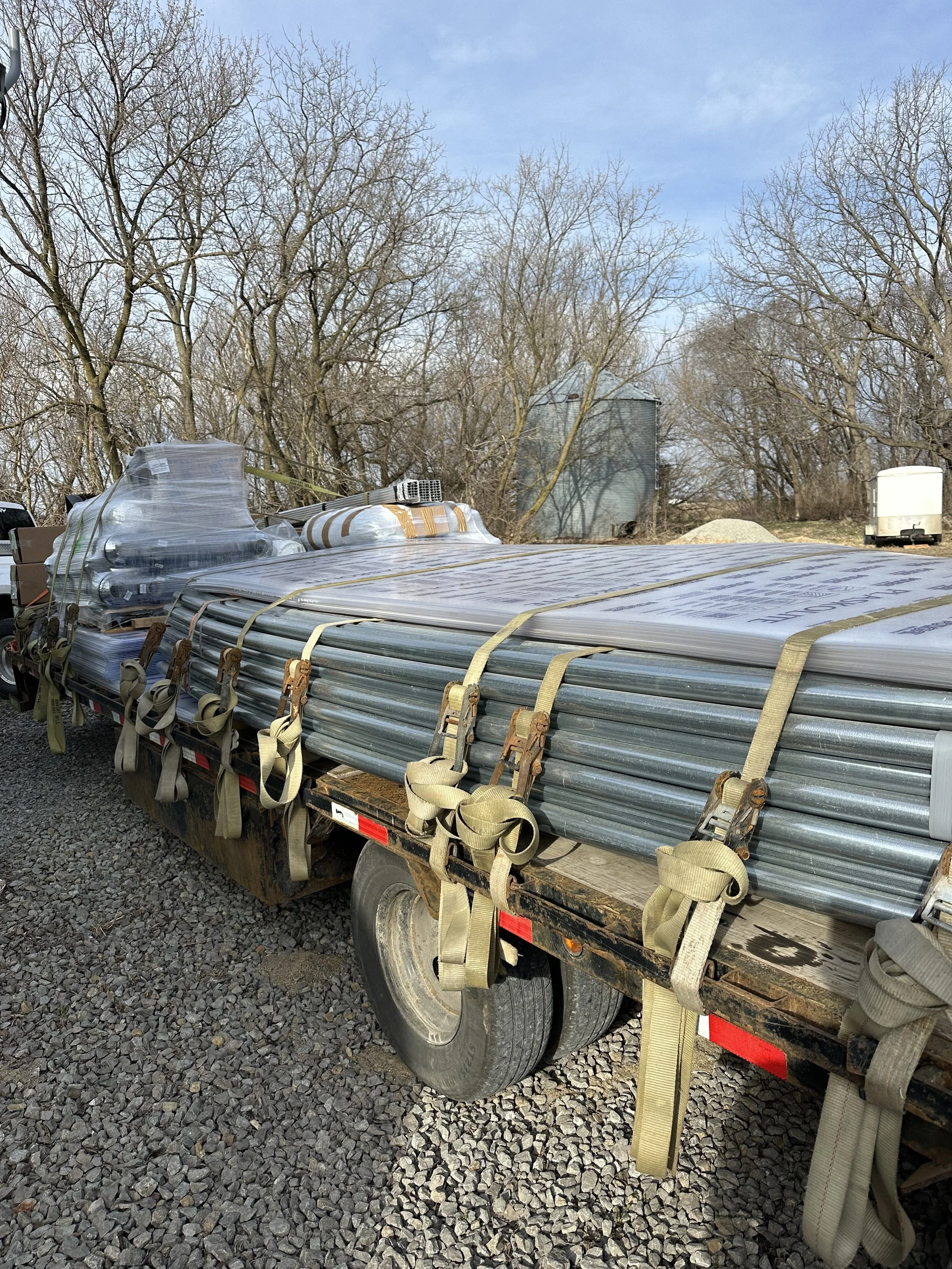
May Crop Preview
One of the areas we excel at is having a good selection of produce available early in the season (think May and the 1st half of June). There’s a lot of planning and a good bit of luck that go into our ability to produce crops so early in the season. Today we’re going to go over our May crop plan and what goes into having these crops ready so early in the season.
May Crop List
Lettuce
Radish
Salad Turnips
Scallions
Cilantro
Spinach
Beets
Broccolini
Carrots
Snap Peas?
Step One: Grow In Tunnels
When we began investing in season extension infrastructure like caterpillar tunnels and high tunnels (referred to as “tunnels” henceforth) we knew that we wanted to do things a little different. At the time there were plenty of other vendors selling early tomatoes and cucumbers which are quite commonly grown in a tunnel. We wanted to focus on other popular crops that make sense in a tunnel. We landed on lettuce as our main focus crop but also wanted to have more available than lettuce. We added beets and carrots to our spring tunnel lineup as well as the others listed above.
Step Two: Think Ahead
We use software to aid in our crop planning so we know at a glance when certain tasks need to be done. Still, early in the season it can take a long time for soil conditions to be right for bed prep. In February we’re closely monitoring soil moisture levels inside the tunnels so when bed prep time comes around we are ready.
Step Three: Account For Cold Weather and Limited Sun
It can take a crop as much as 2-3 weeks extra to reach maturity early in the season. This is due mostly to colder temperatures but also due partly to decreased sunlight. This pushes our plant dates as early as March 1st for carrots and beets. With day to maturity ratings of around 60 days you would think they would be ready by May 1st. Instead, it’s more like May 15 for beets and May 22nd for carrots!
Step Four: Tunnel Management
The nice thing about the tunnels is we can achieve much warmer soil & air temperatures much earlier than we can outside. This also means on really sunny and warm days we can hit temperatures that are too hot for our crops. So we ventilate our tunnels to make sure we keep our crops in ideal growing temps. Since weather fluctuates wildly in the spring we also try to conserve heat on cooler and cloudy days. The compounded effect of this is earlier crop maturities!
When will we see these crops on the market stand/online store?
Early May: Lettuce, Spinach, Radish, Salad Turnips
Mid May: All of the above plus: Beets, Cilantro, Scallions
Late May: All of the above plus: Carrots, Snap Peas, Broccolini
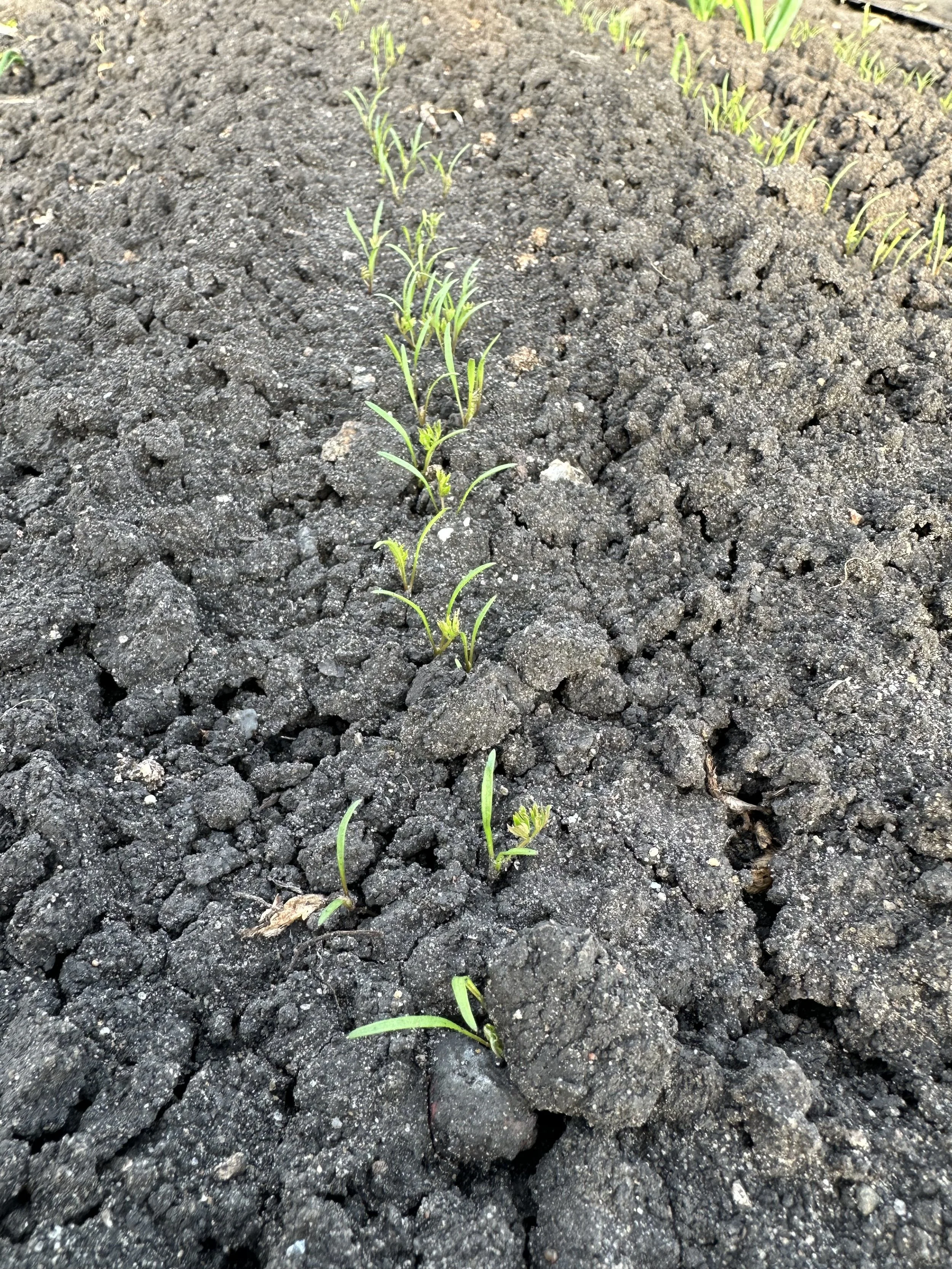
Carrots with first true leaves showing!