
Tunnel Snow Management
We’ve just had our first big snow of the winter this past weekend. I don’t know about you, but I love winter and the snow but with is comes a different set of challenges. It might surprise you, but we need to carefully and thoughtfully manage snow around our tunnels even if they don’t have crops actively growing in them. This is especially true for our smaller “caterpillar” tunnels pictured below.
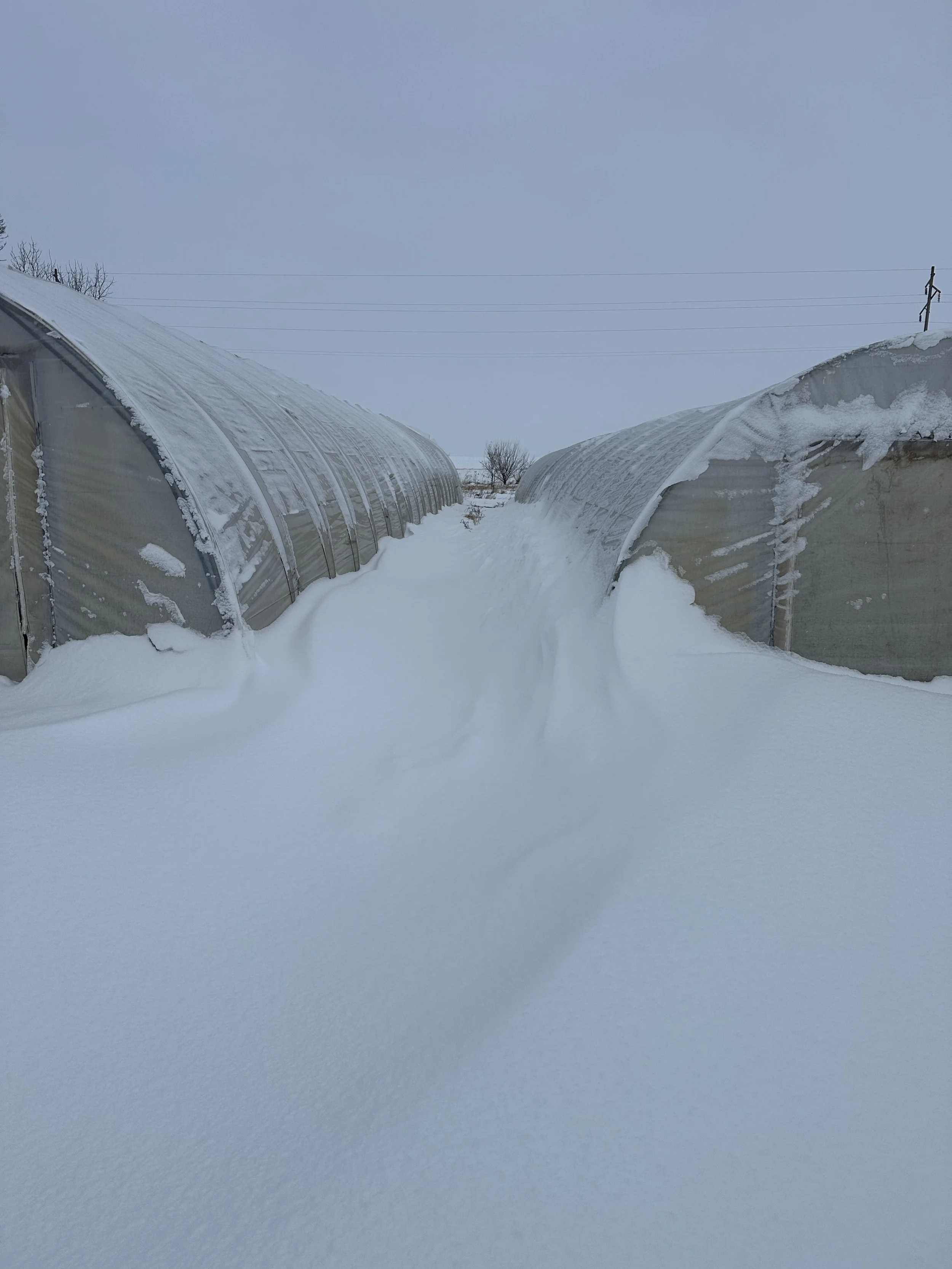
It’s a bit difficult to judge scale on this photo but the tallest drift on the right side of the photo is around 4 feet deep.
Native Minnesotans will recognize the different types of snow we get here: the loose fluffy stuff, the heavy “heart attack” snow, and everything in between. The “heart attack” snow is the most dangerous for our tunnels since by volume it has the most weight but even the fluffy stuff and cause problems. Over time, snow will build up on and between our tunnels. One or two big snow events won’t matter that much but an entire winter's worth of snow events would build up enough snow to collapse or damage our tunnels. To get ahead of that we routinely clear snow from the roof and in between our tunnels.
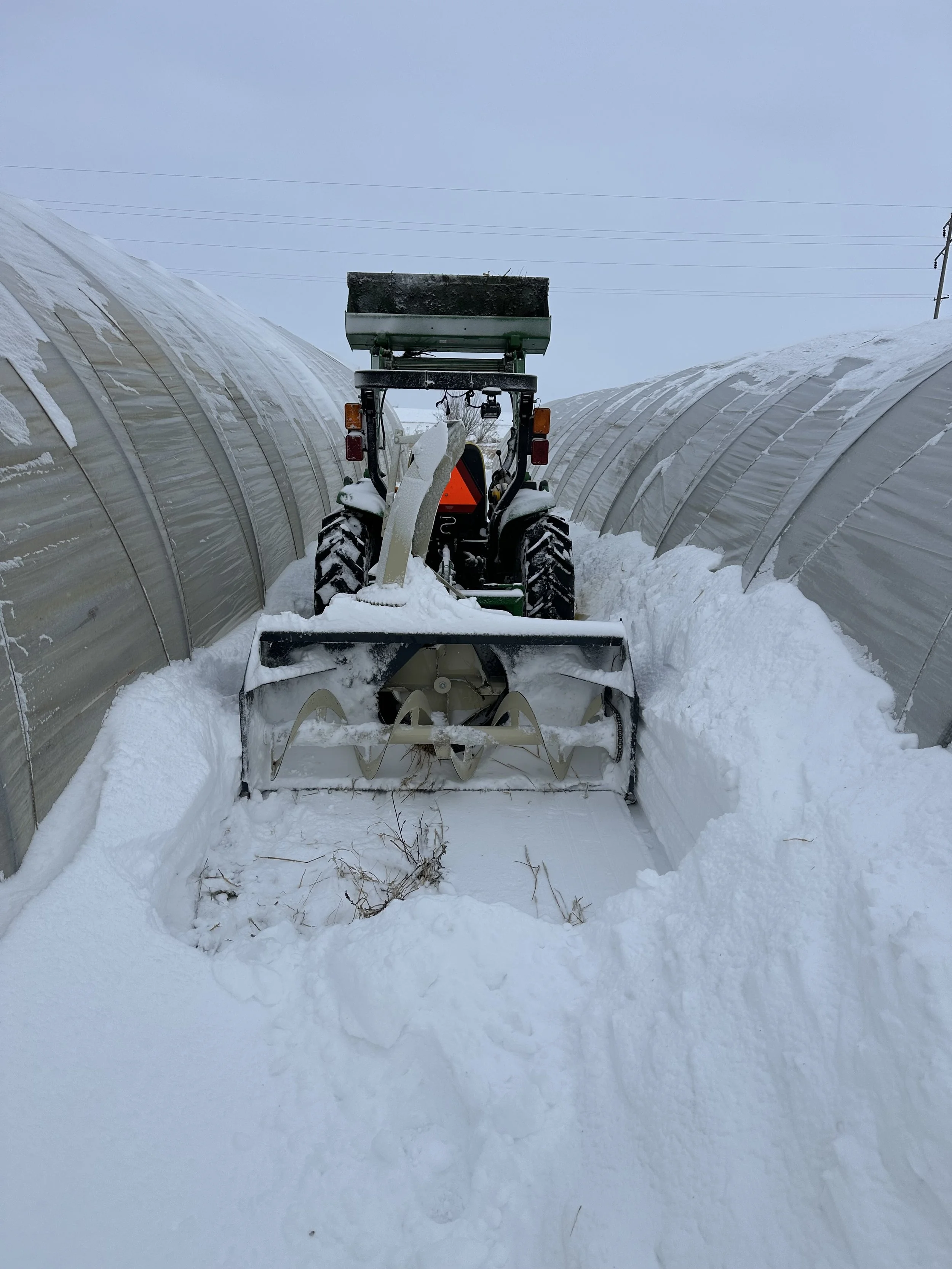
Our tractor and snowblower doing work!
We make use of our tractor and snow blower to tackle snow removal from the tunnels. We have our tunnels spaced such that we can fit our tractor and snowblower in between the tunnels. The snow is blown either completely over the tunnel into the field in the case of the smaller caterpillar tunnel (pictured right above) or blown to the north away from the tunnels in the case of our larger gothic style tunnels (pictured left above).
Bonus Tidbit: Some snow is actually REALLY good for our tunnels in the winter. Around a foot of snow all the way round the base of the tunnels helps to seal the tunnel where the plastic meets the ground. This helps us in two ways. First, it stops cold winter winds from entering the tunnel. Second, it helps to insulate the ground around our tunnels which preserves precious heat the soil inside the tunnels.