Winter Observations
My mom is always happy to have a fresh salad and I had noticed that we did have a very small amount of available in our tunnels that somehow survived outside temperatures of -20* F (+10* F in tunnel under row cover). I have been experimenting with winter growing for 5 years now and I was taken aback. I was happy to be able to harvest some lettuce mix to share with my family for our Christmas celebration. Observation is a critical part of farming produce and I wanted to share with you a few things I noticed in our winter tunnels this past week.
First observation, in the photo below, you’ll see some gorgeous spinach and tucked into the spinach is something else that caught my eye. Peas! These were part of our cover crop mixture and a few seeds ended up in our winter tunnel when we were broadcasting seed. I knew peas were cold hardy - that's why they were part of the cover crop mix - but the literature said they were good to the low 30s upper 20s.
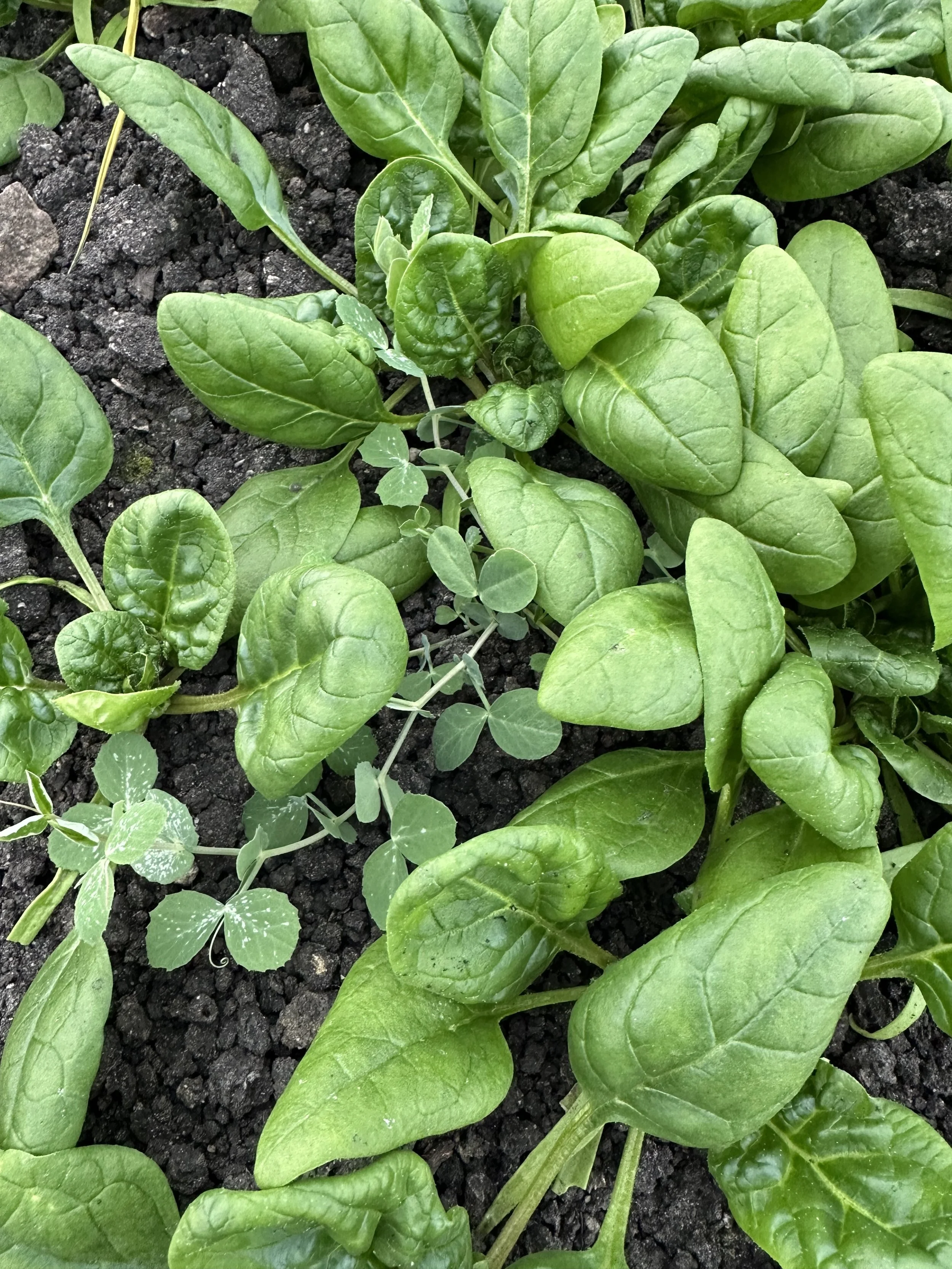
Pea cover crop pictured center.
Second observation. Since I had noticed the peas surviving in the spinach bed, it got me thinking: I had planted the same cover crop mix intentionally in a different tunnel. I wondered what it might look like. See the photo below for the results While the oats in the mix are matted down and mostly dead, the peas that are part of the mix are still alive.
I’ve written about why cover crops are important in the past so I won’t get into it again today but know that I am tickled that these cover crops are continuing to do their job deep into the winter! I can hardly wait to see what the soil looks like in the spring when we start prepping these beds for new crops.
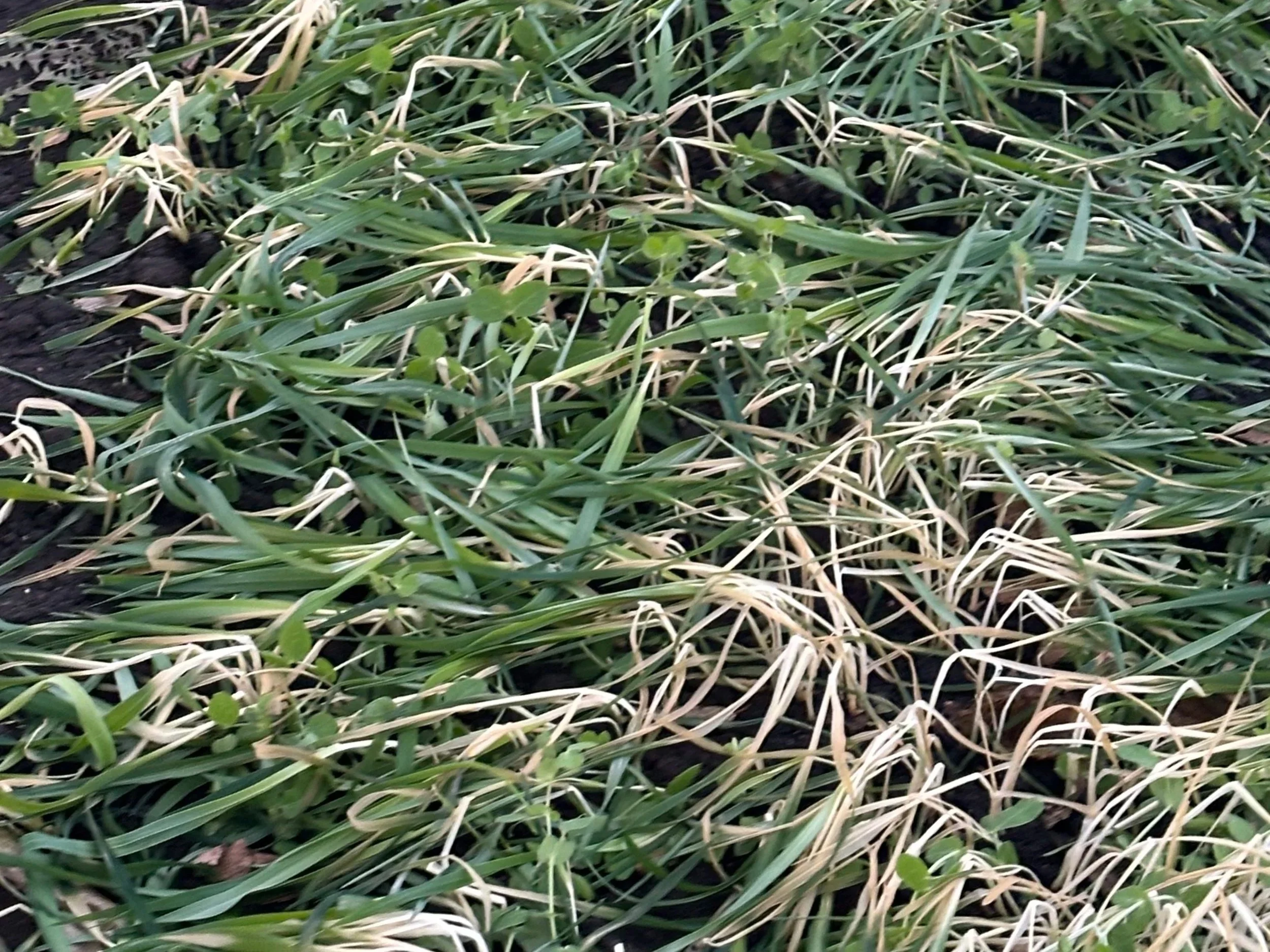
Oats and peas cover crop doin’ work!
Third Observation. Some of the lettuce varieties that constitute our lettuce mix are less cold tolerant and the size of the lettuce plant also matters with respect to cold tolerance. The rounded leaf types (red & green oak-leaf and butterhead) are much more cold tolerant than the pointy leaf types (red & green incised and sweet crisp). I don’t know why but I’d hypothesize that at a genetic and/or cellular level there are differences between the varieties that govern cold tolerance.
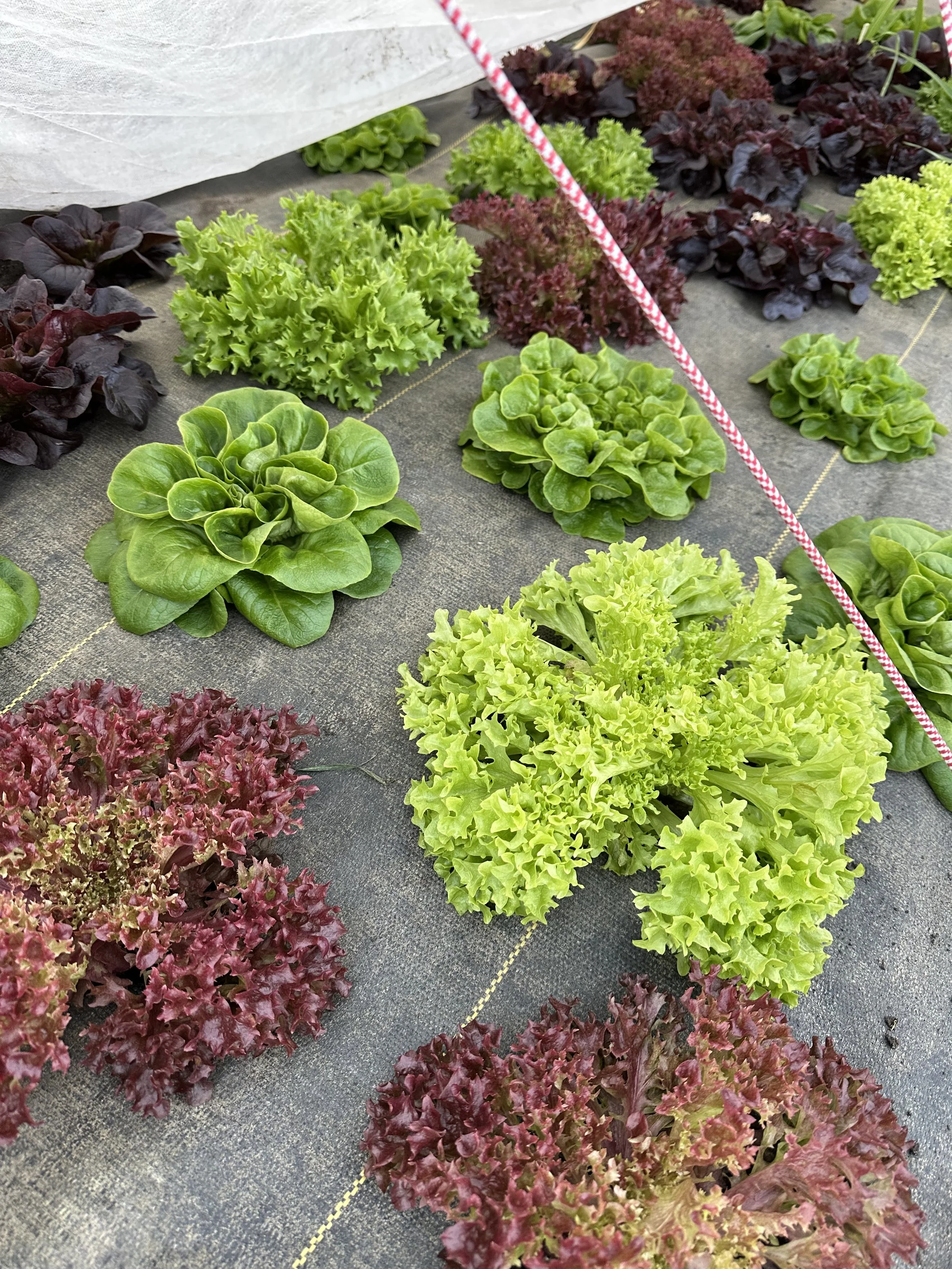
Lettuce picture from December 28th, 2025
An Observation on Observations: To tie a bow on this blog post I just want to note that this is just a small example of the observations that I, as a farmer, make to help in my decision making on the farm. Small observations can often be inter-related and can help inform my management decisions, crop/variety selection, and so much more. To be a good farmer, you really have to notice the details in your crops and think about what they might mean for the farm!