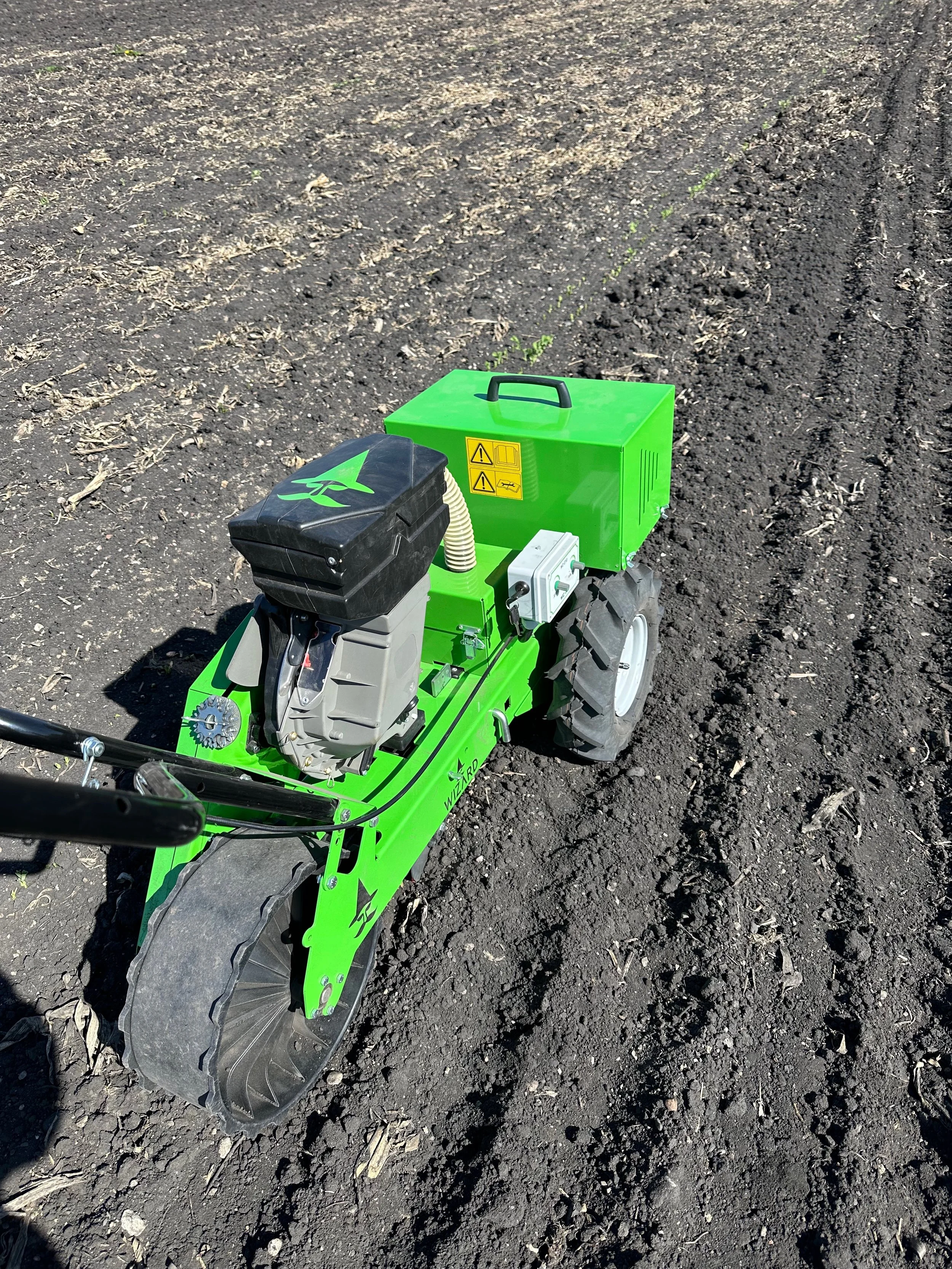
Vacuum Seeder Explained
Last year we made a big (and expensive) upgrade to our direct seeding equipment with the purchase of a Wizard Electric Vacuum Seeder. A vacuum seeder is going to help us solve some of the biggest problems we have with our direct seeded crops like sweet corn, peas, beans, beets & more. This weeks blog post will go over how the vacuum seeder works and the problems it helps us solve.
The name gives it away: vacuum seeder. The seeder uses vacuum to pull seeds up against a plate. The plate rotates at a configurable rate to allow for variable spacing for different crops. For example, peas like to be really close together at 1”-2” between plants whereas sweet corn and popcorn need more space at 9”-12” between plants. Once the seed held against the plate is at the precise location it needs to be the vacuum is cut and the seed drops down into the soil.
The biggest advantage of a vacuum seeder over our existing gravity based seeders is seed singulation. That is, making sure a single seed drops into the soil at the spacing it’s supposed to. This solves two problems at once for us: jams and double/triple seed drops. Our gravity based seeders often jam which means we’re no longer dropping seeds at the right spacing. The other double/triple problem is when multiple seeds are dropped at one time when there should just be one. That means we have to go back and thin the plants. More time, more work and worse yield.
We’re happy to have this new seeder and we’re excited to share the results with you later on this summer!