March Farm Update

March is a time of excitement on our farm. The snow has mostly melted, the first plants of 2021 have been seeded indoors, we’re finalizing our plans for the 2021 growing season, and getting our equipment ready for another year of growing for you This March has been unique for us. Lara’s maternity leave ended at the end of February and I have begun caring for Addie full time while also trying to keep up with things on the farm. For a first time dad it’s been a little tough but I have been loving the quality time with Addie and I can’t help but think about having her help with all of these farm tasks in the future!


The biggest project we’ve had so far this month is starting our seeds. We have a robust seed starting setup with several key components. The first is our germination chamber which we built with a reclaimed upright freezer, a couple crock pots, a temperature controller and a humidity controller. This keeps the space inside the chamber at a steady 78 degrees Fahrenheit with 95% humidity which are ideal conditions for starting seeds. We have lettuce, thyme, cilantro, oregano, kohlrabi, broccoli, tomatoes, cabbage and peppers all up and we have a goal of transplanting the cold tolerant crops like lettuce and kohlrabi into our tunnel around the first week of April.
You can see the germination chamber in the upper photo with some of our seed starts. Notice the crock pots at the bottom of the chamber that help keep our temperatures consistent. Below is a recent photo of lettuce and cilantro on our grow rack. We hope to transplant the lettuce sometime during the first week of April!

End walls and plastic on the first tunnel back in early March.
Another big project we’ve completed with the help of our farm hand Caitlyn is getting the end walls and plastic over our caterpillar tunnels. This project involved waiting for a very calm day as even a 10mph wind is enough to cause a the large sheets of plastic to blow uncontrollably. This can be difficult in March as the seasons change. It seems we have more windy days than calm days this time of year!
Finally, we’ve begun construction on our new chicken coop! We’re making some improvements over the first chicken coop we built including building the coop on the frame of a trailer so that we can easily move the coop to fresh pasture. Unfortunately, the skids on our last coop did not work well. It was very difficult to move with the tractor and we ultimately left it in one place. Other improvements include a mesh floor so that the chicken poop will fall onto our pasture fertilizing it and keeping the chickens clean! We’re hoping to finish building the coop in the next 2 weeks. Stay tuned to Facebook for more pictures!


What's happening on the farm in February?

There's no doubt about it: during the winter there are way less "Instagramable" moments on the farm but that doesn't mean we haven't been busy! Read on to see what we've been up to this winter.
Baby Addie
Our precious baby Addie was born on December 22nd in 2020 and we've just been loving every minute with her. She's growing so fast and somehow is getting cuter every single day. Addie is keeping us very busy and we're so lucky to have this slow time of year to spend with her

Crop Planning & Seed Order
We spent a lot of time updating and adjusting our crop plan for this season. We've added two new 16' by 100' tunnels to our farm which more than quadruples the amount of tunnel growing we will be doing this season. As such, we had to develop a plan for which crops will go into those tunnels and which crops will be planted after the previous crop is harvested. We keep track of all of this using Google Calendar and Google Sheets that are updated yearly.
Equipment and Supply Orders
We have been ordering the necessary supplies and equipment to make our 2021 season a success. One of the things we're most excited about is our new walk behind tractor and cultivation setup. This tool will help us reduce the amount of hand weeding we have to do on our farm saving us time and our backs! Check out this Youtube video below:
We've also ordered components for an irrigation system since we finally have a well on our farm. This system includes both drip irrigation and overhead irrigation. We use both forms of irrigation on our farm in strategic ways to enhance the quality of our produce. Other supplies we've ordered include tomato stakes, packaging materials, and fertilizer.
Marketing
We've also been hard at work getting our CSA shares marketed and sold. We increased our total shares from 50 up to 80 this year and have about 25 left to sell. They're going really fast this year so if you have a friend or neighbor that's considering signup up, they should do it soon!
We're excited to be starting plants in just a few weeks. It will finally feel like winter is coming to an end and that spring will be here soon! We love the slower pace of winter but we can't wait to get our hands dirty again!
Thank you for supporting our farm this season!
June Farm Update: Weeding, Planting, and Pack Shed Progress!!
Wow! Where does the time go? We’ve been so busy on the farm planting, weeding, and setting things up for our season that time just seems to go by so fast. May and June are very critical months of the year on our farm. The work we do now helps ensure our season is successful. We are usually juggling multiple important farm tasks such as weeding, planting, and setting up infrastructure and each task usually has a set of weather conditions that work best.
Take weeding for example. We have multiple tools and strategies to deal with the inevitable weeds including flame weeding, plastic mulch, frequent shallow cultivation and hand weeding. Our flame weeder works best when the weeds are very small and when the wind speed is less than 15 mph. It’s been fairly windy this spring so we haven’t been able to flame weed as much as we like. Cultivation requires dry ground and for the most part we have had that. By killing weeds with cultivation and flame weeding now gives our crops a chance to establish themselves and out compete future weeds. Furthermore, by killing weeds now we ensure that the weeds don’t reproduce and add even more weeds to our fields.
Planting is another very important task for obvious reasons. There’s a lot of thought that goes into when we plant crops, where we plant crops both in relation to what it’s planted next to this year and what was planted in that spot last year. We keep a Google Calendar of our planting dates to help make sense of everything and compare year to year.
Our new pack shed is also coming a long nicely. Our posts are set, the rafters are up and they are beginning the work that will go into the floor including setting drains, raising the grade and installing pex tubing for our heating system. We expect the shed to be finished around mid July and hope to start using it then as well as it will greatly improve our farm efficiency.






Early May Farm Update!
It’s been a busy couple of weeks here on the farm. From seeding to building and planning we have some updates we’re excited to share with everyone. This time of year, especially this year, is a nice return to normal for us. With how crazy life seems when you tune into the news, we feel really lucky to have at least some part of our life seem like normal. Getting our hands in the dirt and seeing our seeds sprout to life is comforting in these uncomfortable times.

Seeding
We already posted about how we started planting our seeds about two weeks ago but this week we did our second round of seeding. Unlike conventional corn and soybean farms who usually plant once a year in the spring, we are continuously planting all season long to keep a steady supply of produce available in our CSA shares, Farm Stand, and farmers market. In fact, the last seeds we plant each year are usually in September! To be fair, we are definitely a lot more busy seeding in the spring and the amount of planting we do is certainly less during the summer.
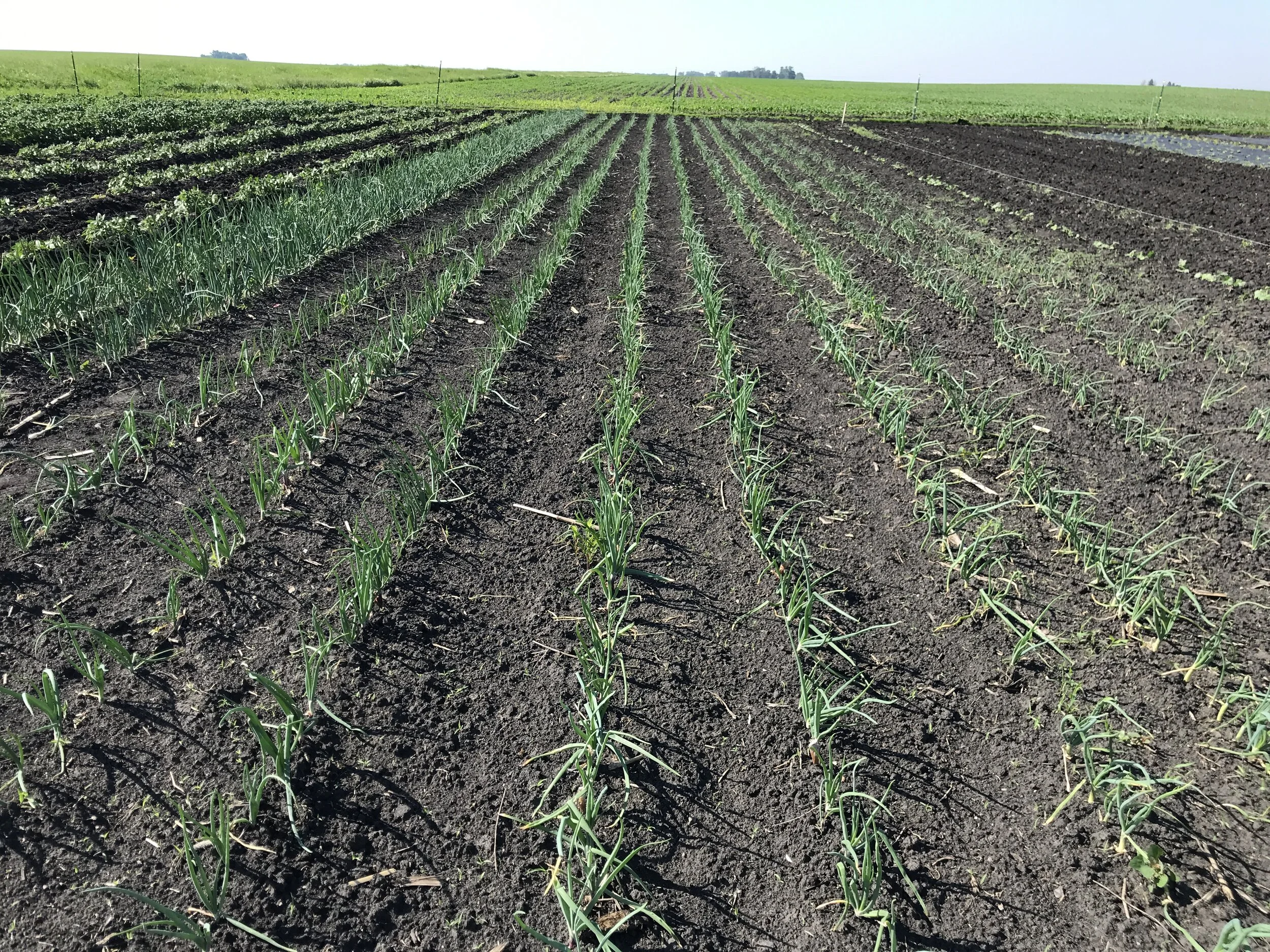
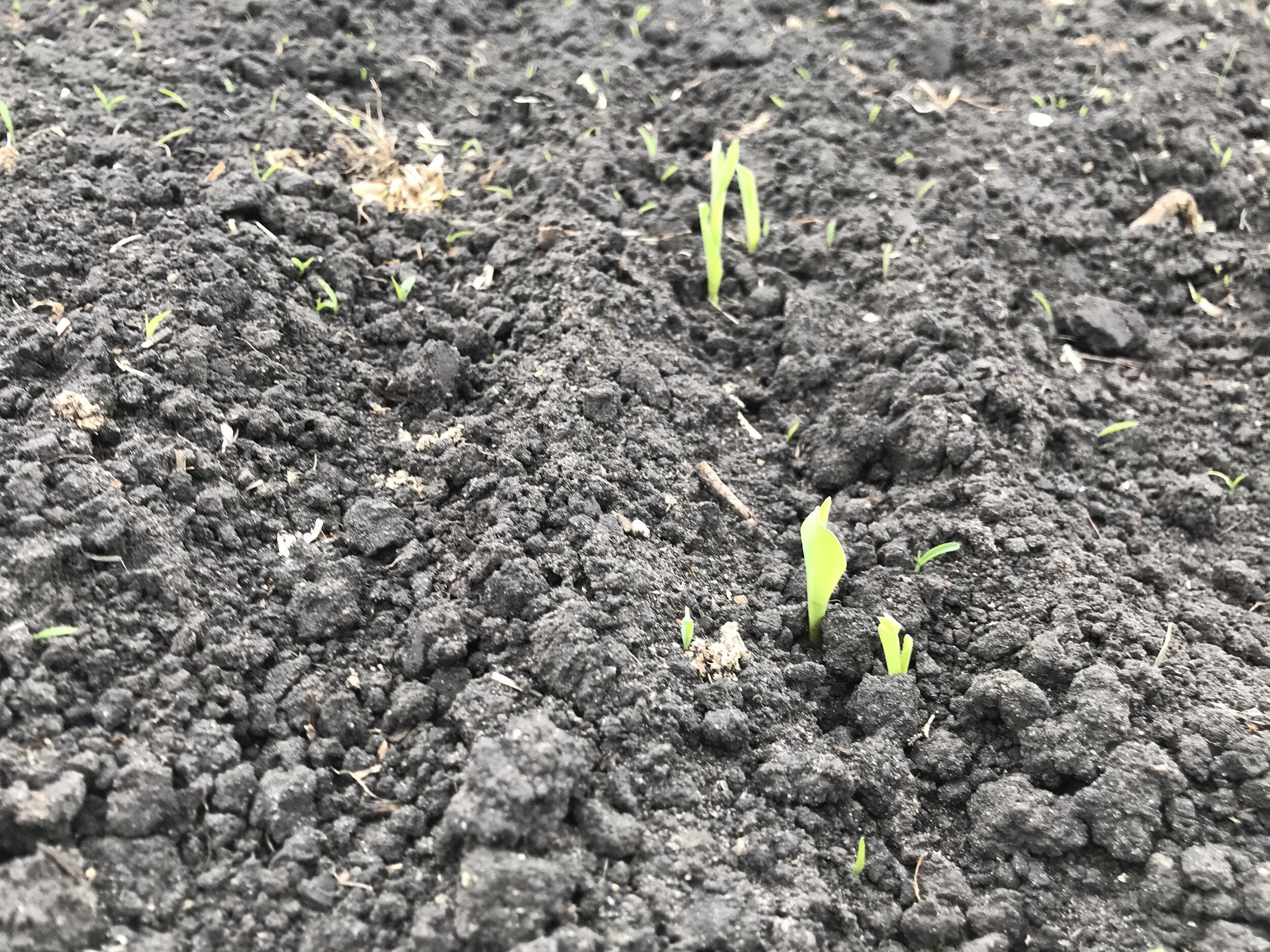
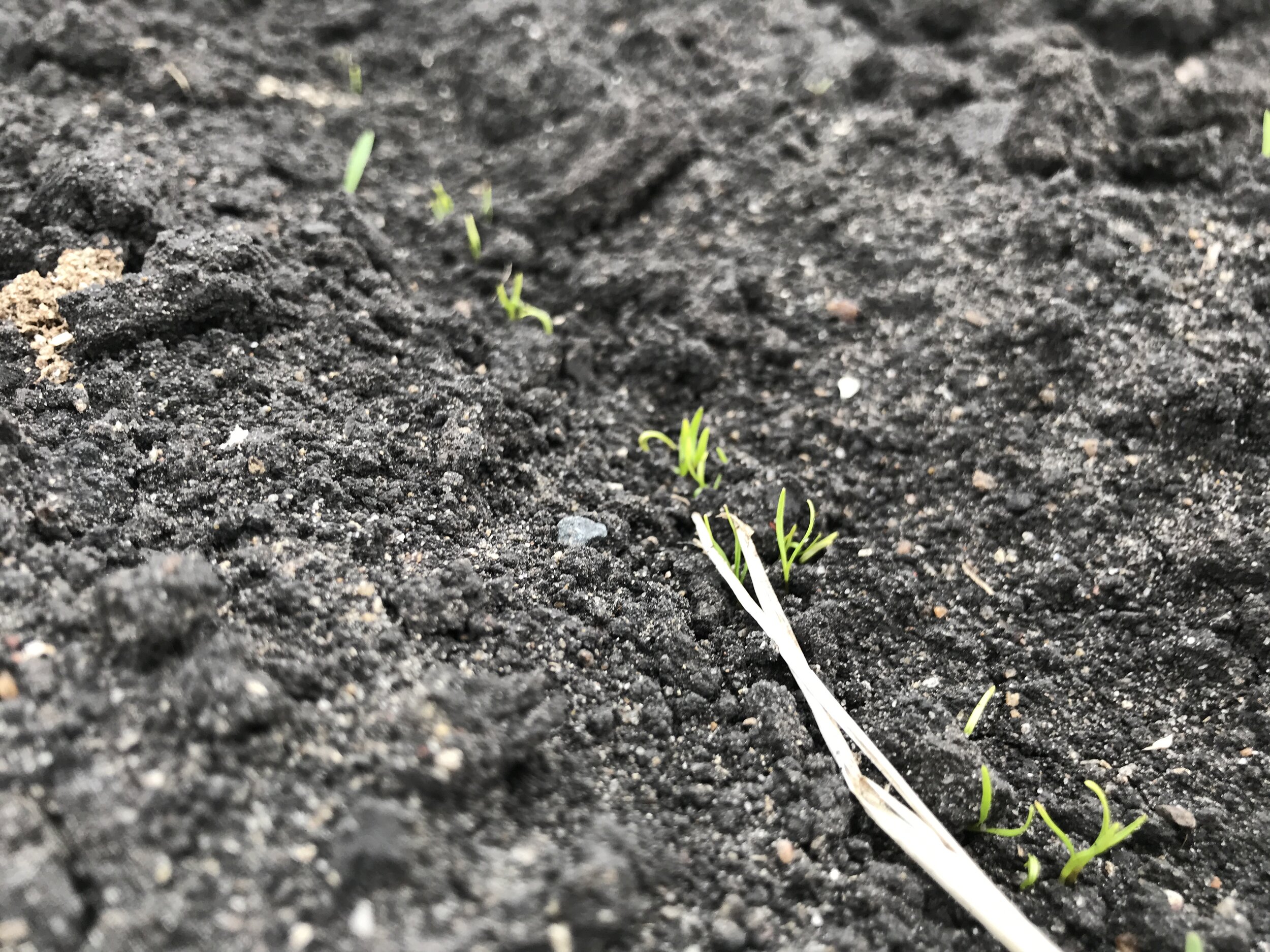
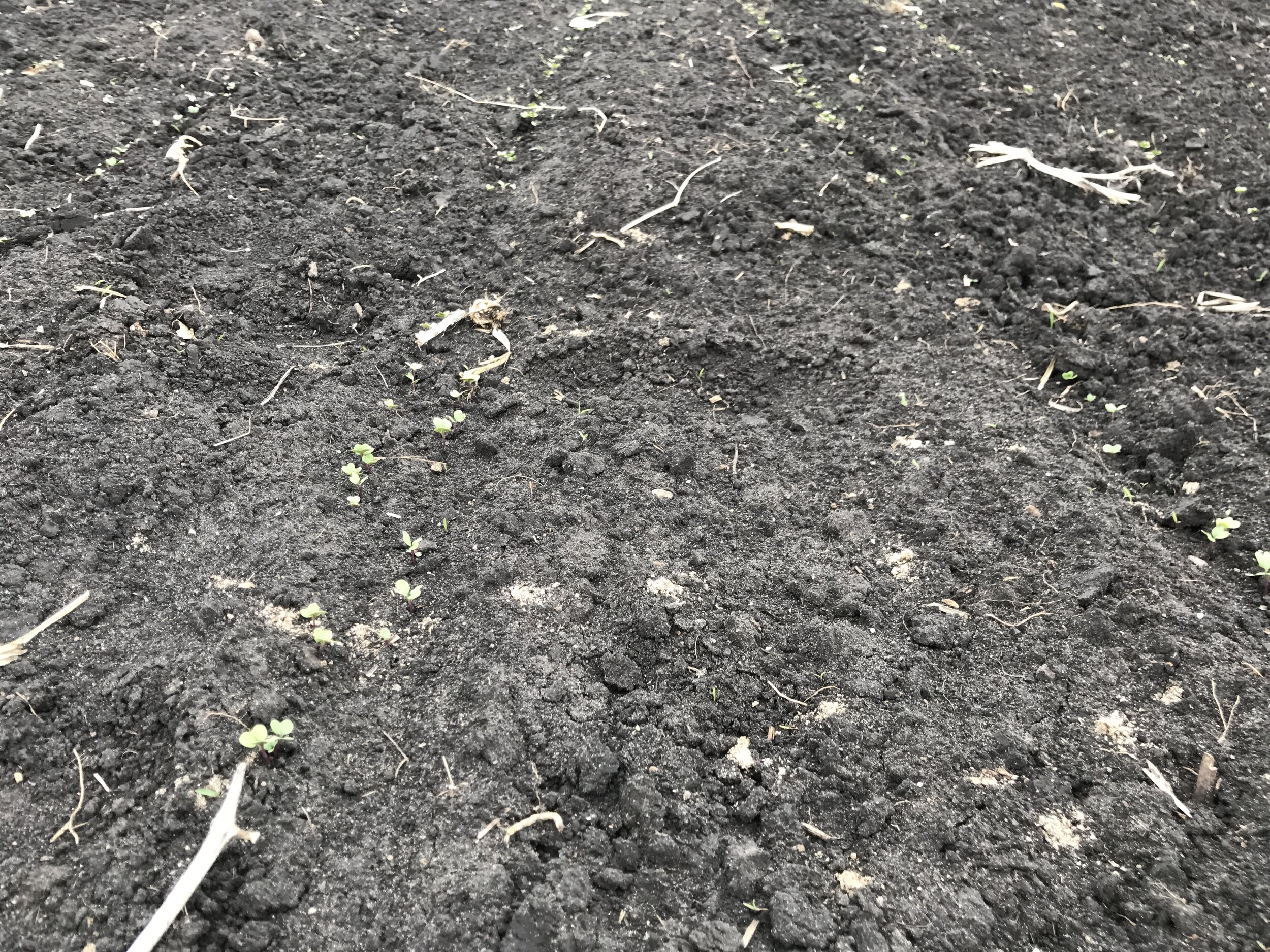
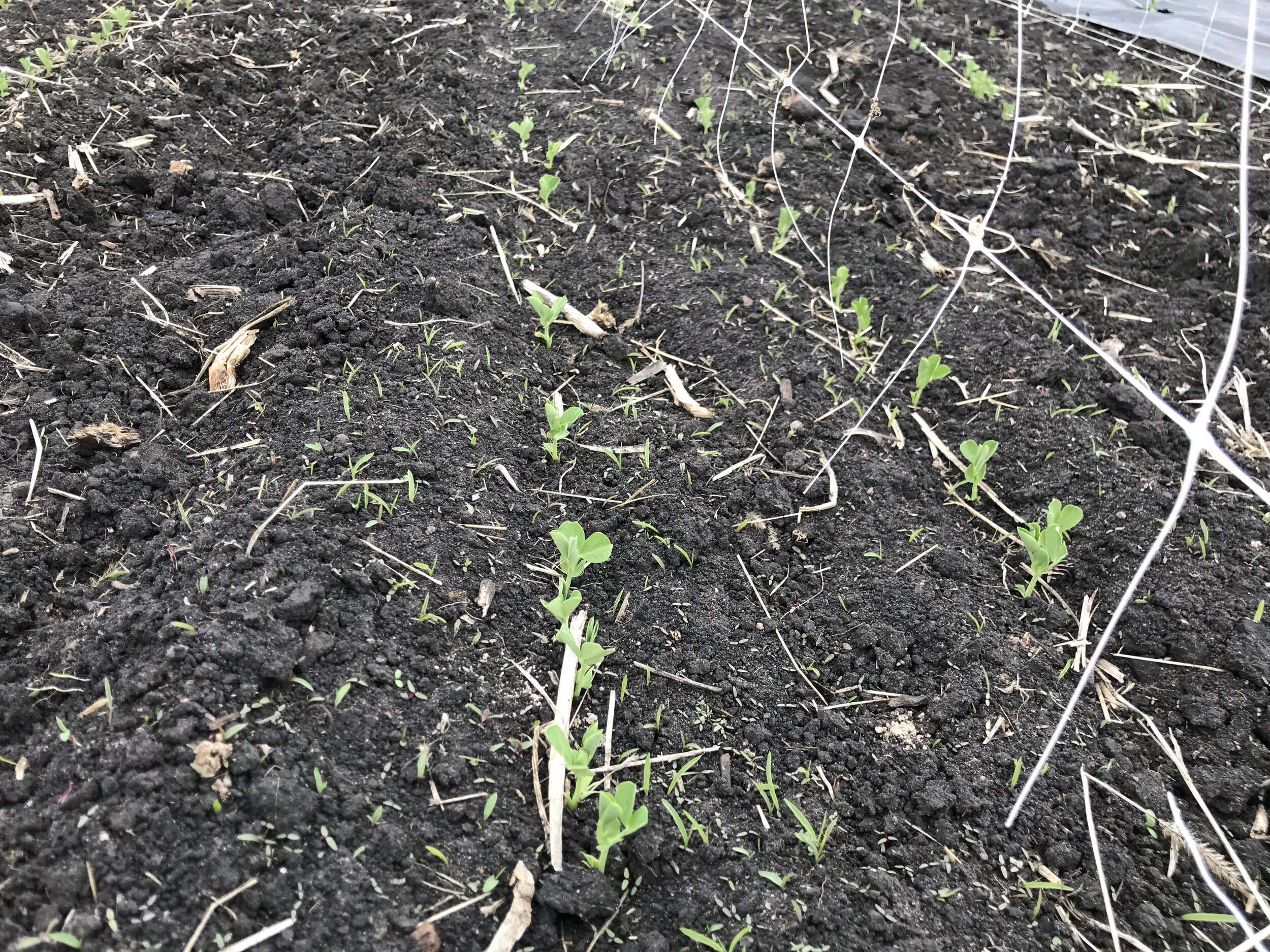
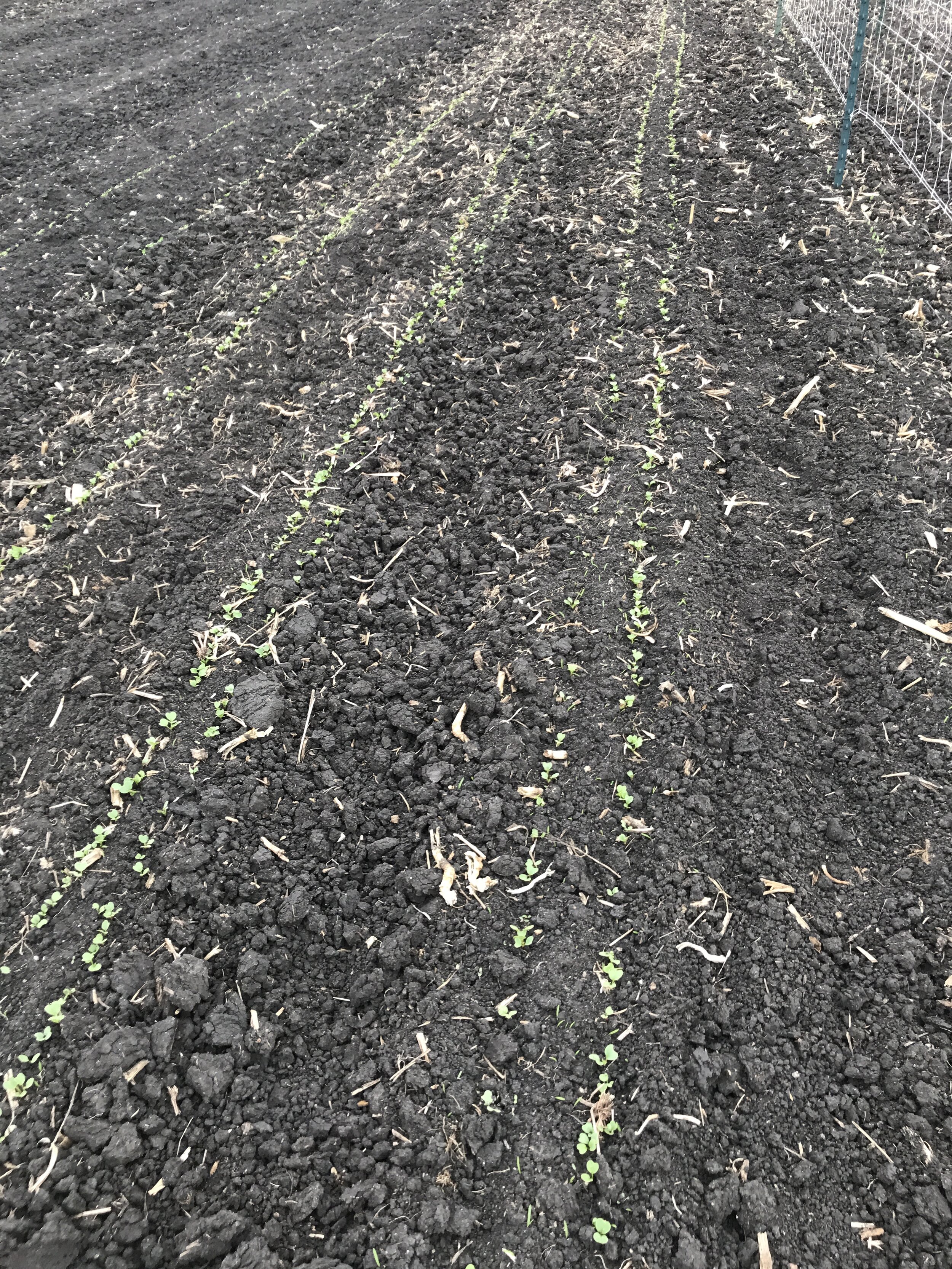
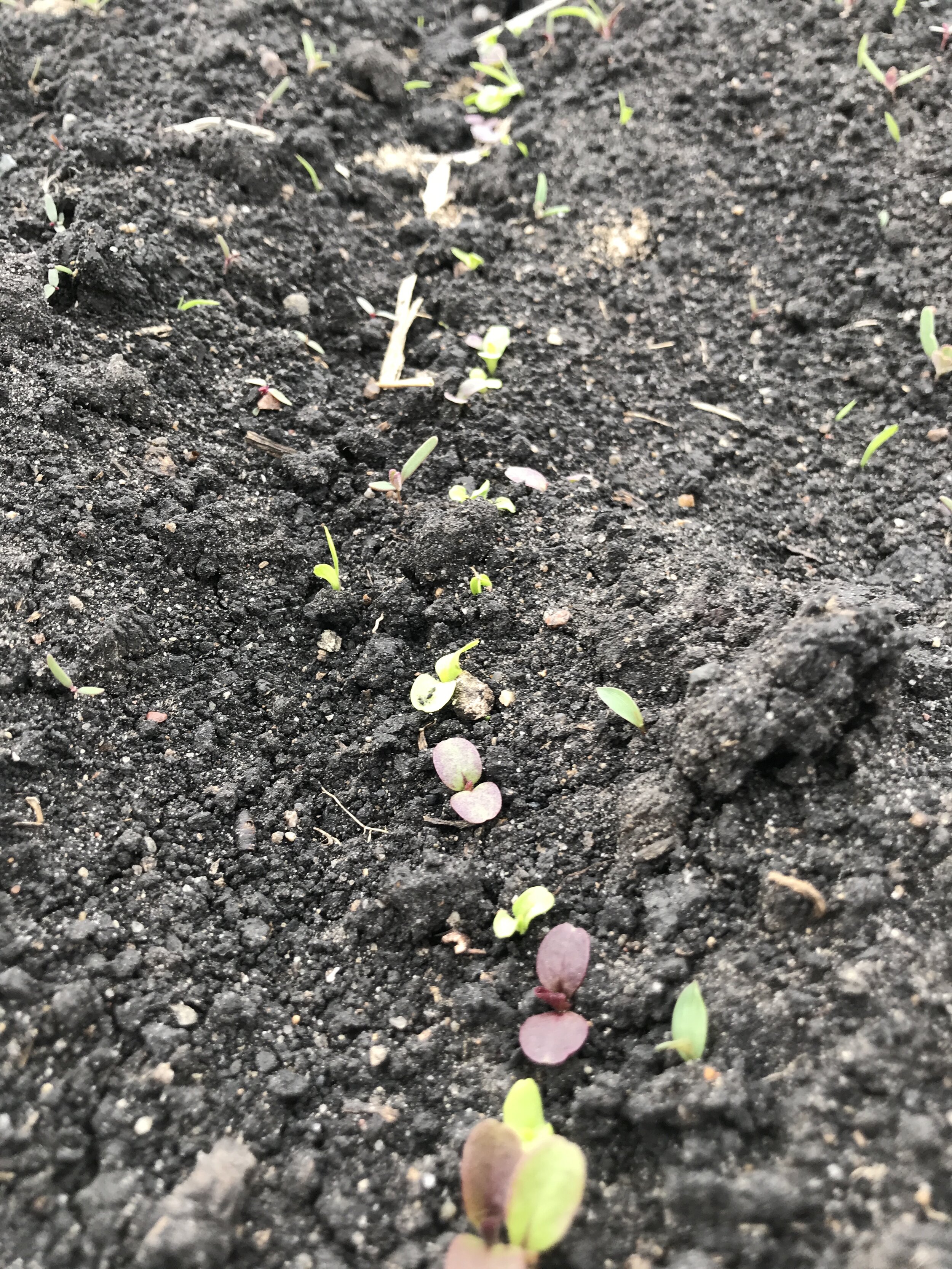
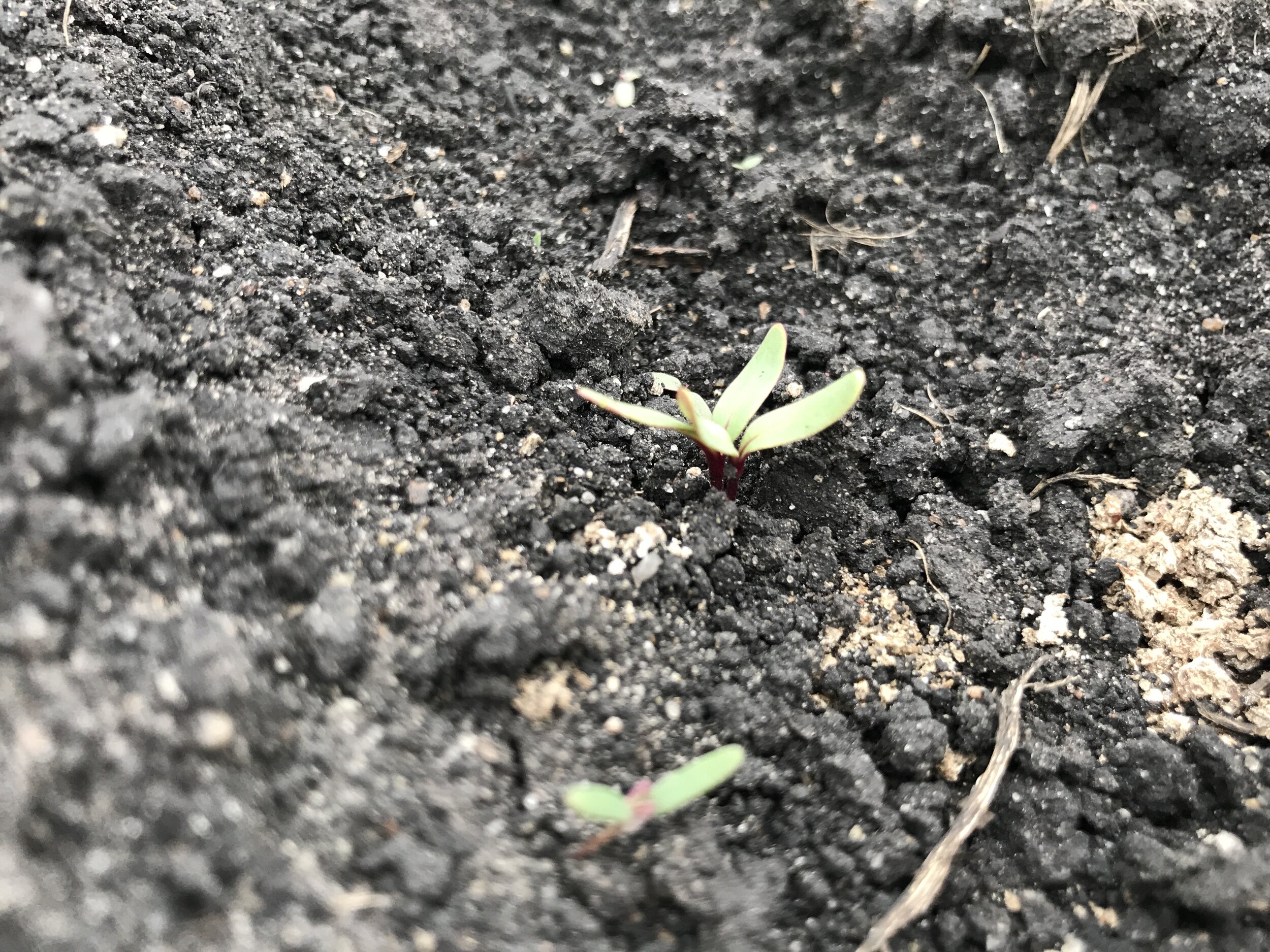
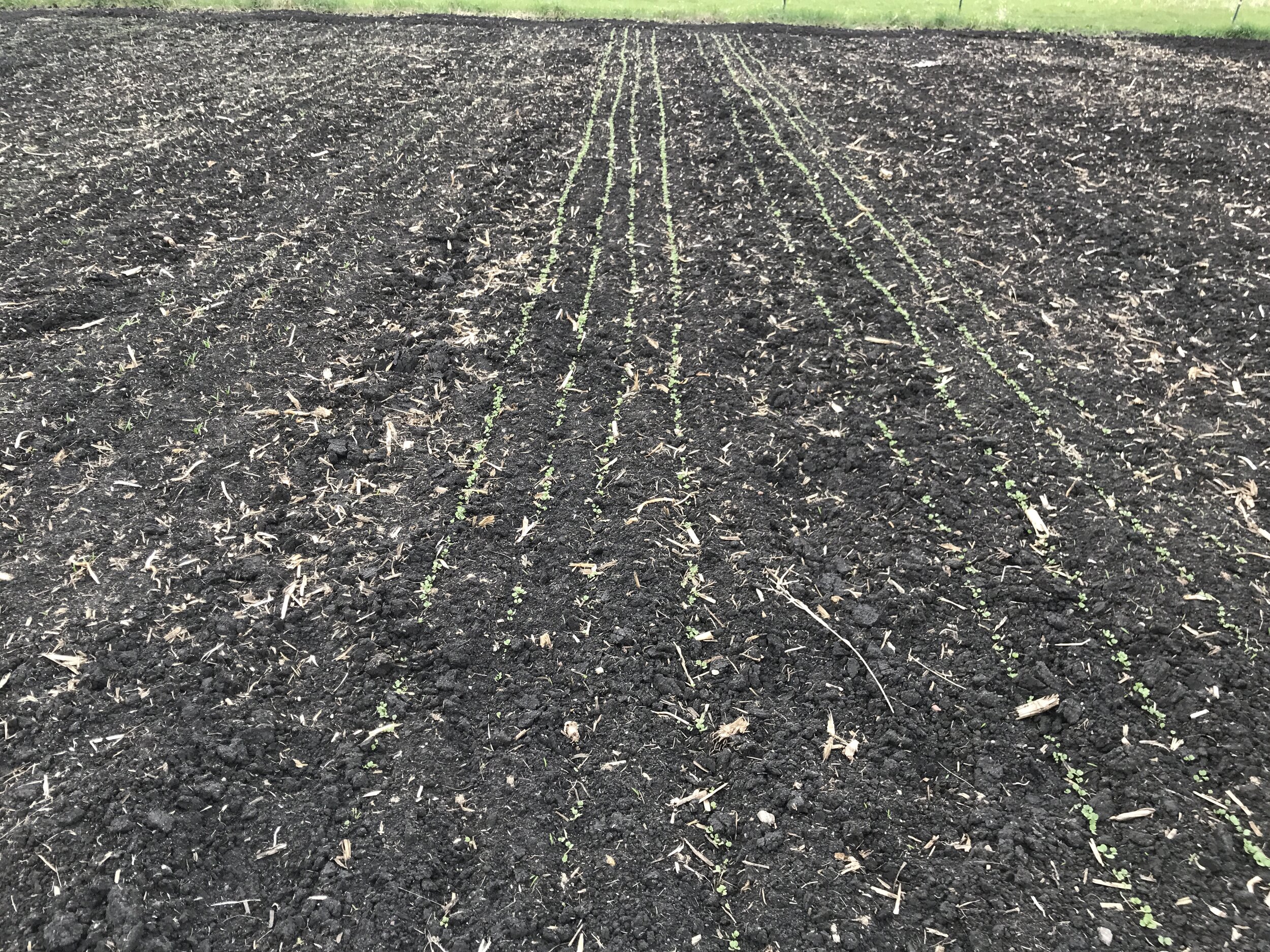
Almost all of the first seeds we’ve planted are up and overall things look pretty great! We’ve got excellent stands of peas, carrots, lettuce, arugula, beets, cilantro, spinach, and kohlrabi. We’ve even got some sweet corn up (though it might not survive the frost). We haven’t planted any warm season crops like cucumbers, peppers or watermelon yet but they will be planted in the next 1-2 weeks.
Building
Many of you know that we sold our house in March this year which also means that we sold our washing and storage building (our old garage) and that our new facility is not done yet. Since we need somewhere to store our veggies between now and when our new pack shed is done, we’ve had to construct a new temporary walk-in cooler which is well under way. We finally have power at our farm site and within the next few weeks we should have running water and have begun construction on our new pack shed. We can’t wait!

The frame of our walk-in cooler.
Weather
You can’t be a farmer, or a Minnesotan for that matter, without talking about the weather. Overall, the weather has been pretty great (with a few exceptions) this spring. We’ve had fairly warm temperatures overall and we’ve never been able to plant as early as we did this year. That said, the weather has not been without it’s challenges. We’ve had days where it’s been so windy that we were unable to do any work in the field and the plastic on our tunnel sustained some damage. We were able to repair the plastic but it is very likely that we will need to replace it by the end of this season.
In addition, it’s been pretty dry this spring. We could really use a good shot of rain in the neighborhood of one to two inches of rain. The rain is necessary to get our seeds to sprout and to make sure our transplanted crops get well established. Finally, and most damaging of all, the multiple freezing nights this weekend are damaging our tomatoes and peppers which are currently in our tunnel. It’s actually so cold that even the tunnel is not enough protection for them. We’ll see where we turn out after this cold, but it’s likely we’ll have to purchase new plants (if possible - many farms are sold out) or have our tomato and pepper crop be delayed by a few weeks. We’ll keep you posted on how we turn out.
Broiler chickens!

Lara and I miss raising livestock (we had to sell our flock of laying hens to facilitate our move) so, for a couple of reasons, we’ve decided to raise around 100 broiler chickens (meat chickens). We are very interested in incorporating livestock into our operation and broiler chickens are a relatively low cost way to get started. We are also able to process up to 1000 chickens on our farm without inspection from the department of ag and with all the scary stuff in the news about meat packing plants closing, we thought we’d do our part to help provide healthy, sustainable meat to our community.
We will be ordering our flock for the early part of August with an anticipated processing date of late September. We’ll be taking pre-orders for our birds on our website with a deposit of $5/bird. We will butcher the birds for you on our farm and they can be picked up at the Mankato Farmers Market, with your CSA, or on the farm. We’ll also show you how to cook them perfectly every time whether in the oven or on the grill and we’ll show you how to get the most out of every bird. Lara and I are able to turn one chicken into nearly a weeks worth of meals.
An Exciting Time of Year: Planting 2020!
We couldn’t have asked for better weather this past week. With warm temperatures, sunny skies, and a nice breeze we planted the first round of our direct seeded crops this week. As an added bonus, we started planted about two weeks earlier than the past couple seasons. Hopefully, that translates into some of your favorites being available earlier in the season! To cap it all off, the week ended with a little over a half inch of rain which is the perfect amount to get our recently planted seeds to sprout.

Unloading one of our fertilizer super sacks.
Our farm direct seeds most of our crops. For those of you unfamiliar, direct seeding refers to planting the seed directly into the ground. The alternative would be to start plants in a greenhouse, indoors, or high tunnel using seed trays and potting mix and transplant them into the ground (we do some of this as well). One of the advantages of direct seeding is that it’s fairly fast compared to transplanting. The disadvantage is that we don’t get that head start that started plants get. This week we direct seeded potatoes, onions, peas, cilantro, radish, arugula, lettuce, spinach, beets, kohlrabi, swiss chard, and sweet corn!

Our Hoss seeder. Simple but effective.
We were also able to pick up our cold tolerant started plants (lettuce, thyme, parsley, cabbage, broccoli) over the weekend. This year, because of our construction projects and move, we outsourced our started plants to our friends at My Minnesota Farmer. We are lucky to have a group of farmers and friends who are willing to help each other out! We’ve already got most of them transplanted into our tunnel!
It’s been a busy week and to cap it all off we got a half inch of rain last night which will help our recently planted seeds to sprout in the coming days. We really couldn’t have asked for better weather.
With all of the craziness going on in the world, things felt like normal here on the farm. This time of year always makes us think of the hope involved in planting a seed. We hope that it doesn’t get too cold or too hot. We hope that it doesn’t get too dry or too wet. We hope that it doesn’t get eaten by insects or wildlife. We think that message of hope is more important now than ever before. And just as our seeds will sprout and bear their fruits despite whatever nature has in store for them, we too will overcome the adversity of this pandemic.
How We're Adapting our Farmers Market Stall and CSA For COVID-19
I’m not sure there’s a single industry out there that hasn’t had to adapt in some way for COVID-19. Farms are no different and we’ve been hard at work listening to webinars, consulting with state officials, and learning from our peers on what the best methods are for mitigating the risk of COVID-19. We’re going to go through the changes we’re making this season.
Farmers Market
Social Distancing: We will be offsetting our market tables about six feet from the front of our stall and tying a rope across our canopy legs to create a physical barrier between us. You’ll still be able to see all of our produce but you won’t be able to touch it before purchase. We will also be marking with chalk 6 foot intervals in front of our stall space so you’ll be able to easily see safe distancing.
Contact-less Payment: We’ve been using Square for years now and have decided to purchase a contact-less payment chip reader. If you have a card with a chip, Apple Pay or Google Pay then we won’t have to touch your card. This will be our preferred method of payment this season.
Online Pre Order: We’ve setup an online Farm Stand we’re you’ll be able to pre-order items each week and pick them up at the market. We recommend scheduling your pickup time for Tuesday or Thursday as they are usually lower traffic days. To sign up visit this link: https://www.harvie.farm/farm-stand/cedar-crate-farm
Hand Washing Station: Our market has invested in several hand washing stations that will be located throughout the market. One will be adjacent to our stall.
Face Masks: Luckily Dan’s mom is a gifted seamstress and made us cloth masks for use this summer. We will be using them at market while that recommendation remains in place.
Sanitizing After Handling Money: Any time we handle cash or touch a shared surface we will sanitize our hands and that surface.
Farm Shares/CSA
There has probably never been a better time to be a member of a farm share. This is a great way to have food security, minimize your exposure, and support small businesses like ours. While our CSA was already very safe we’re taking these additional steps.
Mankato Farmers Market Pickups: We’ll still be packing your produce into crates BUT you won’t be able to take the crate home with you this season. Instead, we ask that you bring a reusable bag and will ask you to pack your share into your own bag. The crates will then be left idle for 1 week before re-use. Current studies suggest the virus does not persist longer than a couple days on surfaces.
Saint Peter Food Co-op Pickups: We will NOT be packing your produce into crates this season. Instead, we will be using wax boxes which we will re-use after they go through an idle period of one week.
In General
Employees and/or family members who are sick will not be working while ill and will follow all CDC and MN Dept of Health guidelines for returning to work. This was true before as well but it’s important to reiterate.
If COVID-19 is contracted by someone on our farm our market sales and CSA drops will pause until the person is recovered while meeting all CDC and MN Dept. Of Health guidelines.
Our existing food safety plan before COVID-19 is also effective for COVID-19. You can read about that from an early blog post here.
Food safety has always been very important to us and it is even more so during this pandemic. We will do everything we can to minimize and eliminate the risk of transferring the virus to protect vulnerable populations. Thank you all for supporting our farm this season!
Our Farm is Here for You

I’ve been really struggling with how to write about how our farm is dealing with the coronavirus. I’ve had no less than 3 different drafts of blog posts that I decided to scrap because they just didn’t feel right.
Really, what we want to say is that we are planning on planting everything we planned on before the coronavirus spread to the United States. We’re planting all the same seeds, in the same or greater quantities than before. We are still planning on constructing our new pack shed. Our farm will carry on this year and how we get our produce to your kitchen is just details.
We are ready, eager and prepared to grow food for you. We are here for you and because of you and we will find a way to make sure you can access our produce.
Thank you all for your support. Stay home, stay healthy and stay safe folks.

Conference Season: What We Learned This Year
We’ve attended a number of conferences this winter including the MOSES Organic Farming Conference, the Sustainable Farming Association Annual Conference, and the Northern Growers Conference. You could say we’re eager to learn and are always looking for ways to innovate on our farm. We’ll go through some of the highlight of what we’ve learned during this winter season and what impacts our knowledge will have on our farm.
Nutrition
One of the most interesting and exciting things that I learned (or really reaffirmed, as I already knew this was true) is that pastured production of broilers yields more nutritious poultry. One talk at the Sustainable Farming Association was able to compare several poultry production systems and even had grant funding to have their poultry analyzed at a nutrition lab. What they found was that pastured poultry on all nutritional metrics measured was significantly more healthy than what the USDA says a standard serving of chicken nutrition is. Vitamin E content was significantly higher, the Omega 3 to Omega 6 fatty acid ratio was significantly lower and so on for everything they tested.
This wasn’t a surprise to me but it' sure is nice to have a study to back up what I know is true. I also imagine this can extend toward not only any pasture meat production of beef, pigs or layers but also to vegetables grown using organic forms of fertilizer such as animal manure and compost. This is a great affirmation for why we do what we do: it’s healthier for you and better for the environment.

You can read the study summary in the MN Dept of Ag Greenbook 2019 under the Livestock Section Page 138: https://www.mda.state.mn.us/sites/default/files/2019-09/greenbook2019.pdf
Diversity

Just like many organizations push for human diversity, diversity of production on farms is extremely important. Many of the talks I’ve gone to involve cover crops (cover crops are crops that are grown to enhance soil quality but are generally not harvested and sold) and most studies conclude that a diversity of species in cover crop mixes yields better results. In addition, diversity on the farm can also include a multitude of crops grown for profit - something we’re already really good at! It can also include incorporating livestock into farming operations. Basically, the more you can do the better off your farm will be!
The image in this section is a photo of some of our cover crops. This particular mix is our fall and winter mix that includes radish (bottom left), clover (bottom right), sudan grass, and kale. We have a summer mix as well that includes things like buckwheat, sun hemp, soy beans, cow peas, sudan grass, and more! We’ll keep experimenting with cover crops and building our soil!
We have a vision of adding more livestock to our farm starting next season. We’re interested in poultry both meat chickens and laying hens, pigs and beef cattle. We likely won’t add all of those at once but we’re excited to incorporate more livestock into our farm.
Early Winter Update and CSA News!
2020 will be a year of changes for our farm. We’ve been hard at work planning for these changes and are hopeful that they will lay the foundation for what we dream our farm to be someday. Read on to see what changes are in store and what we’ve been working on.

Our New Land
If you’ve been following along with our blog posts the past few months you’ll know that we recently purchased 7 acres of land adjacent to our produce field. We intend on building a new pack shed that will house our wash lines, packing tables, and walk-in cooler. We’ve been hard at work on planning this shed, securing bids from local contractors and filling out grant applications to help cover the cost of this project. Of particular note is the Minnesota Department of Agriculture’s Value Added Grant which, if awarded, would cover up to 25% of our project cost. We’ve spent several months filling out the application and supplying the correct supporting documents. We’re hopeful we will be funded but won’t know until March of this year.
New CSA Software

A spring full share.
We’re excited to announce that we’re partnering with Harvie (https://www.harvie.farm/) to help our CSA members get more out of their CSA membership. We’ll have more details and sign-up live by the end of January though there are several features we wanted to let you know about now.
More Customization Ability - Harvie will allow you to have even more control over your CSA share on a week to week basis. You’ll have the option to customize each share each week to suit your preferences.
Reschedule CSA Pickups - Harvie also lets you easily reschedule a pickup if you’re going to be out of town.
Add more items to your CSA - Harvie also lets you add more beyond what you’d normally get in your CSA. Need extra sweet corn to freeze? Harvie will let you add more based on our availability and it will automatically get added to your share!
Sign up for next year - Harvie also has the ability to auto-renew your CSA membership so you don’t have to wait for our email next season.
We hope that you’ll find that Harvie improves your CSA experience and we will be eagerly awaiting your feedback as we move to this new system.
Beef Shares

Mmmm….steak :)
Last month we introduced our Beef Shares and we’re excited and encouraged by the response we’ve had so far. Partnering with my parents to offer beef shares helps build the bridge on where I came from to where we’re going with the farm. We love that we’re able to offer beef that is raised on the farm I grew up on and that we’re able to offer people food that’s fresh from the farm!
Our House Is For Sale!
In addition to the new pack shed we’re also building a new house on our new land and, as such, our house near Kasota is for sale. We’ve really enjoyed living here and we absolutely love the location but in order for our business to grow we need to be closer to our field and have space to expand into more livestock as well as the ability to invest in infrastructure like greenhouses and irrigation. If you know of someone looking for a solid starter home or empty-nesters looking to downsize our listing can be found here: https://search.truerealestatemankato.com/idx/details/listing/a359/7022977/58105-243-Street-Kasota-MN-56050-7022977?widgetReferer=true
Cedar Crate Beef!!
Earlier this week we announced that we’re partnering with my parents, Mike and Diana Zimmerli, of Wabasso, MN (about 1.5 hours west of Saint Peter/Mankato) to sell beef shares! We expect the beef to be ready in late winter/early spring and will be processed at the local butcher shop in Wabasso. Check out our new Beef Shares page for all the details and reserve your beef today!
About our cows

Some good lookin’ cows!
My dad raises cattle the same way he always has and the same way my grandpa did: in a large fenced in area with access to windbreaks and shelter as well as their food and water. His cattle are fed a mixture of silage, ground corn, and additional vitamins and minerals as needed.
To be clear, these are not pastured or grass-fed cattle unless. We would like to provide grass-fed beef or some kind of hybrid approach in the future but we’re not there yet.
One of the advantages of silage fed beef is that they are ready to butcher more quickly than their grass fed counterparts. What this means for you is that it is cheaper to produce than grass fed beef because there’s less labor involved so it’s cheaper for you to purchase than grass fed beef. Another benefit of silage fed beef is that is has higher fat content meaning more marbling in your steaks and better flavor overall.
Why are we adding beef?
We feel really strongly about supporting local farmers and local businesses and think this is a great way to tie together what we’re doing with our produce and my dads farm. We also love that we will be supporting the meat market in Wabasso instead of the large, industrial meat packing facilities where most super market meat comes from. This helps revitalize rural Minnesota and helps keep jobs in rural towns. Finally, we are excited to partner with our family. Farming and family go hand in hand and this is just another example of how farm families work together to produce delicious food for you!
Click the button below to learn more about our beef shares and to reserve your share today!