What’s in Store for 2025
2025 is here and in about a month we’ll be starting the first seeds of the season. As we’ve gained experience we’ve settled into a bit of a pattern and the year to year changes don’t always feel as drastic as they used to. Here’s what we’re looking forward to in 2025 and what we’ll be switching up or changing to improve our farm.
New Farm Manager position. We’re excited to announce that we’re planning to hire a Farm Manager position for this season. Now that our family has grown we’re recognizing that for both health of the family and the farm that it makes sense for Lara to take a step back in the summer. Lara had essentially been fulfilling this duty from June - August: making sure the daily task list got done on time and in accordance with our quality standards. But as the farm grew we now need this role fulfilled in May, September & October as well.
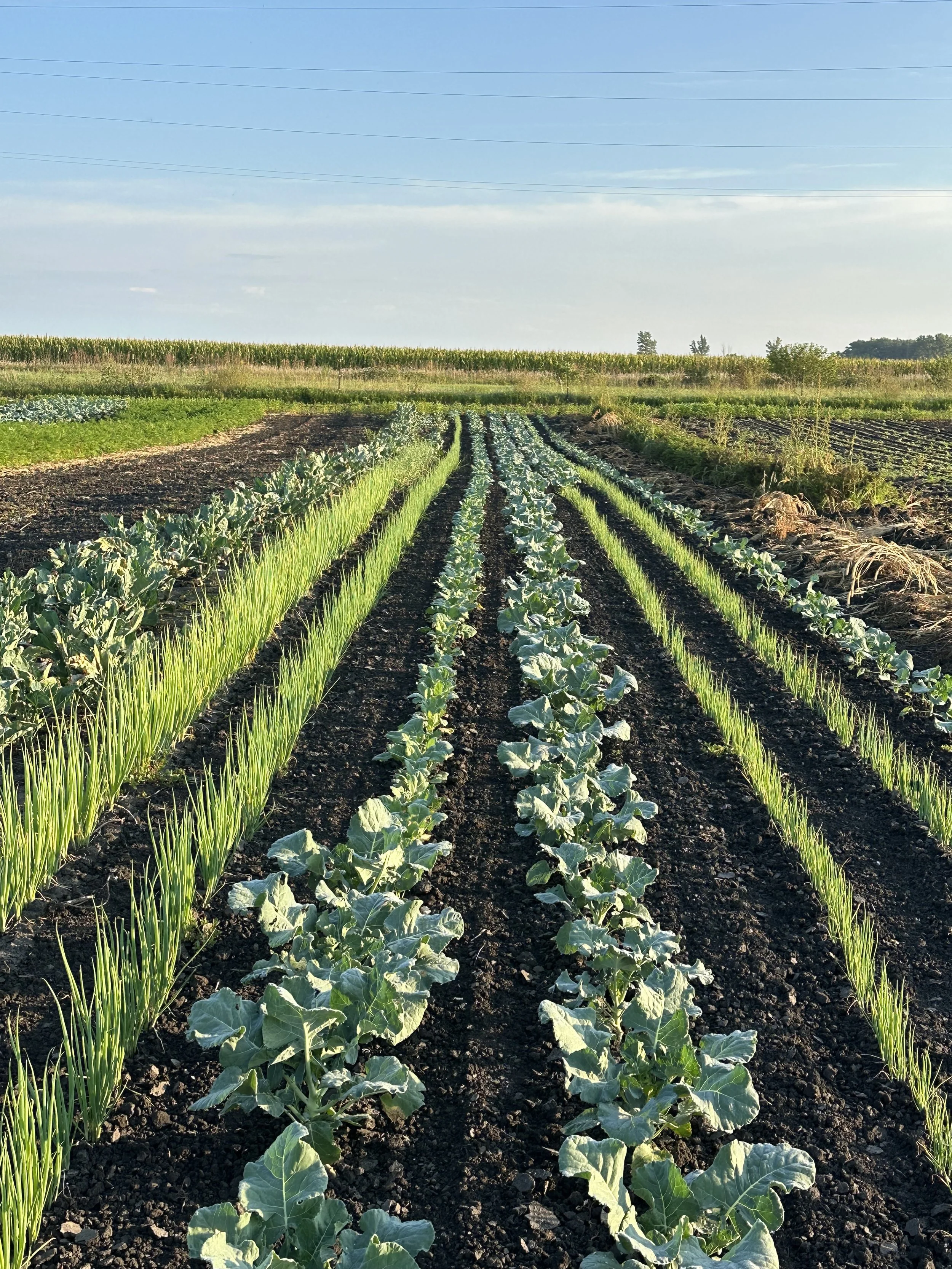
New Scallion, Broccoli, Cabbage, Snap Pea Varieties. We switch up some varieties almost every year. Usually if we feel a crop under performs or we notice that it doesn’t have the disease and/or pest resistance we look for. This year, we’re trying a new purple scallion that we’re really excited about. Green Onions/Scallions have been a hit so expanding on this made sense to us. In both the broccoli and red cabbage in particular we were unhappy with the disease resistance from last years varieties so we’re switching these up and we’ll see how it goes. We also want to grow more snap peas so we’ve added an early variety and another mid season variety. We’re hoping for TONS of peas this season!
Dropping A Few Crops. It’s always hard to stop growing a crop. With everything we grow we’ve heard from at least one customer that they love the crop and we hate to disappoint. But, the crops we’re dropping are incredibly unpopular and/or labor intense to grow OR have unsuitable replacement variety options. Crops we’re dropping this year include daikon radish, arugula, and french breakfast radish.
Entry Level Harvester positions. We’re adding a new entry level position where the only duty will be harvesting some of the more tedious crops to harvest like green beans, peas, & strawberries. We see this as a great opportunity for a high school aged person to get some on the job experience. We envision having a small harvester crew of 3-6 people who would work morning to harvest crops in season.
Self-Serve Farm Stand. We’re going to test out a self-serve farm stand this season to see how it goes. It will be pretty straightforward: we’ll have a small stand in the shade at the end of our driveway that’s stocked daily with fresh produce from our farm. We’re a little skeptical that this will work since our farm is located on a gravel road and is located 30 minutes from any larger city. Still, we’ve heard from enough neighbors and through our Facebook/Instagram that we think this is worth trying.
New Winter Tunnel. We’re planning to construct a new “winter” tunnel sometime in the next 1-2 years. We’ve got an application in with the National Resource Conservation Service (NRCS) for one of their programs that can help with the cost of constructing the tunnel and depending on how it goes construction could start as early as spring 2025. This tunnel will be designed for winter growing in mind and will be equipped with a double layer of greenhouse plastic for better r-value, a heater, and passive ventilation. We have very high demand for winter crops like lettuce, spinach, green onions and more and for most of these crops it’s just a little too risky to attempt to grow them without supplemental heating for the coldest nights.
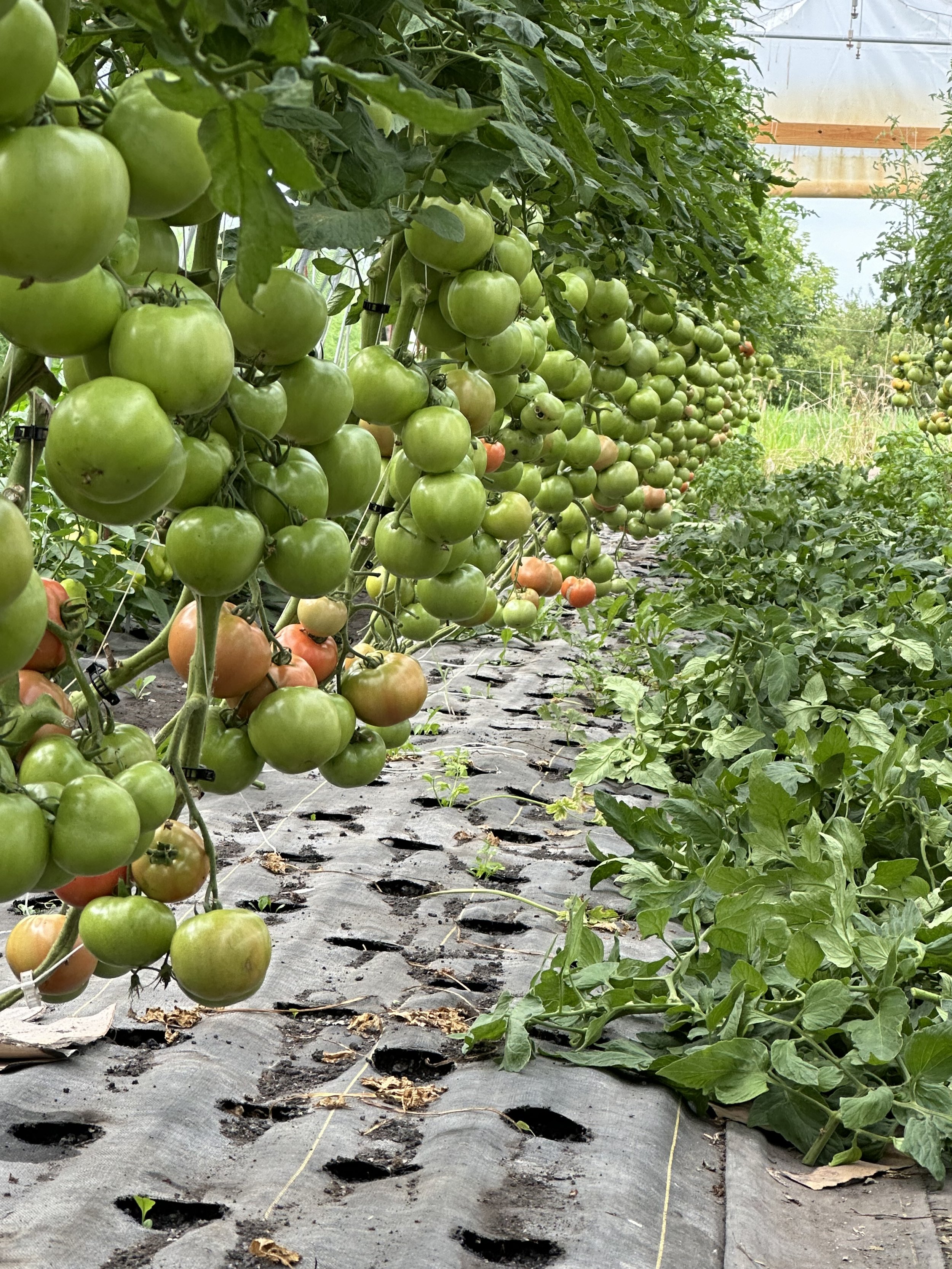
My favorite photo from 2024: our tunnel tomatoes after a pruning session. Look at all those tomatoes!
2024: Poignant Photos From a Transformative Year
As I revel in the New Year I am called to reflect on the previous year. 2024 marked a year of growth, unprecedented hardship, unprecedented gratitude and excitement for the future. We made some huge changes to our farm which felt very scary but ultimately were some of the best decisions we’ve made. Join me as I reflect on 2024 through photos and words.
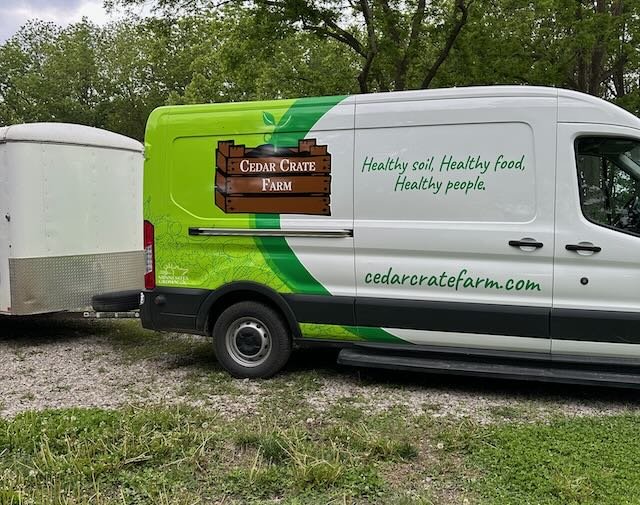
We Bought A Cargo Van!
One of the biggest changes we’ve made on our farm was the decision to drop our Tuesday CSA Delivery & Farmers Market to allow a better work-life balance. That decision turned out to be amazing for our farm and family: we had better work-life balance and more flexible time on the farm to focus on crop care.
Since we were now delivering 100 CSA shares in a single day along with our market inventory and wholesale orders we needed more cargo space. We purchased this van and put some money towards wrapping the van with our name, website, and motto. We love the van, the flexibility it offers and the additional cargo space!
Off To A Good Start
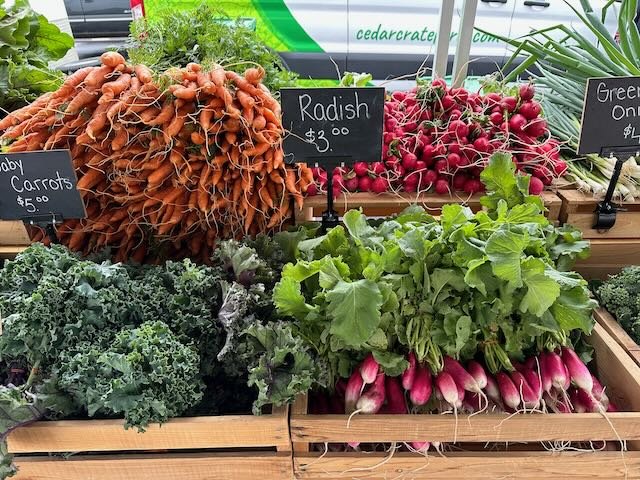
Our early season crops were absolutely amazing! We had beautiful carrots, broccolini, green onions, radish and of course lettuce available in May and early June.
It felt like the season was getting off to a great start. We were even lucky enough to witness the aurora borealis. It was magical and inspirational but then…


Unprecedented Rain, Flooding & Hail
In May - early July we received more rain than any point previously recorded. We had massive flooding, crop losses, delayed or missed plantings, increased disease pressure and to cap it all off on June 22nd a freak hailstorm absolutely decimated our field tomatoes & peas and caused significant damage to other crops. We were getting 2”-3” rains every 2-3 days. It was almost impossible to get our field work done.
I was broken. Hopeless. Looking for a city job. I thought it was all over…


Our Community Stepped Up
Just when we thought it was all over our CSA community and the greater Mankato community stepped up and helped out. We had so many CSA members offer to forgo their CSA share or reduce it’s size to help us out. We had community members who saw our photos on Facebook and Instagram show up to the market and literally bought everything we had brought. We had our friends over at the Wooden Spoon and South Central MN Food Recovery who bought hundreds of pounds of seconds, damaged crops, and the rare surplus crops this year. We are so grateful to be a part of this wonderful community.
Things Got Better
The rain finally stopped in July and things just got better from there. The crops that survived the flooding and hail did well. Especially our tunnel tomatoes! Our new day neutral strawberries were delicious and a huge hit! We’re doubling the amount we’re planting in 2025. We had a long streak of our busiest markets ever and our wonderful staff did an awesome job getting things harvested, washed and packed for market, CSA and wholesale!


We Got Away From The Farm
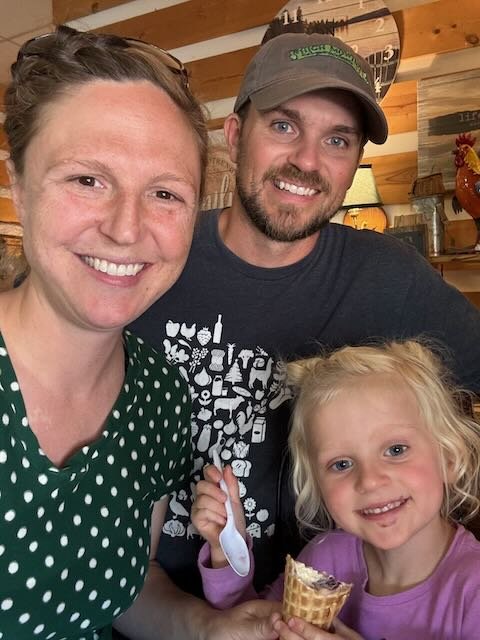
We always take a family vacation in early August and despite the hardship this year we still took our vacation. It was great: Addie and I went fishing and boating and we roasted marshmallows over the fire, slept in a tent, played in the water and went out for ice cream!

We Were on the Cover of Agriculture Magazine!
This was one of my favorites from this year. We were on the cover and had an article written about us in Agriculture Magazine - a publication sent to Minnesota Farmers Union members.
The article described our farm and the sort of “boots on the ground revolutionaries” our farming and food system needs. We’re proud, honored, and thankful to be a part of this.
p.s. - You should consider becoming a Minnesota Farmers Union member. You don’t need to be a farmer to be a member and they do a good job of advocating for farms like ours.
Our Staff Are the Best
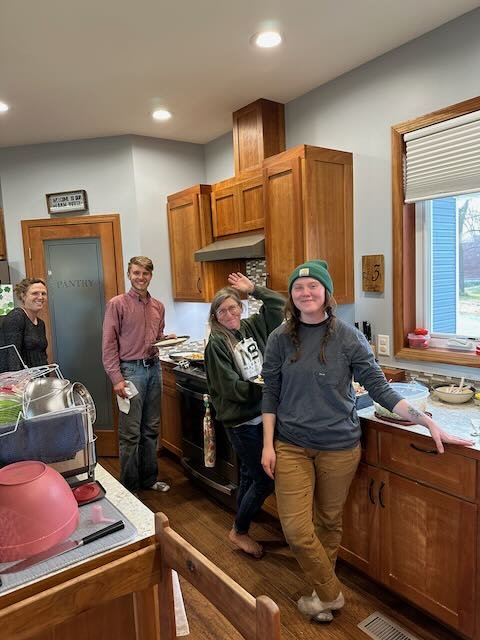
We had our annual staff appreciation supper late in the season and this year we were even more appreciative of our staff than ever before. They all stepped up and came to the farm with a great attitude despite the difficult situation the farm was in.
Their smiling faces greeted you at the Farmers Market and when you picked up your CSA share. We’re so lucky to have great staff here!

Our Farm and Family Grows in 2025
We can hardly wait to welcome baby Zimmerli to our family this month! Addie is already practicing putting diapers on some of her stuffed animals and babies in anticipation of becoming the best big sister ever.
Our farm will grow too. Not just vegetables but people too! We’ll be adding a farm manager position and expanding our farm crew to keep up with the produce that this little farm grows.
Thank you for being with us in 2024 and we can’t wait to share 2025 with you!
Happy New Year!
What do you do in winter?
“What do you do in winter?” It’s a common question I get this time of year and the answer is a lot! It’s true that winter is a much slower time of year for us here on the farm but we stay pretty darn busy. Especially now as our winter offerings have expanded. In this weeks farm update I’ll go through what we do here on the farm each winter season.
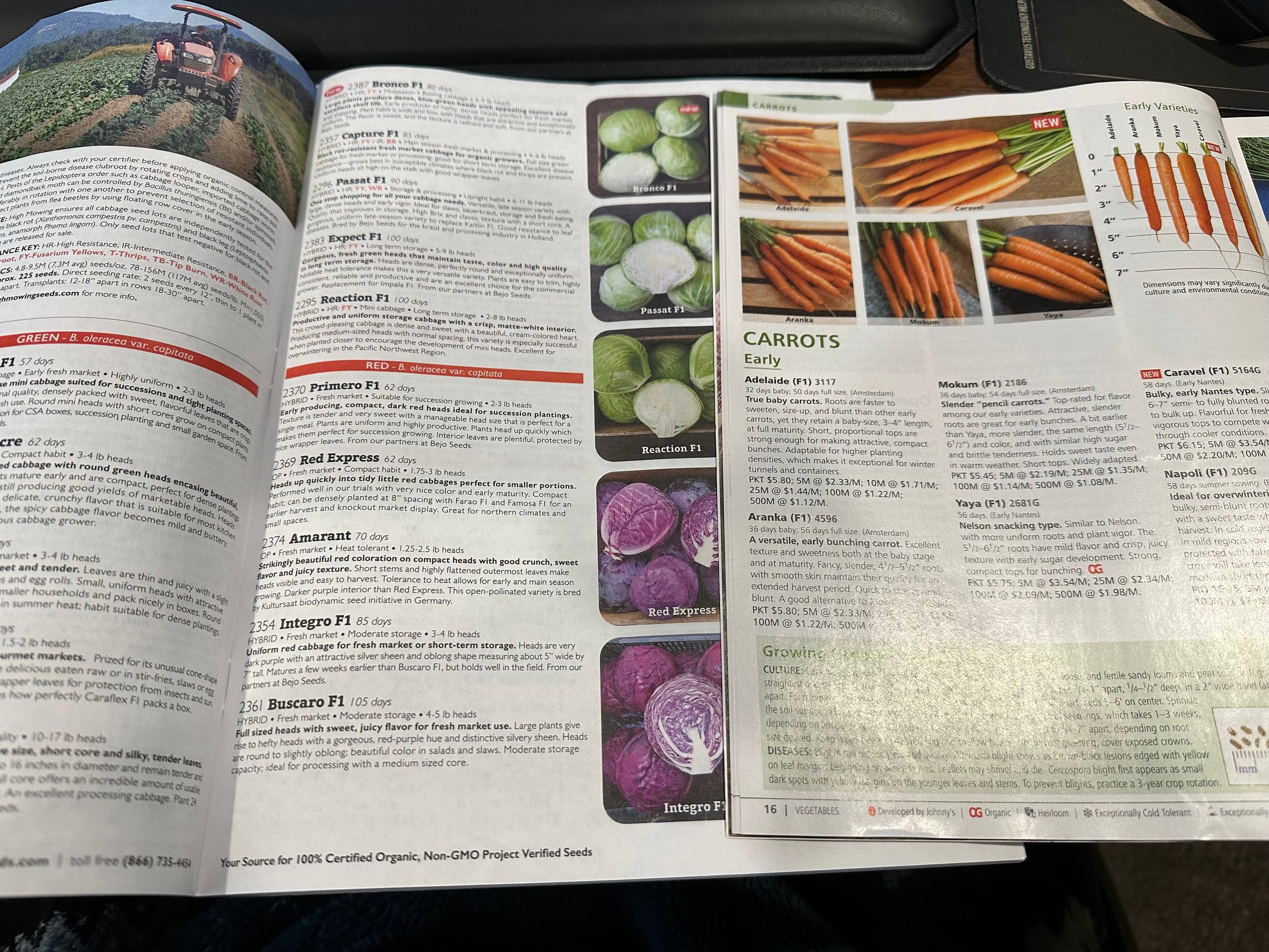
A couple seed catalogs!
Planning!
I'm a planner and I love putting together a good plan and look forward to executing the plan each season. The biggest and most important piece of the planning work I do is our crop plan. We grow over 90 varieties of produce and each year I go through each variety and assess if it's meeting our expectations for flavor, consistency, yield, and overall appeal. Some things get removed entirely from our crop plan (daikon radish, I'm looking at YOU). Others get replaced with a different variety. I also look at the timing of our successions and ask myself if I think we can grow something earlier or later? Did we run out of something consistently? I tweak our planting dates and quantities accordingly.
We also look at our financials and put together our financial plan for the year so we have an idea of how much we need to grow and how much help we need to make it happen. Once the financial plan is done we work on our plan for our farm crew for the summer.
The first photo is a couple of our seed catalogs from a couple years ago. There are hundreds of varieties to consider which seems like a lot but I love pouring over the catalog and thinking about what's possible and what you all would love to see us grow. The second photo as a screen grab of part of our crop plan. The blue bars represent the "off season", the thin grey bar represents when the crop is in the ground but not ready for harvest, and the thick grey bard is the harvest window for the crop.

Seed catalogs!
Winter Crops!
We've been dabbling with winter growing for the past 3-4 seasons as we've built out tunnels and other infrastructure on our farm to allow for some degree of year round growing. The crop care is A LOT less demanding in the winter. We generally don't have to deal with weeds in the winter and most of the work for our winter crops is done in the late fall.
Spinach is our main winter crop. It's incredibly cold hardy surviving temperatures well below zero. It's also incredibly delicious in the winter as the plant creates more sugars to help it deal with the cold temps. We're harvesting, washing, packing and selling spinach for most of the winter!
Microgreens! Micros are a relatively new crop for us but they've been a big hit. We grow these completely indoors in our heated pack shed so we have a continual supply of them year round.
Storage Crops: Carrots, Beets, Potatoes, Cabbage! These crops are stored in our walk-in cooler at optimal conditions allowing them to be stored well into the winter.
Experimental Winter Crops: Lettuce, Green Onions, Bok Choy, Mizuna, Tat Soi, Celery, Komatsuna and Kale. We're testing these crops out this year trying to understand what the extremes are for these crops.

The winter tunnel in early fall.
We slow down.
There's no two ways about it; there just isn't as much work to do in the winter. That's ok. We work REALLY hard from May-October to bring fresh, sustainable, delicious, produce to you and so we're ok with slowing down a bit during the winter.
We are especially looking forward to really slowing down once baby number 2 arrives in January. We'll soak up new baby snuggles and give Addie extra attention. There may be more daddy-daughter donut days in the future!
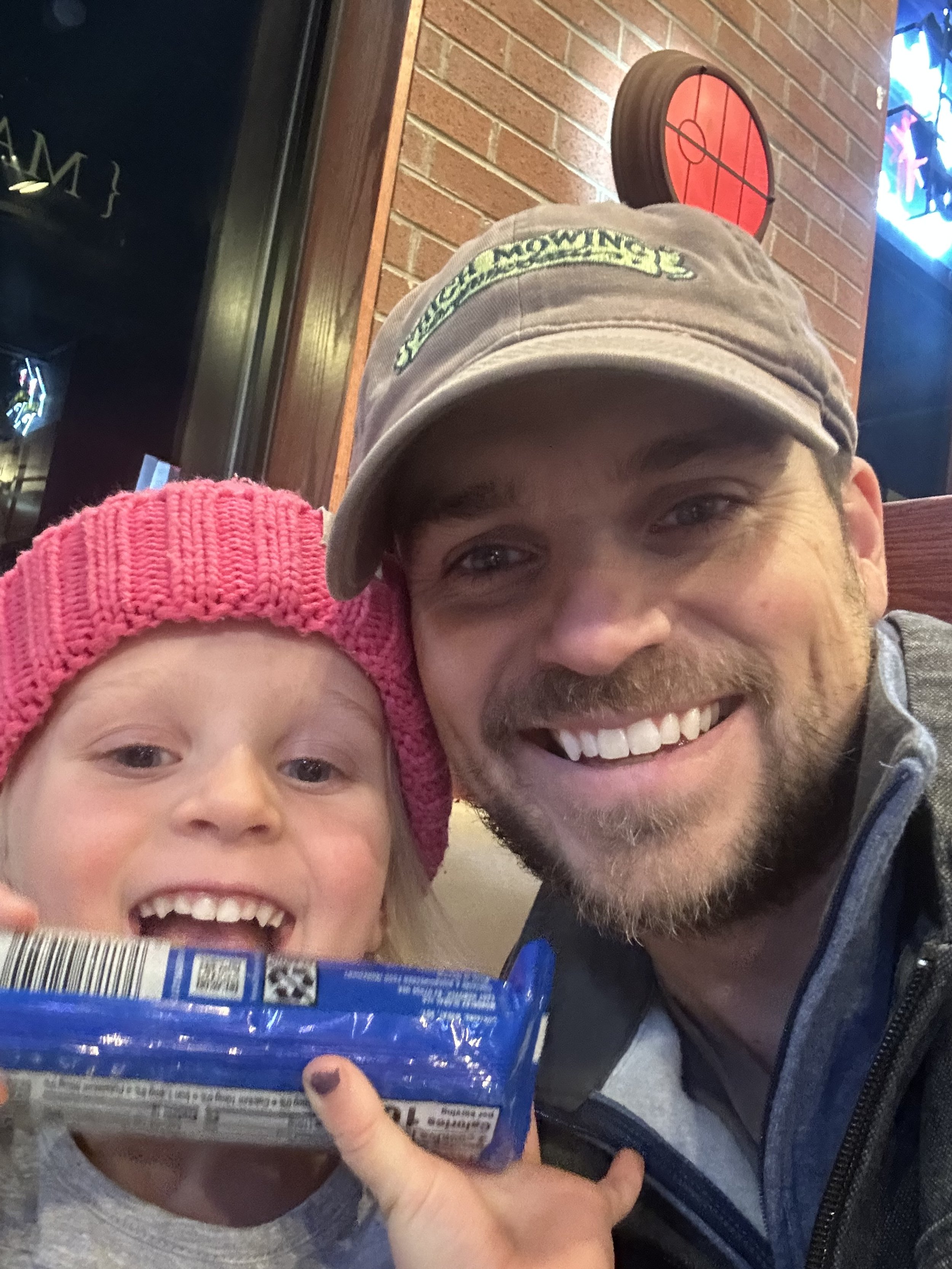
Daddy-daughter time!
Hobbies!
Winter is time for hobbies. Two of my biggest hobbies are woodworking and video games. Woodworking for me is both a creative outlet but also another way to keep moving in the winter. I like to build furniture and larger pieces but dabble in smaller work from time to time.
Video games are a bit of a vestige of my younger self and how I stay connected to some life long friends. I find them to be relaxing. It's fun to play a video game where at the end of the day your choices within the video game don't really matter. A welcome reprieve from small business ownership where your choices DO matter monumentally.

My latest hobby project - solid white oak kitchen chairs
The Great Garlic Mulching of 2024

Pretending I’m thrilled to be itchy! All kidding aside it was a beautiful day to be outside taking care of a crop we love!
Garlic Mulching either marks the beginning of next season or the end of the current season. I’m not sure which. This year, it was the absolute last outdoor field project we’ll do this year. It’s also the capstone to planting garlic which is the first crop we plant with intent to harvest in 2025. Either way, it’s a big project and I’m happy that it’s done. Here’s why and how we mulch our garlic.
Mulching garlic is a way to provide some extra thermal protection to the garlic cloves we planted just a few weeks ago. We all have experienced how climate change is making extremes more extreme and temperature fluctuations seem to roller coaster all over the place these days. Mulch helps insulate the garlic and provides some thermal regulation from the extremes we experience.
We have heard that it’s possible to grow garlic without mulching and it’s something we’ve considered but ultimately have decided that the mulch is too beneficial to not use. For us, the main additional benefits include weed suppression, moisture regulation, and the addition of more organic matter. Weed suppression is kind of a no brainer: - the less weeds our garlic has to compete with the better it grows and the less time we need to spend hand weeding it. Mulch also helps regulate and retain moisture which is particularly important in dry years. The mulch helps keep the moisture in the soil and greatly slows down how fast the soil dries out. Finally, the additional organic matter is beneficial to our soil. The vast multitudes of soil microbes feed on soil organic matter. The more organic matter we can feed them the better as they help improve our soil by adding nutrients, improving water infiltration, and reducing runoff. As we like to say: healthy soil, healthy food, healthy people.
We use either straw mulch from wheat or oats or cornstalk mulch from baled cornstalks for our mulching material. This year it took us about 40 small square bales to cover our garlic plot in about 4” to 6” of mulch. It’s a pretty labor intensive process. The small square bales we use are about 40# each and they are all torn apart and spread by hand. We stage the bales over the garlic plot and then tear them apart and spread them out. It’s slow, itchy, and tedious work but it’s worth it to keep our wonderful garlic tucked in for winter.
Garlic has become a very important crop for us and it’s something our CSA members look forward to every year. Not only is garlic delicious but it’s also very healthy including some evidence that it can help lower cancer risk and has anti-inflammatory properties among many others. Check out this article from the Cleveland Clinic regarding the health benefits of garlic.
Ok! That’s the last blog post on garlic for a little while. We’re excited to continue to offer this pantry staple to our CSA Members, our online store and our farmers market stand!
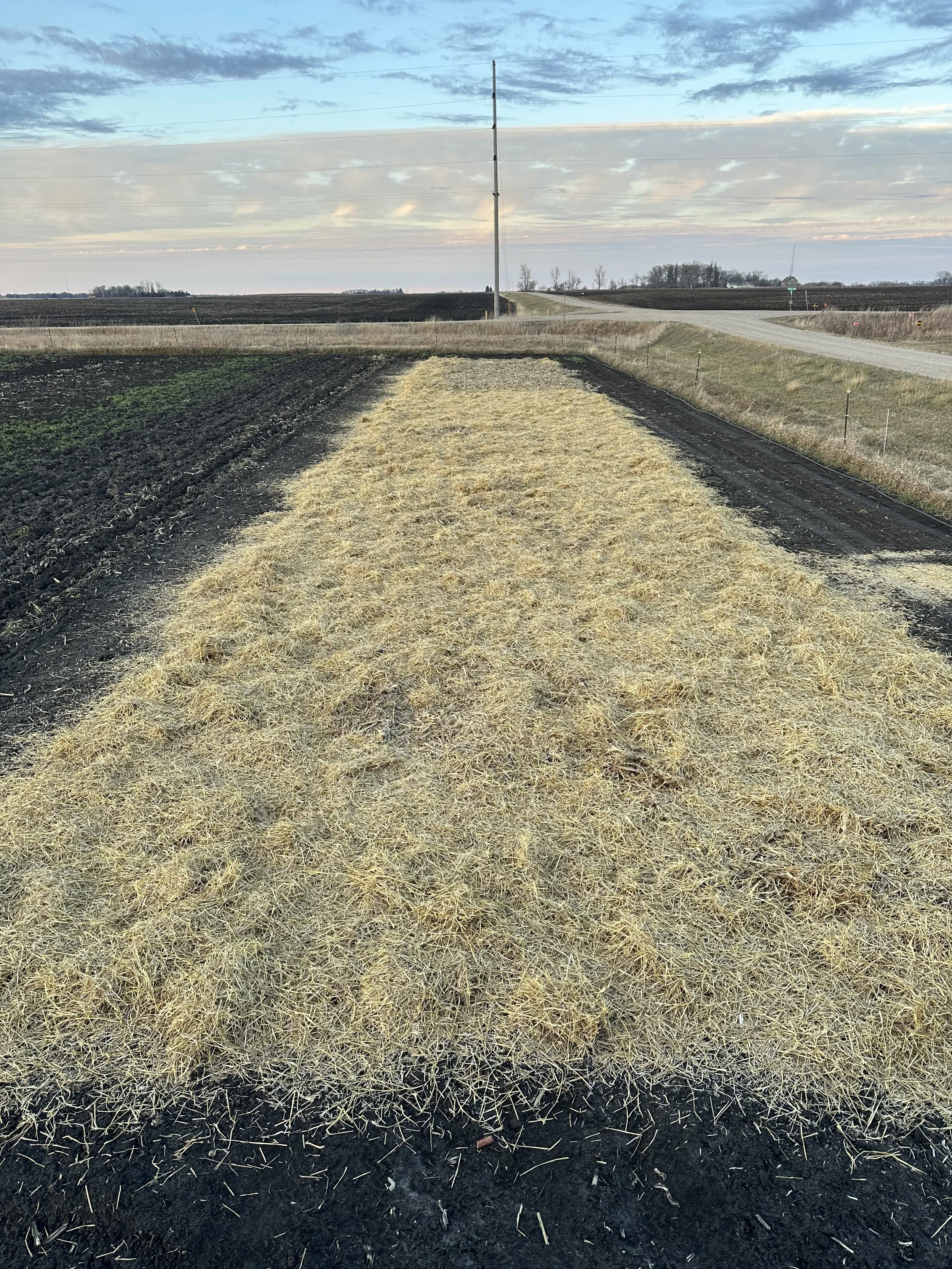
The finished product!
Garlic Planting 2024
Garlic is the first crop we’re planting for our 2025 season and will be one of the very first crops to pop up in bright green rows early next spring. We’ll walk you through why we plant garlic in the fall, how we plant it, and why we’re excited to continue to offer garlic as part of our CSA and farmers market offerings.

Garlic emerging from it’s mulch in mid-April.
So why do we plant garlic in the fall?
Planting garlic in the fall gives us a number of benefits. First, and most importantly, it improves the average size of the garlic bulbs by around 30%. We frequently get comments about how large our garlic is and planting garlic in the fall is one reason for the large bulbs. Second, it’s nice to check something off our planting list ahead of time. The spring is an extremely busy time of year for us and the fluctuations in the weather can have a huge impact on our farm and the ability to plant things on schedule. Having garlic planted going into the season helps reduce that workload and reduce the risk that we might not get a garlic crop. Finally, we’re less busy in the second half of October which allows us to get this job done without worrying about what other jobs need to be done on the farm.

Garlic cloves ready to plant.
How we plant garlic.
Prep The Soil We prep the soil by preceding the garlic with a cover crop. About a month before we want to plant prepare the soil by spreading fertilizer and then incorporating the fertilizer with our tiller. The tiller has several important functions in that it incorporated the fertilizer into the soil, chops up and incorporates residue from cover crops, and leaves the soil light and airy so that we can plant the cloves easily.
Mark Our Rows We use a “dibbler” attachment for our wheel hoe to mark both where the rows of garlic should be and where each individual clove should be.
Plant! It’s a slow process but we plant each clove of garlic individually. This is because the orientation of the clove is important. The root side of the clove must go down for optimal growth.
Mulch! Before deep winter sets in we apply a layer of mulch to our garlic. We typically use straw or corn stover to apply around 4-6” of mulch. Mulching our garlic helps protect the garlic from extreme temperature swings and acts as a weed barrier.
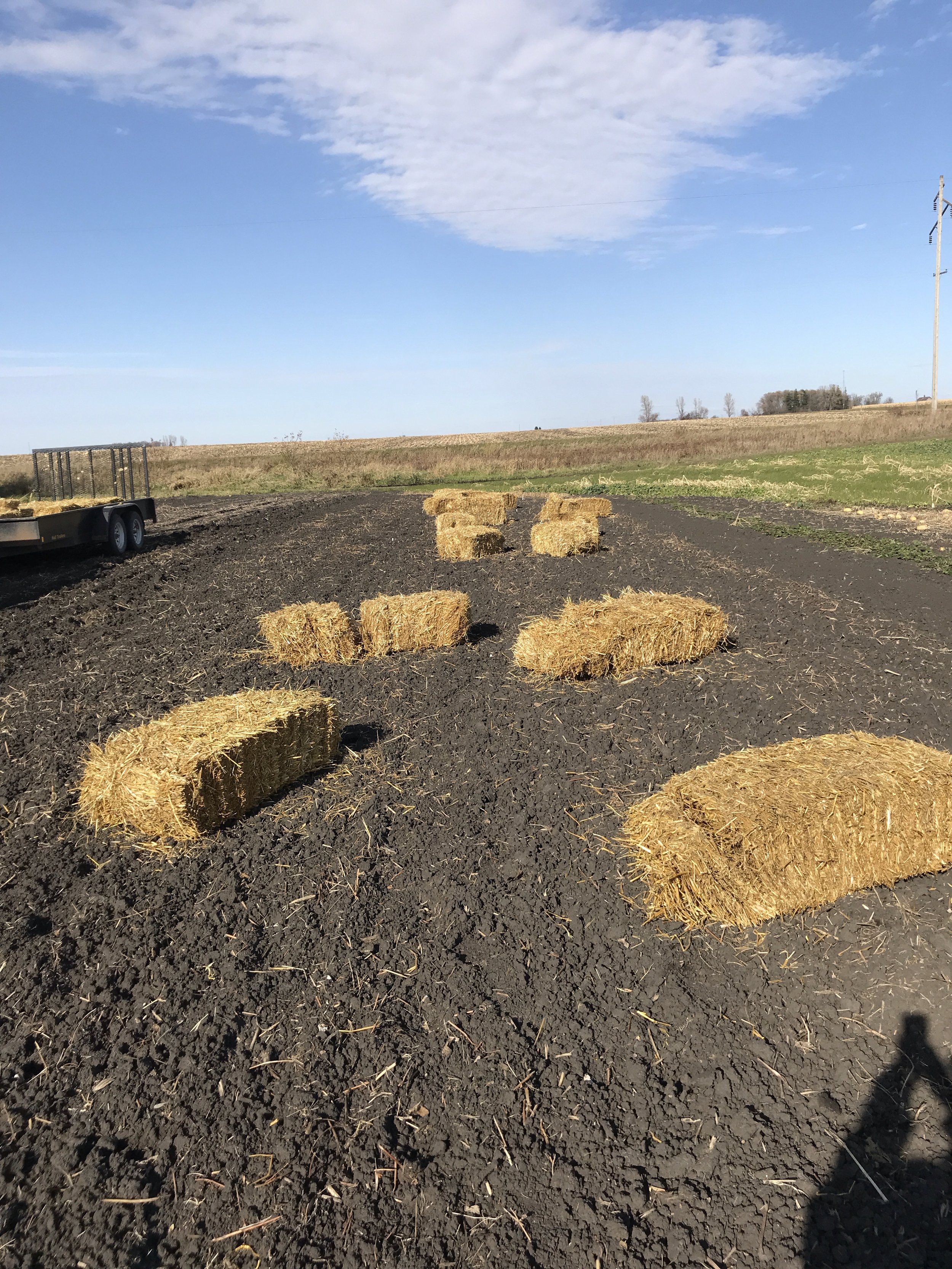
These straw bales will be evenly spread in a 4-6” layer to mulch our garlic.
Why we’re excited about garlic!
Garlic is an important crop for our small scale farmers market and CSA farm. Not only is garlic absolutely delicious in so many applications it’s also really good for you. Don’t take our word for it, check out this blog post from Cleveland Clinic regarding the health benefits of garlic. Garlic can help with everything from helping to prevent some forms of cancer to anti-inflammatory to managing blood pressure.
We do believe that healthy soil grows healthy food that when consumed makes for healthy people.
Our storage & organization hack!
One of the least glamorous but most important jobs on the farm in the fall is cleanup, storage, & organization. It’s a huge undertaking every fall but everything we’re able to do now is time saved in the spring and less wear and tear on our equipment, supplies & tools.
Fun fact: storage & organization is my jam. I love to have everything neat & tidy and for everything to have a home so that I always know where something is. But with the hustle and bustle of farm life during the midst of the season things get jumbled and cluttered. The best example of this is with our landscape fabric.

Landscape fabric is a tool we use a lot on our farm but it’s one that can be difficult to manage in storage. You see, we have a variety of crops that we grow in landscape fabric that have different spacing requirements which means that we have landscape fabric with different hole patterns for different crops. Nothing is more frustrating than grabbing a run of landscape fabric and bringing it down to the field only to realize the spacing isn’t correct for the crop you’re planting.
We developed a labeling system but we still had piles of landscape fabric in random locations in our storage shed so we decided to solve that problem. We built some shelving out of scrap lumber on the farm and built these great shelves. Then, we went through all of our runs of landscape fabric and sorted them into their respective hole spacing. The result tickles my brain in all the right ways: a neat, organized landscape fabric area in our storage shed where anyone could quickly figure out what’s what.

It feels good to have this project checked off the list and to have this system in place for seasons to come!
Seeding, Weeding and Thanksgiving Shares!
Wow! Where did May go?! It’s been a busy month here on the farm and we’ve been working on a lot of different projects. We’ve also been working on a new holiday share for Thanksgiving. Read on to learn more!
Direct Seeding

Our push seeder with row marker.
Direct seeding refers to planting seeds directly into the field and relying on the soil and rain to germinate said seeds. This is opposed to transplanting which is where we plant a seed we started indoors in a more controlled environment. More on that below.
Unsurprisingly, May is by far the busiest month for seeding for us. This is for a couple reasons. First, we utilize succession planting so that we have a steady supply of vegetables throughout as much of the season as possible. This means that even though we can plant things like lettuce, spinach and radish in April, we usually have more successions of plantings in May and even June. Additionally, we’re planting some of our warm season loving crops in May which include basically anything that grows on a vine like watermelon, cucumbers and squash as well as sweet corn, beets, carrots and more! These two factors contribute to May being a super busy month for planting.
Transplanting

Brussels sprouts, napa cabbage, herbs and cabbage transplanted into landscape fabric which serves as a weed barrier.
Transplanting is an important part of our crop plan each year. We transplant certain types of vegetables for several reasons. First, starting the seed indoors in a controlled environment gives our seeds the best chance at getting off to a really good start. This is especially important for crops like lettuce and broccoli that have a hard time out competing weeds. Second, it affords us a longer harvest window for crops like peppers and tomatoes which are typically ready later in the season. Indeed, some crops like peppers would not produce anything at all if it weren’t for starting indoors. Finally, we because we are planting in a controlled environment we can achieve extremely high germination rates meaning we waste less seeds.
The biggest tradeoff for transplanting is that it’s much more labor intensive. This balances out some with reduced labor from weeding but it is still a factor. Other tradeoffs include increased cost since we need trays to hold the plants, growing medium, and a place to put the plants after they’ve germinated but before they’re ready to be planted outside.

Our transplant tunnel which holds our transplants until they’re ready to be transplanted outside.
May is a big transplanting month as well. We transplanted several successions of lettuce and broccoli as well as cabbage, brussels sprouts, napa cabbage, peppers, eggplant and tomatoes. I haven’t done the exact math but it’s well over 3000 transplants so far this year! Crazy!
Weeding
Weeds are always an problem that we face on our farm. Because of the shortage of rainfall in the first half of May the weed pressure was pretty light. However, the second half of May produced adequate rainfall and the weeds sprung up as fast as our crops did! We’ve been hard at work keeping the weeds at bay using a variety of cultivation tools including our wheel hoe, walk behind tractor, long and short handled hoes and as a last resort good old fashioned pulling weeds by hand.

Our walk behind tractor with finger weeders. The yellow fingers flick small weeds out of the rows without damaging well established plants.
We’ve talked about our walk behind tractor before but it’s worth bringing up again because of the impact it’s have on our farm. We are already reducing weed pressure by utilizing the walk behind tractor and, as a bonus, it’s easier on our bodies as well.
Chicken and Pasture Update
Our chickens are acclimating really well to their new co-op and pasture based life. Admittedly, it took some time and training for the chickens to realize there’s plenty to eat in the pasture and for them to get used to the automatic door on their chicken coop but now that they’ve learned their new setup they are looking healthier than ever and laying TONS of eggs!

Our chickens LOVE the grass!
Our pasture that we seeded in early May is also looking really, really good. The field has gone from a bare field to a sea of green. The rainfall in the later part of May really helped the pasture grow quickly and we think that in a month or so that we will be able to move our chickens onto the new pasture where there’s plenty of clover, grass, bugs and more for them to eat. We feel really good about converting convention farmland into perennial pasture!

Our pasture is GREEN! Now it just needs to get big.
You might be wondering where our chickens are if our new pasture isn’t established yet. The answer is that we have around an acre of CRP land between our produce field and a drainage ditch that runs along the township road. This is where our chickens are currently and although the CRP land isn’t 100% ideal it’s a lot better than being confined into a chicken barn!
Holiday Shares
And now for the most exciting news; we are raising turkeys for a special, one time holiday shares that will be a nearly complete meal for your Thanksgiving gathering! This share will include one pasture raised turkey that we estimate will be between 12 and 18lbs, potatoes, carrots, beets, winter squash, lettuce, garlic, carrots, and more. Plus, this share will be fully customizable so you can tweak your quantities to get the perfect amount for your gathering. These shares will be delivered to your residence the Saturday before Thanksgiving or available to pick up on the farm. To sign up for your share today visit this link: https://www.harvie.farm/farm/cedar-crate-farm/signup

Mmmmm turkey!
Spring has sprung! Here's what's happening on the farm!
Wow! It’s hard to believe it’s the end of April already but here we are. It’s been a busy month on the farm and we’ve been tackling a variety of projects around here. Here’s what we’ve been up to this Month.
Planting


Caitlyn helped us get the first potatoes and green onions planted back in early April. This is the earliest we’ve planted potatoes since our farm started! We planted three kinds of potatoes for you this season including our popular and beautiful pink fingerling potato, our early red potatoes and our “if it ain’t broke don’t fix it” white potatoes.
Dan was also able to start direct seeding some of our early season crops including radishes, arugula, spinach, lettuce, kale and more. New this year are hakurei turnips which are also known as salad turnips. We hope this will spice up our early season offerings.
Transplanting into the Tunnels
We’ve also been hard at work transplanting crops into our 3 caterpillar tunnels. We’ve transplanted our first two plantings** of lettuce and kohlrabi. We’ve also direct seeded lettuce, cilantro, peas, spinach, carrots and beets into our tunnels.
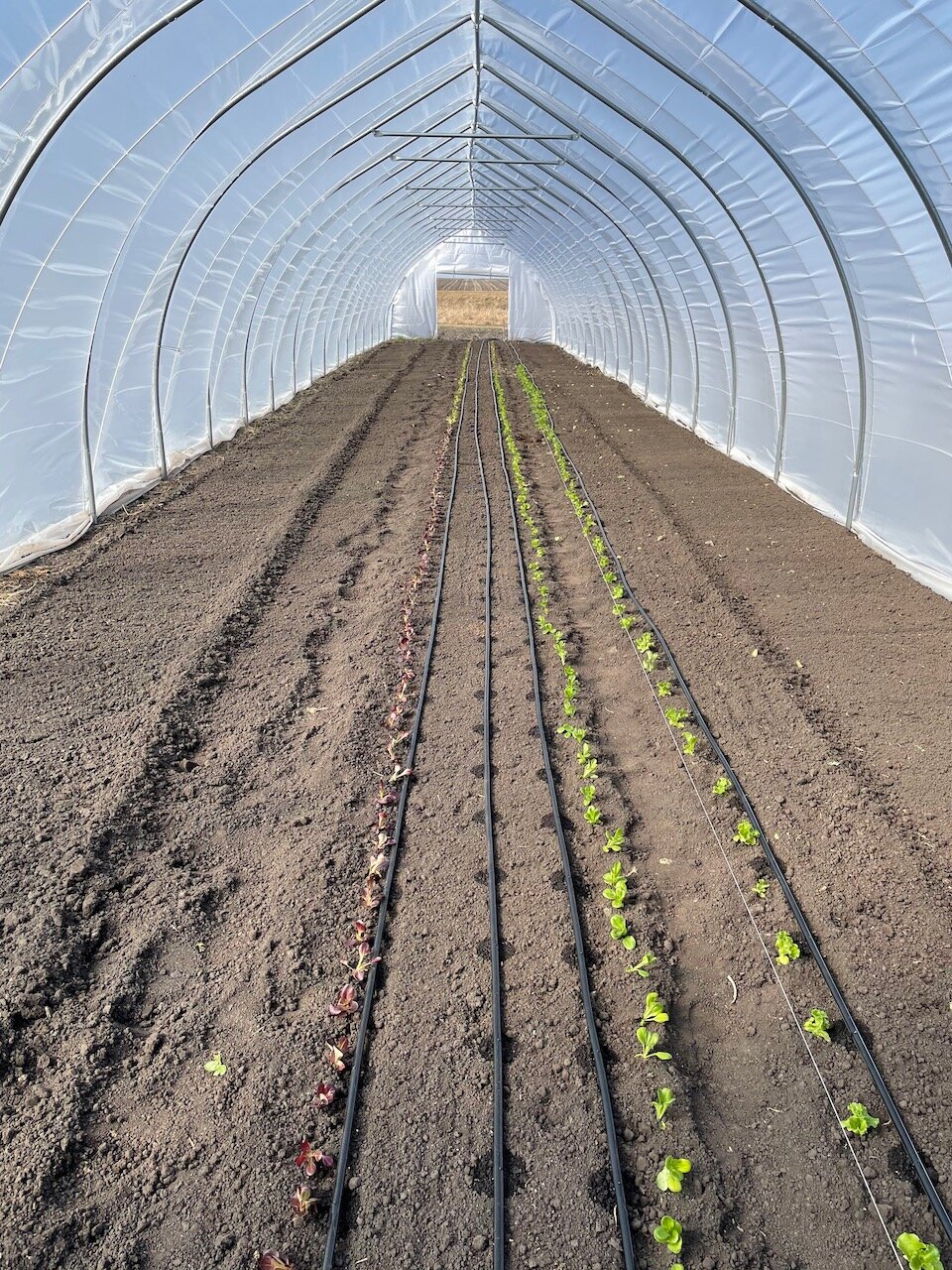
Setting Up Irrigation
No doubt about it; it’s been dry this April. We’re lucky to have a quick recharging well and excellent equipment for irrigating our fields. A lot of farmers are concerned that this season will be a season of drought. We are too. Luckily, we made an investment into some irrigation infrastructure that will allow us to water the majority of our crops in the event of drought.
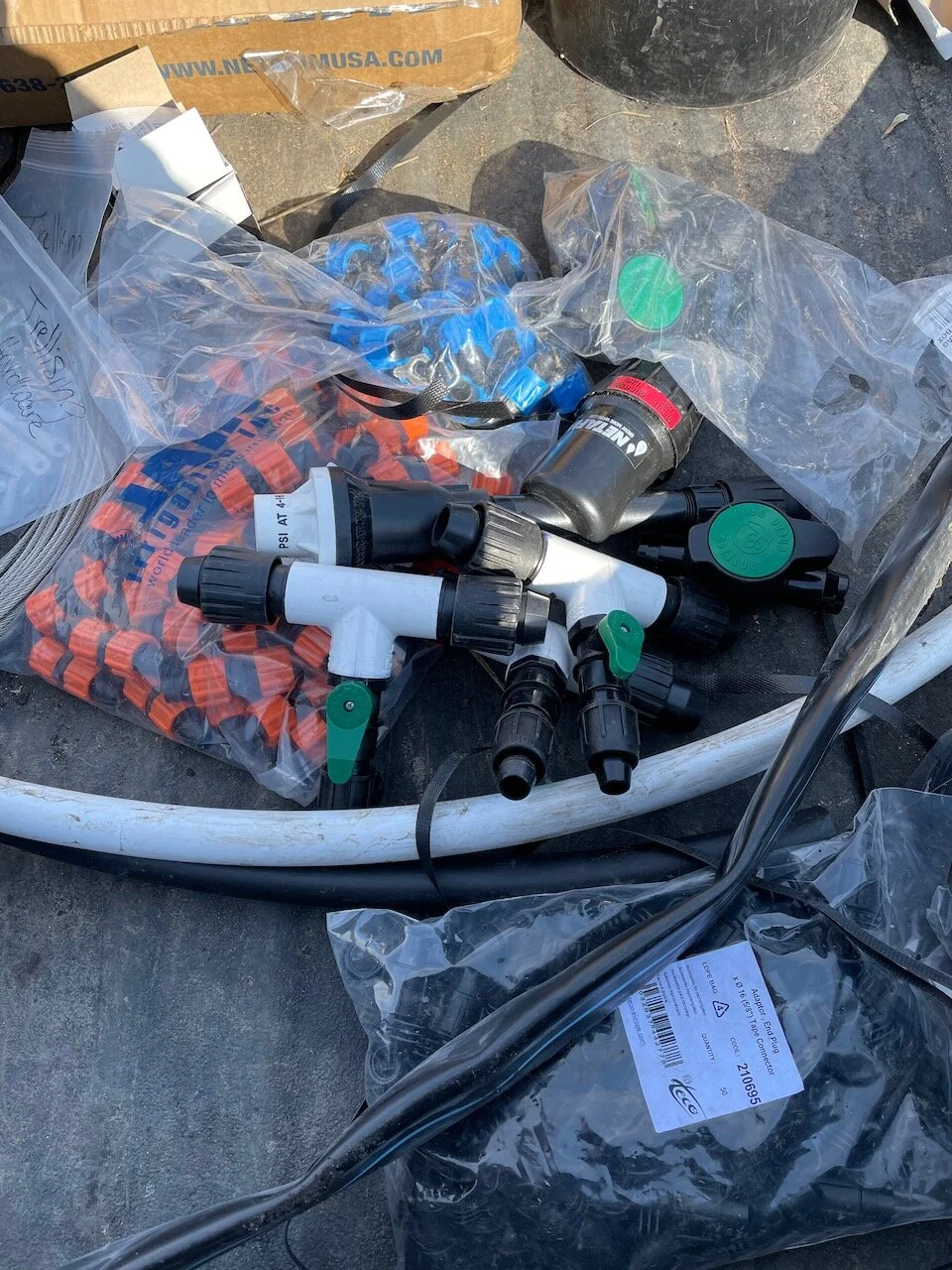


Setting up irrigation is a bit like building with Legos and Dan has tons of experience building with Legos. We have several components of our irrigation system including our mainline which runs from our hydrant the length of our farm. From this mainline we’re able to connect in both drip irrigation and overhead irrigation.
The Chicken Coop
This has been a project that has languished this year but we’re happy to share with you that it’s nearly completed. As we mentioned in our last blog post this coop has several improvements over our last coop the biggest of which is that it’s on wheels allowing us to easily move it around our pasture!
Speaking of pasture, Dan also seeded our pasture. We are converting roughly 2 acres of what had been corn and soybean rotation for decades into permanent pasture for our chickens and whatever future livestock we decide to add. This was a fairly big project requiring nearly a full day of tractor work. First, Dan had to work the rough cornstalk ground with a small tractor mounted field cultivator. This broke up the large clumps and helped level the ground. Next, Dan spread about 1 ton of fertilizer using our tractor mounted fertilizer spreader. Then, Dan added the pasture mix to the spreader and spread the seeds over the pasture. Finally, Dan took a harrow section and lightly worked the ground one more time which helped get the pasture seeds incorporated into the soil.


March Farm Update

March is a time of excitement on our farm. The snow has mostly melted, the first plants of 2021 have been seeded indoors, we’re finalizing our plans for the 2021 growing season, and getting our equipment ready for another year of growing for you This March has been unique for us. Lara’s maternity leave ended at the end of February and I have begun caring for Addie full time while also trying to keep up with things on the farm. For a first time dad it’s been a little tough but I have been loving the quality time with Addie and I can’t help but think about having her help with all of these farm tasks in the future!


The biggest project we’ve had so far this month is starting our seeds. We have a robust seed starting setup with several key components. The first is our germination chamber which we built with a reclaimed upright freezer, a couple crock pots, a temperature controller and a humidity controller. This keeps the space inside the chamber at a steady 78 degrees Fahrenheit with 95% humidity which are ideal conditions for starting seeds. We have lettuce, thyme, cilantro, oregano, kohlrabi, broccoli, tomatoes, cabbage and peppers all up and we have a goal of transplanting the cold tolerant crops like lettuce and kohlrabi into our tunnel around the first week of April.
You can see the germination chamber in the upper photo with some of our seed starts. Notice the crock pots at the bottom of the chamber that help keep our temperatures consistent. Below is a recent photo of lettuce and cilantro on our grow rack. We hope to transplant the lettuce sometime during the first week of April!

End walls and plastic on the first tunnel back in early March.
Another big project we’ve completed with the help of our farm hand Caitlyn is getting the end walls and plastic over our caterpillar tunnels. This project involved waiting for a very calm day as even a 10mph wind is enough to cause a the large sheets of plastic to blow uncontrollably. This can be difficult in March as the seasons change. It seems we have more windy days than calm days this time of year!
Finally, we’ve begun construction on our new chicken coop! We’re making some improvements over the first chicken coop we built including building the coop on the frame of a trailer so that we can easily move the coop to fresh pasture. Unfortunately, the skids on our last coop did not work well. It was very difficult to move with the tractor and we ultimately left it in one place. Other improvements include a mesh floor so that the chicken poop will fall onto our pasture fertilizing it and keeping the chickens clean! We’re hoping to finish building the coop in the next 2 weeks. Stay tuned to Facebook for more pictures!


What's happening on the farm in February?

There's no doubt about it: during the winter there are way less "Instagramable" moments on the farm but that doesn't mean we haven't been busy! Read on to see what we've been up to this winter.
Baby Addie
Our precious baby Addie was born on December 22nd in 2020 and we've just been loving every minute with her. She's growing so fast and somehow is getting cuter every single day. Addie is keeping us very busy and we're so lucky to have this slow time of year to spend with her

Crop Planning & Seed Order
We spent a lot of time updating and adjusting our crop plan for this season. We've added two new 16' by 100' tunnels to our farm which more than quadruples the amount of tunnel growing we will be doing this season. As such, we had to develop a plan for which crops will go into those tunnels and which crops will be planted after the previous crop is harvested. We keep track of all of this using Google Calendar and Google Sheets that are updated yearly.
Equipment and Supply Orders
We have been ordering the necessary supplies and equipment to make our 2021 season a success. One of the things we're most excited about is our new walk behind tractor and cultivation setup. This tool will help us reduce the amount of hand weeding we have to do on our farm saving us time and our backs! Check out this Youtube video below:
We've also ordered components for an irrigation system since we finally have a well on our farm. This system includes both drip irrigation and overhead irrigation. We use both forms of irrigation on our farm in strategic ways to enhance the quality of our produce. Other supplies we've ordered include tomato stakes, packaging materials, and fertilizer.
Marketing
We've also been hard at work getting our CSA shares marketed and sold. We increased our total shares from 50 up to 80 this year and have about 25 left to sell. They're going really fast this year so if you have a friend or neighbor that's considering signup up, they should do it soon!
We're excited to be starting plants in just a few weeks. It will finally feel like winter is coming to an end and that spring will be here soon! We love the slower pace of winter but we can't wait to get our hands dirty again!
Thank you for supporting our farm this season!