
Landscape Fabric: The Good, The Bad, The Ugly
I have a bit of a love-hate relationship with landscape fabric. I love that it dramatically reduces weed pressure AND keeps our crops clean. I hate that it’s plastic and managing it can be difficult to say the least. Last week, we laid down landscape fabric in our field pepper & tomato beds so it’s the perfect time to talk about how we manage it, why we use it, and some tricks we use to make it easier to deal with.
Landscape fabric is made from woven plastic strands that allow air and water to pass through but block weeds from growing (for the most part). We use it for two main types of crops lettuce & long season crops like tomatoes, peppers, eggplant & kale. While lettuce is a very short season crop, it’s still really nice to suppress weeds so they don’t end up in your salad and keeping our lettuce clean is another big plus. On our longer season crops the main benefits are weed suppression and reduced disease pressure. Many diseases that would affect our tomatoes are soil-borne so reducing soil splash up from rain events helps reduce disease pressure.
Landscape fabric can be re-used for around 5-7 seasons in our experience with careful management. We typically fold landscape fabric up neatly, tie it with twine so it stays neat, label it so we know what length, hole spacing and the date it was last used and store it in our storage shed until the next season. To keep landscape fabric fastened down to the soil we use hundreds of staples about 8” in length spaced every 2-3’ to keep the fabric in place.
When brand new, landscape fabric doesn’t have any holes. We created these custom plywood templates with different hole patterns and spacing. This allows us to quickly and accurately burn holes into the fabric at optimal spacing for the crops were growing.
The Good
Weed suppression, disease reduction, cleaner crops
The Bad
Labor to manage, lots of staples, you need a calm day to install it.
The Ugly
Plastic :-(
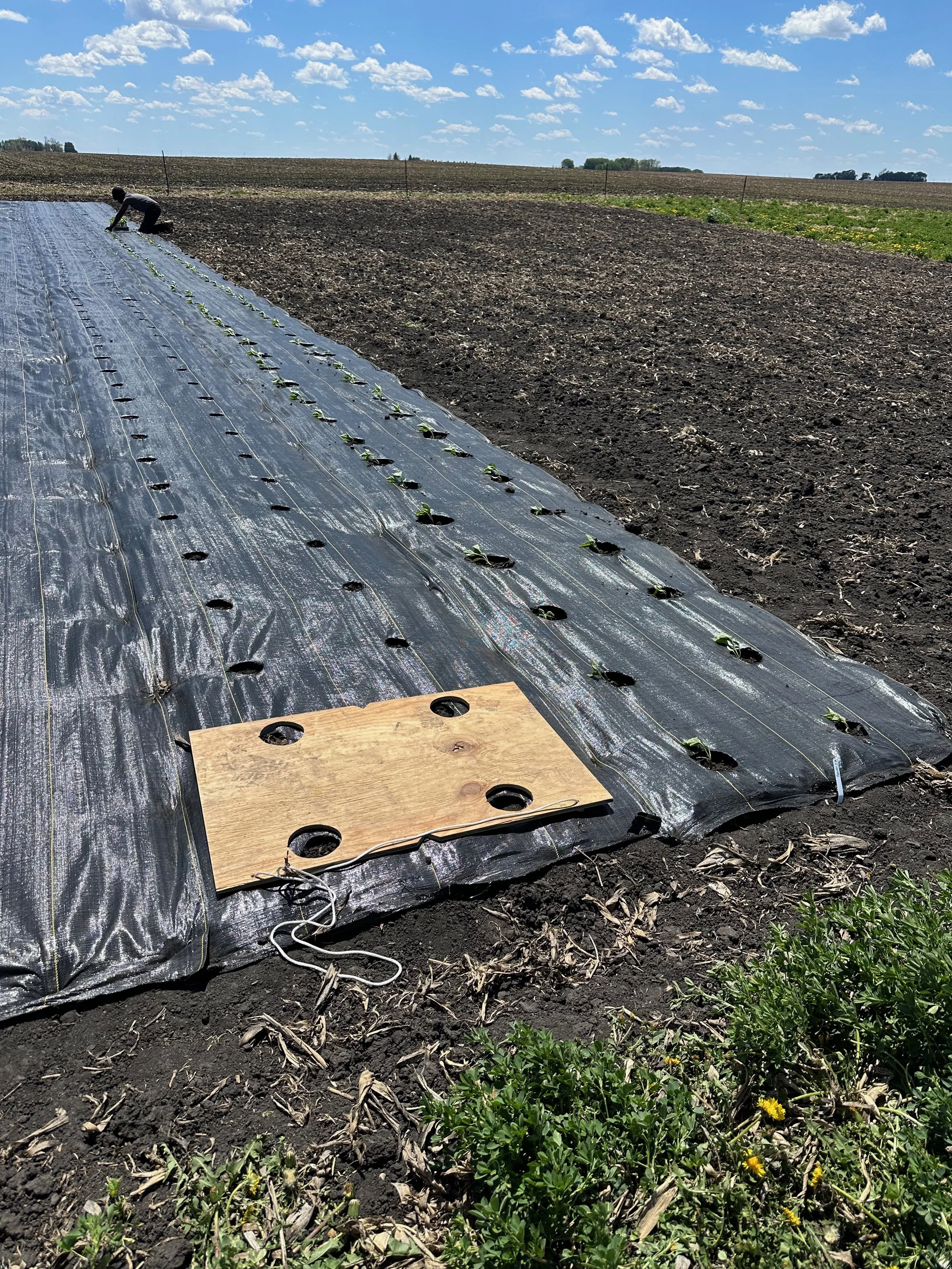
Burning holes for crops into landscape fabric with this template.