
Tunnel Snow Management
We’ve just had our first big snow of the winter this past weekend. I don’t know about you, but I love winter and the snow but with is comes a different set of challenges. It might surprise you, but we need to carefully and thoughtfully manage snow around our tunnels even if they don’t have crops actively growing in them. This is especially true for our smaller “caterpillar” tunnels pictured below.
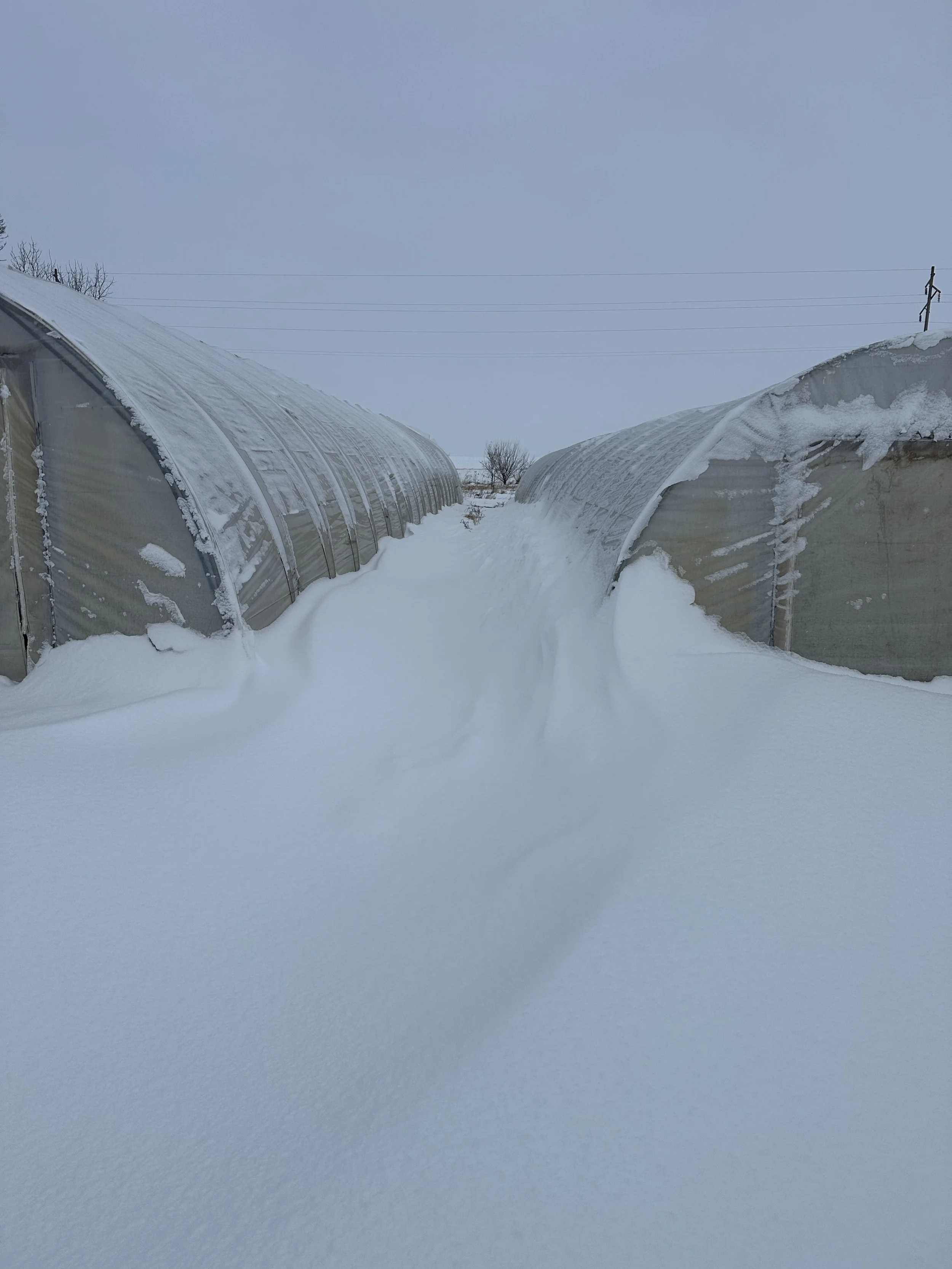
It’s a bit difficult to judge scale on this photo but the tallest drift on the right side of the photo is around 4 feet deep.
Native Minnesotans will recognize the different types of snow we get here: the loose fluffy stuff, the heavy “heart attack” snow, and everything in between. The “heart attack” snow is the most dangerous for our tunnels since by volume it has the most weight but even the fluffy stuff and cause problems. Over time, snow will build up on and between our tunnels. One or two big snow events won’t matter that much but an entire winter's worth of snow events would build up enough snow to collapse or damage our tunnels. To get ahead of that we routinely clear snow from the roof and in between our tunnels.
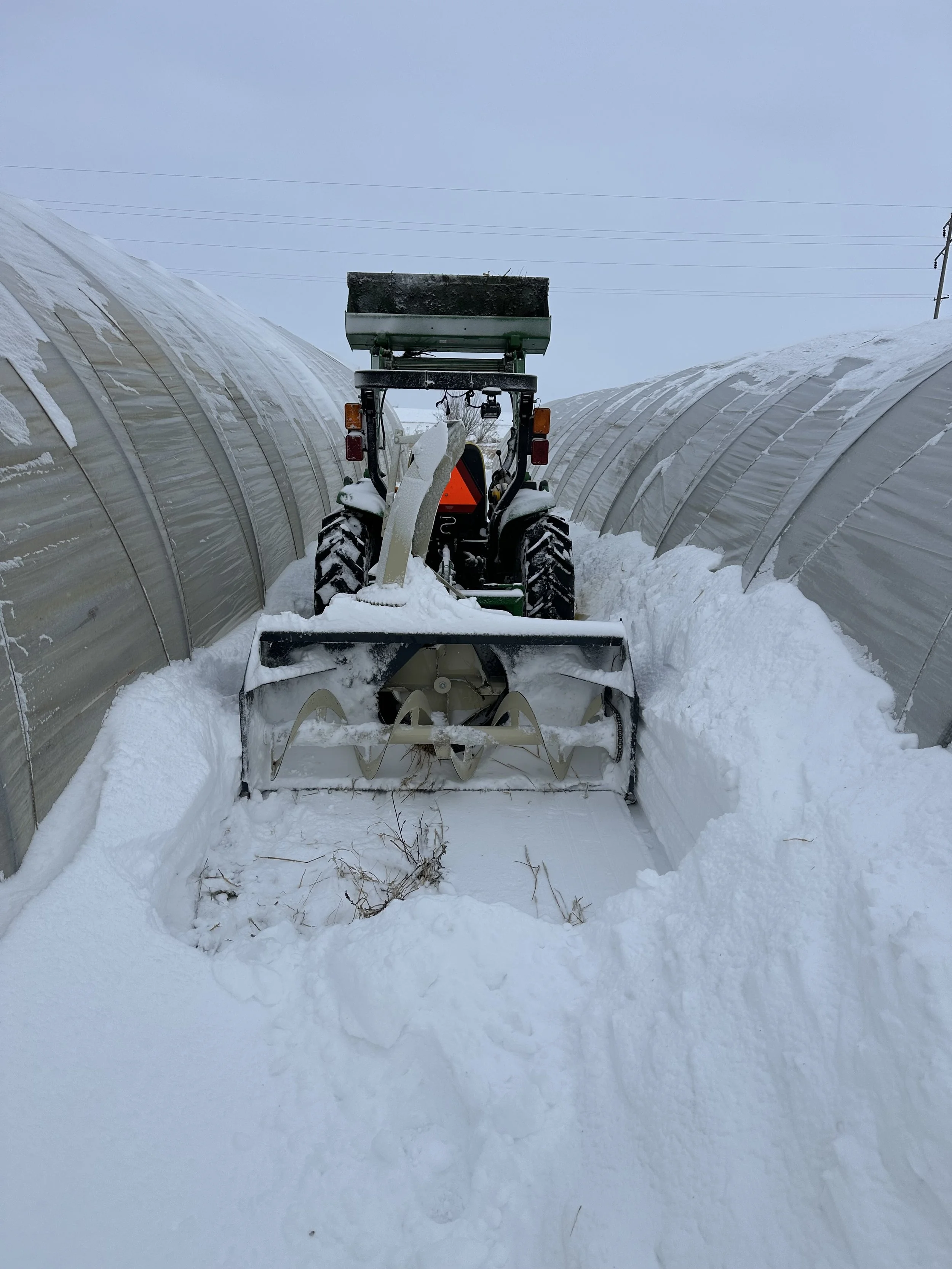
Our tractor and snowblower doing work!
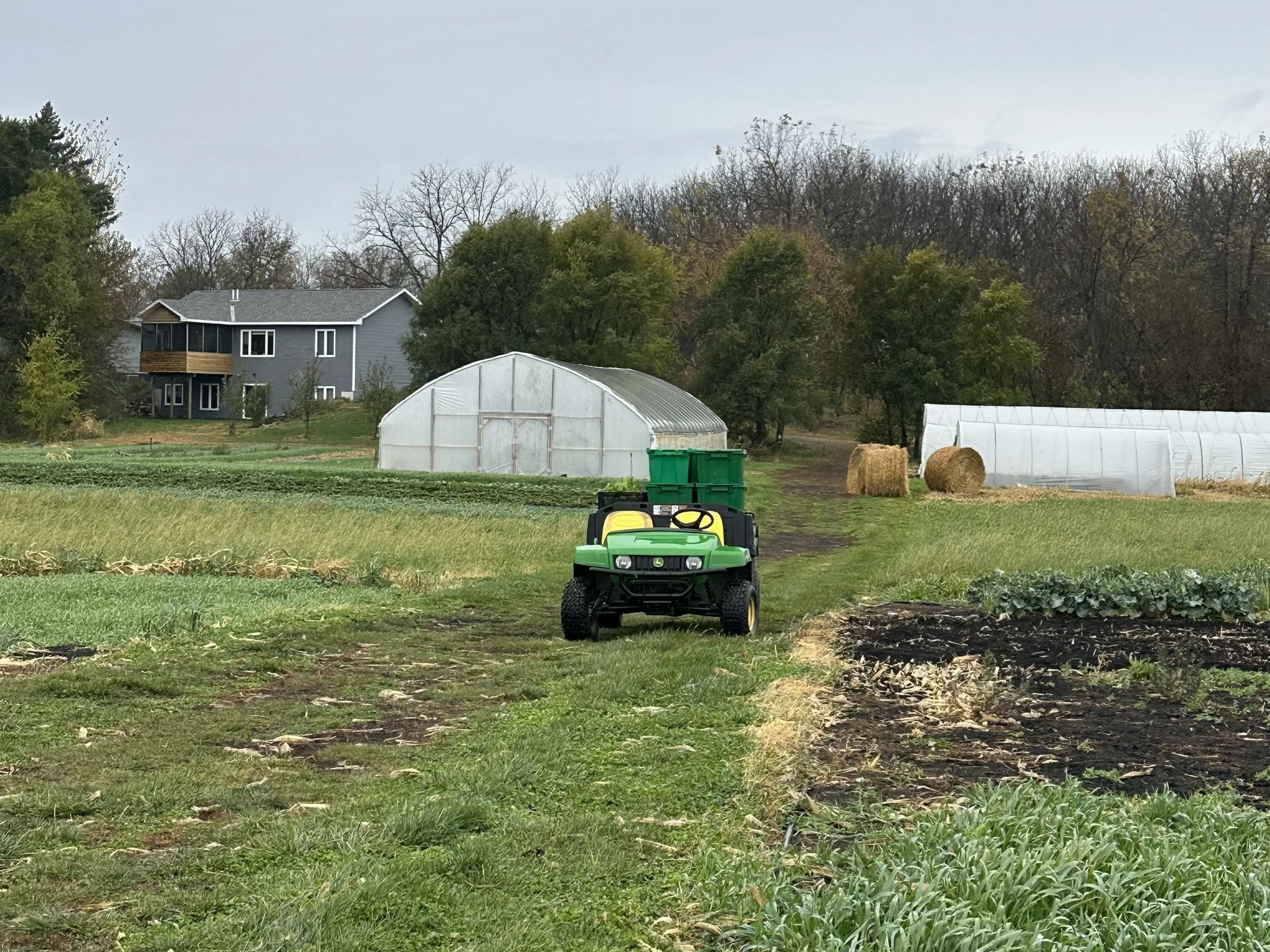
We make use of our tractor and snow blower to tackle snow removal from the tunnels. We have our tunnels spaced such that we can fit our tractor and snowblower in between the tunnels. The snow is blown either completely over the tunnel into the field in the case of the smaller caterpillar tunnel (pictured right above) or blown to the north away from the tunnels in the case of our larger gothic style tunnels (pictured left above).
Bonus Tidbit: Some snow is actually REALLY good for our tunnels in the winter. Around a foot of snow all the way round the base of the tunnels helps to seal the tunnel where the plastic meets the ground. This helps us in two ways. First, it stops cold winter winds from entering the tunnel. Second, it helps to insulate the ground around our tunnels which preserves precious heat the soil inside the tunnels.
Protecting Our Winter Crops
Winter is on the way and it sure felt like it this past weekend. In preparation, we installed our row covers inside our tunnels to protect our winter crops as we transition into winter. It’s important to protect our crops from temperature fluctuations and help preserve warmth in the soil as we head into winter. The warmer we’re able to keep our crops and soil, the longer into the winter we’ll be able to bring you some of the more delicate winter crops we grow like salad turnips and radish.
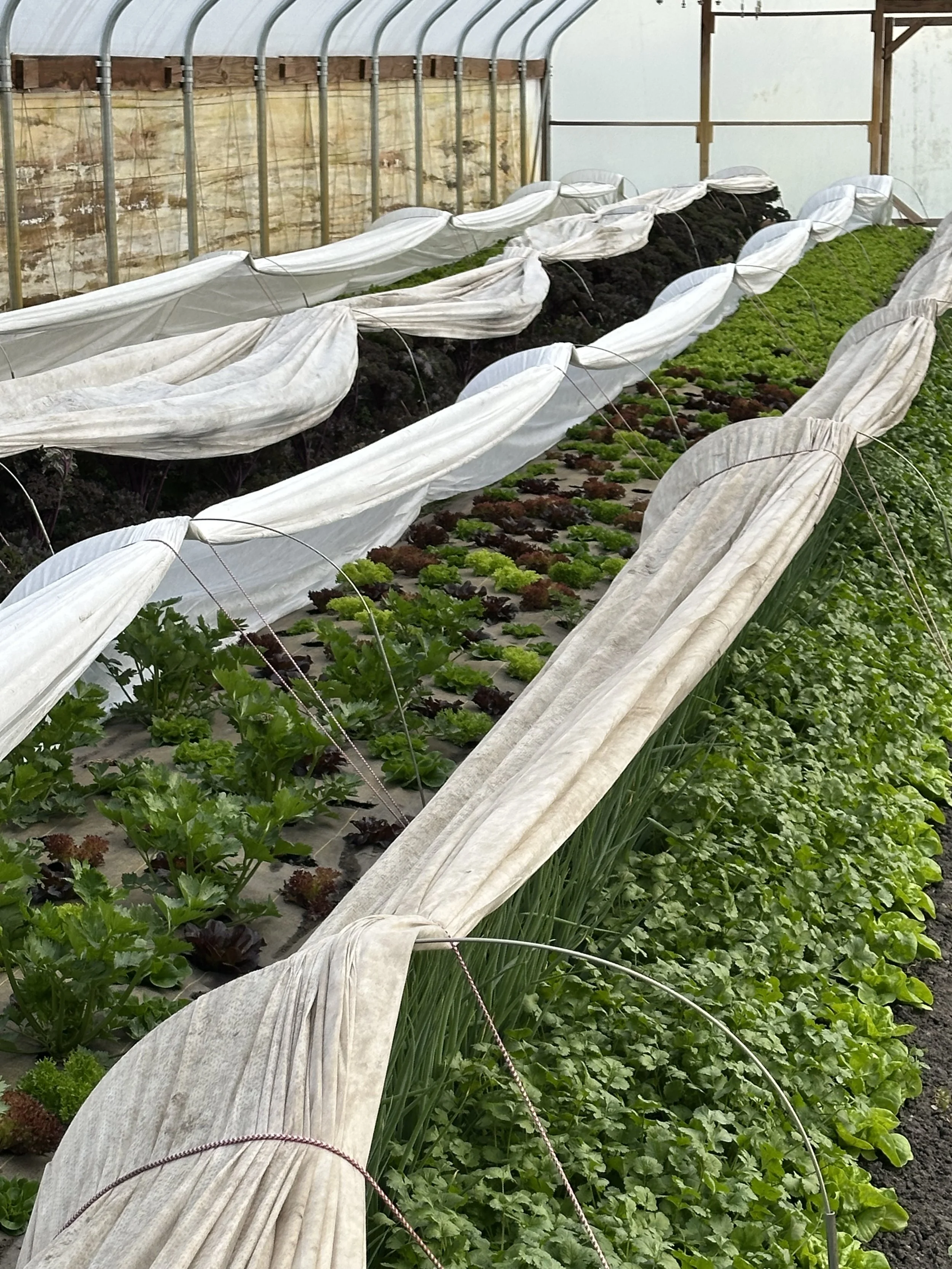
The photo below captures the gist of our setup. We have wire hoops that straddle each bed with white row covers that are held in place with bungee cords. The bungee cords aren’t totally necessary but they are handy for holding the row cover up while we harvest. The row covers are anchored into the ground at each end of the bed with large staples.
We use the wire hoops to help suspend the row cover over our crops without touching them (except for kale - it’s too big!) which helps both reduce disease pressure by keeping moisture off of plant leaves. It also helps protect the crops better - if the row cover is damp and freezes and is touching the plant leaves then there’s a higher chance that crop will be damaged. There is management involved with the row cover. Depending on the temperature, cloud cover, etc, we’ll need to uncover the crops each morning and cover them again a couple hours before sunset.
The row cover provides around 4-5* of temperature buffering. Add that on top of the tunnel which keeps the wind off the plants and gives a couple more degrees of temp buffering. Finally, we have some heat banked in the soil. Overnight the soil gives off some heat and the row cover helps keep that heat closer to our crops. Taken together, this system has allowed us to produce lettuce - our most popular crop - into December consistently.
Persephone Period Approaches
Here we are at the end of October and we’re quickly approaching what’s known as the persephone period. That is, the time of year when daylight falls below 10 hours of light per day. This date is important because it’s the key to timing our crops so that we can get a winter harvest from them. Why? It’s because plant growth essentially stops once daylight falls below 10 hours of light per day. This means that we need to time our winter crops such that they are around 80% mature by the first day of the persephone period. That’s around November 7th for our part of the state.
The complication is exacerbated by the fact that the daylight decreases slowly from the summer solstice and by time September rolls around we’ve lost enough daylight that it affects the "days to maturity” guidelines that our seed companies offer. Further, the cooler temps also slow plant growth. Taken together, getting the planting date correctly to have our winter crops 80% mature by the beginning of the persephone period is tricky.
The Persephone Period extends from November 7th until February 4th. Our winter spinach will see pretty rapid re-growth in February and March due to the increasing daylight and increasing temperatures. If we get the timing and harvests correct then we can do a harvest of our winter spinach in November - December and have those same plantings re-grow in time for harvest again in March. It’s always nice to get two harvests out of a single bed of spinach!
Our Winter Crop Plan
We’re near the end of the outdoor growing season but our winter tunnel growing season is just kicking into production. This week I want to go over our winter crop plan. I’ll go over the various crops we’re growing in our tunnels this year including two new varieties that we’re trialing for winter hardiness.
Lettuce
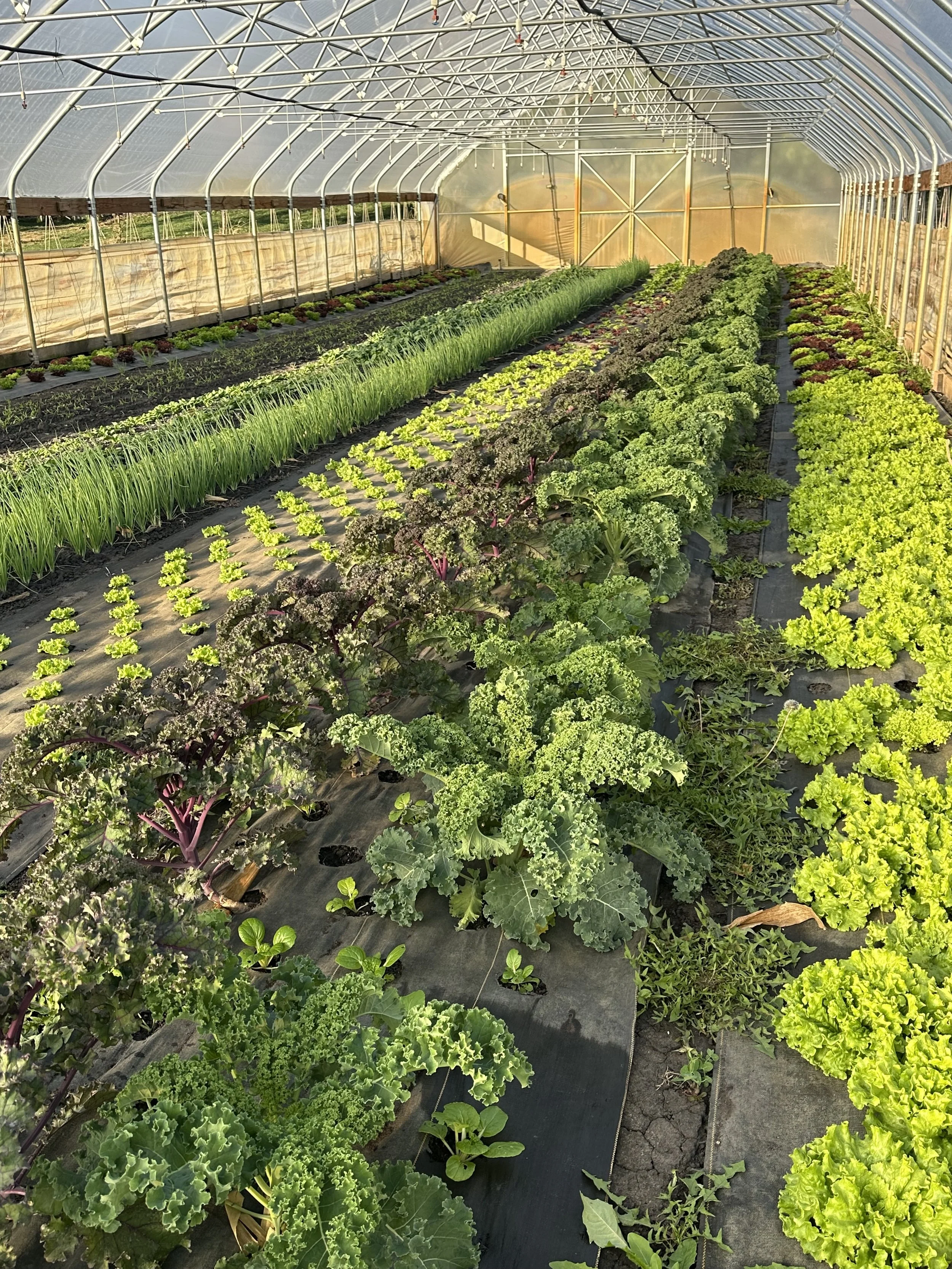
We’ve found that our lettuce mix varieties are actually incredibly cold tolerant and can handle temperatures as low as 15* inside the tunnel before we start to see damage to the plants. Most seasons this means we will have lettuce mix available for November and December. We also trialed a new-to-us butterhead lettuce variety called Landis Winter that is even more cold tolerant than our lettuce mix but the trade-off is that it’s more disease prone. Finally, we head from another farmer that our staple summer green curly lettuce is also incredibly cold tolerant. We’ll see how cold tolerant it is this year but I’m expecting it to be about as good as our lettuce mix.
Kale
We’re growing both red and green kale. We’ve found that adult size kale has about the same cold tolerance as our lettuce mix. The big problem is that the kale plants are fairly tall and far away from the ground which is our main heat source in the winter. The further up into the air the kale is the more likely it is to be damaged by cold temperatures. We hope to have kale available into December.
Spinach
Spinach is our workhorse winter crop capable of withstanding temperatures as low as minus 10 degrees. Spinach does this really cool thing during cold snaps where it drains the water from it’s leaves to protect itself from the cold. It looks like it’s wilted and dead but as soon as it warms up again the spinach looks good as new. Most winters we are able to produce spinach all winter long.
Bok Choy
We found a new-to-us bok choy called “winter yellow heart” where the seed company claimed it could handle temperatures as low as 5* in an outdoor setting. We’re excited to see how it performs in a tunnel with row cover. If successful, we could have bok choy into January.
Scallions
We’re trialing a new variety called ever green hardy that is supposed to be the most cold tolerant scallions available. Our standard variety does over winter but usually gets unsaleable after it gets below about 15*.
Radish & Hakurei Turnips
Both radish and hakurei turnips can handle some cold but usually once it gets below about 15* they suffer enough damage that they’re unsaleable. We’ll probably have turnips and radish into early December.
Mizuna & Tat Soi
Similar to radish and lettuce mix both Mizuna and Tat Soi can handle the cold to a point. Once mature they will be part of our winter mesclun mix. Look for that at the end of November and early December.
We’ve heard that we’ll be in a La Nina weather pattern for this winter which means colder and wetter than usual. The cold is a bit concerning: if we get too cold too fast or have a polar vortex early it could damage many of these crops before we’re able to sell them. The extra precipitation is good though. The snow can help to insulate our tunnels and help our crops to survive the coldest temperatures.
We really enjoy pushing the boundaries on what’s possible in the winter in southern Minnesota. We learn a lot each winter and it is SO satisfying to bring fresh greens to CSA shares and winter farmers markets long after the first snow flies! We will continue to push boundaries and find innovative ways to bring fresh produce to market season after season.
Looking Ahead to 2026
A Preview Of Our 2026 Season Plans
This is the counterpart piece to my 2025 Season Reflection post from a few weeks ago. Every year we begin a reflection process in the fall that looks back at what went well and what didn’t with a goal of formulating a plan for the coming season. In just a few weeks I’ll be placing our seed order and putting the finishing touches on our 2026 crop plan. Here are some of the things we’re looking at changing or improving for 2026.
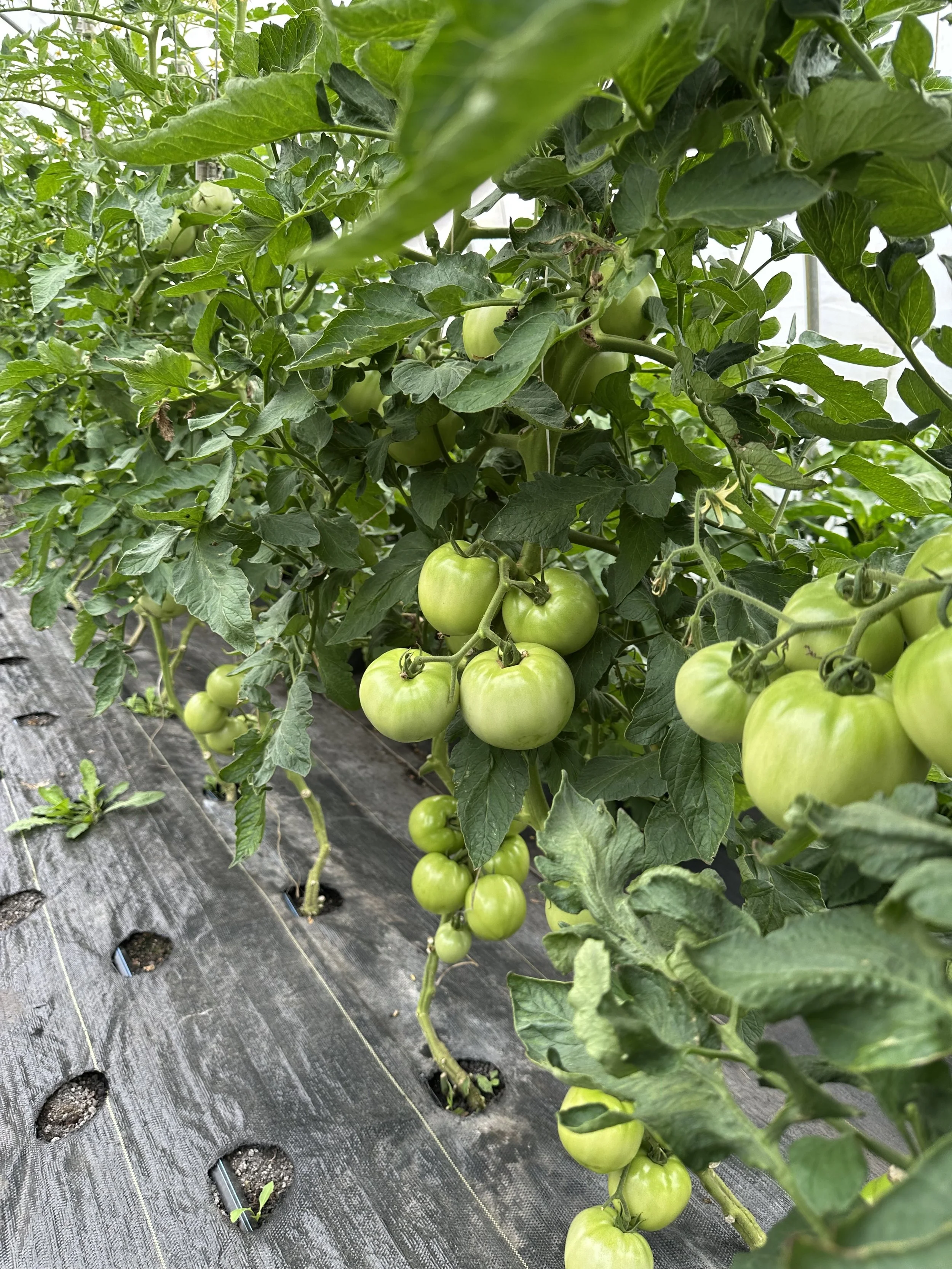
More Tomatoes! We couldn’t keep tomatoes in stock this season. We sold out quickly, routinely, week after week until mid September. We have a couple ways we’re going to address this. First, we will grow at least 2 additional beds of tunnel tomatoes. We’ve found the tunnel tomatoes are the best quality, best flavor, and most reliable when compared to their outdoor counterparts. We’re also going to plant more heirloom style tomatoes outdoors with a florida weave trellis system and light pruning. We’ve seen a number of other farms do this and we think this will be a great way to increase our tomato offerings.
Better Onions We had problems with onions this past season that I outlined in my reflection post. Here’s how we’re going to address this problem. First, we’re going to scale back the amount of onions we grow to a more realistic number. This should give us more time to take care of the onions we do have so that we reduce (eliminate?) the curing issues we had this season. Second, we’re going to grow some bunching style onions, similar to scallions but with bulbs, that will help offer more variety and more flavor to our onion offerings. We’ll also look into switching up varieties but haven’t decided yet.
Strawberries. We know when we take adequate care of our strawberries that we get good results. We’re re-prioritizing strawberry care so that the necessary jobs get done on time. This should mean more strawberries available sooner in the season.
Shallots. We really enjoyed having these in our own kitchen this season. We’ll be looking to grow a variety that gets a little bigger but shallots are here to stay!
Potatoes. We’re kind of taking the same strategy here with the potatoes as we did with the onions. Growing less potatoes but focusing on better care and quality.
Peppers. This a more behind the scenes look but we grew too many shishito, serrano and banana peppers this season so we’ll be tweaking our plan to bring it more in line with what we can sell.
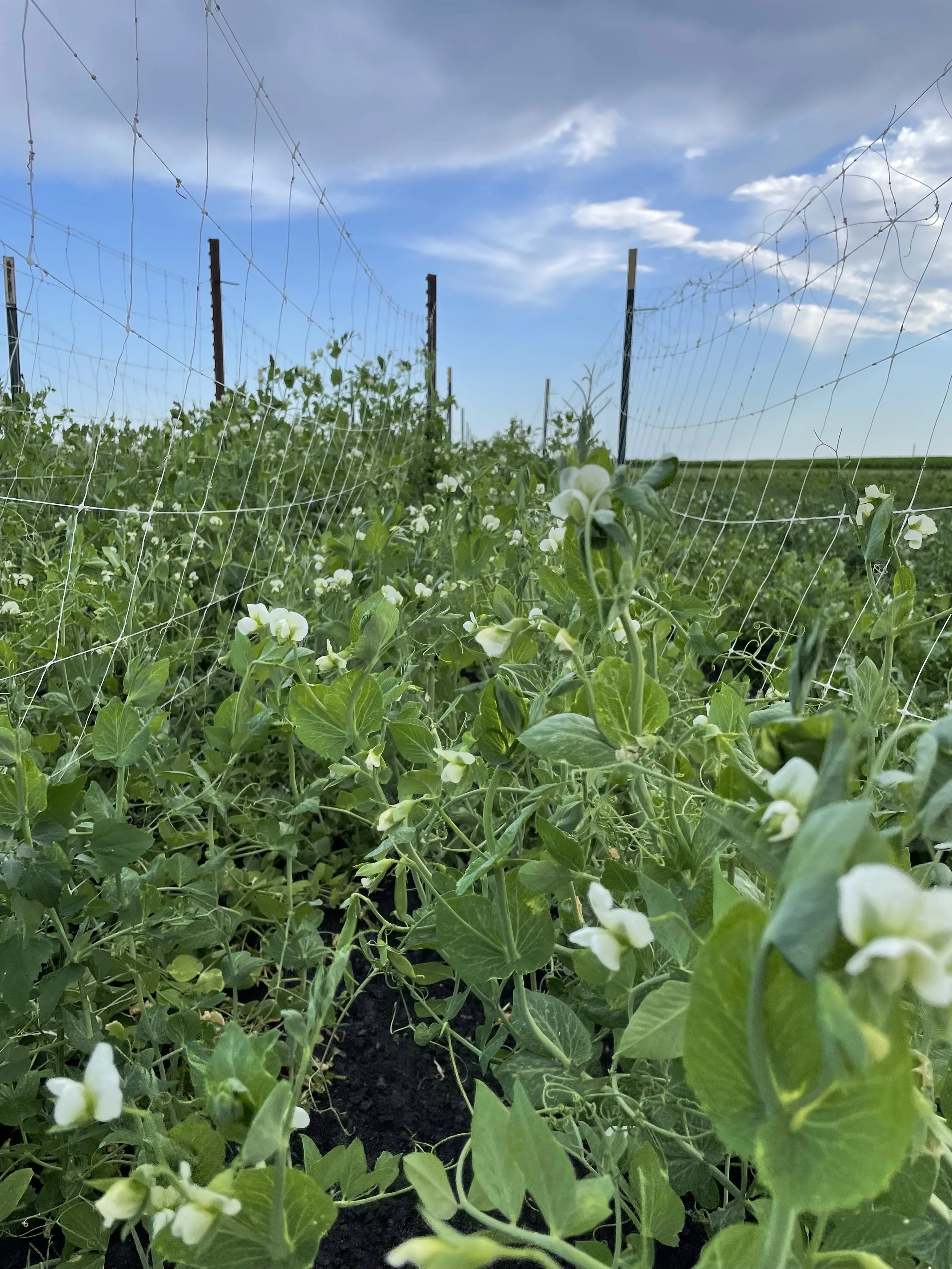
Peas. We were short on snap peas this year. We had trialed a new trellis method that didn’t work very well so we’ll be moving back to our typical netting and support rod trellis. It’s more work but it results in a much easier harvest and better yield. We’ll be planting more snap peas AND if we can figure out a space inside our tunnels to squeeze some peas.
More To Come: The 2026 seed catalogs haven’t come out yet but we know we’ll probably be inspired by something in the catalogs.
Winter Tunnel Finally! As I write this we are in the process of obtaining financing and construction quotes for a fully featured winter growing structure. We hope to put it into service next season and have the first crops grown within be the tomatoes described above. We’ll see how the timing goes!
Partner Farm Products. We want to expand our partner farm product offerings for more reliable inventory and to try to get closer to a full diet farm. We’re looking for partners for baked goods, dairy, meat & poultry, maple syrup & mushrooms to really round out our offerings.
Overall, we’re looking to eliminate as much waste as possible while having more variety. The better we do at this the better our CSA is and the better our farm does as a whole!
2025 Season Reflection
As usual at this time of year I start to really think about how our farming and CSA season went this year and consequently, what changes I want to make in 2026. This post is really meant for our CSA members but if you’ve been following along this season I think you’ll find some interesting tidbits of information in this post. This will be a long one, enjoy!
What Went Well?
It’s probably best to start off on a positive note and go over the things we’re really proud of or that we felt like went really well this season.
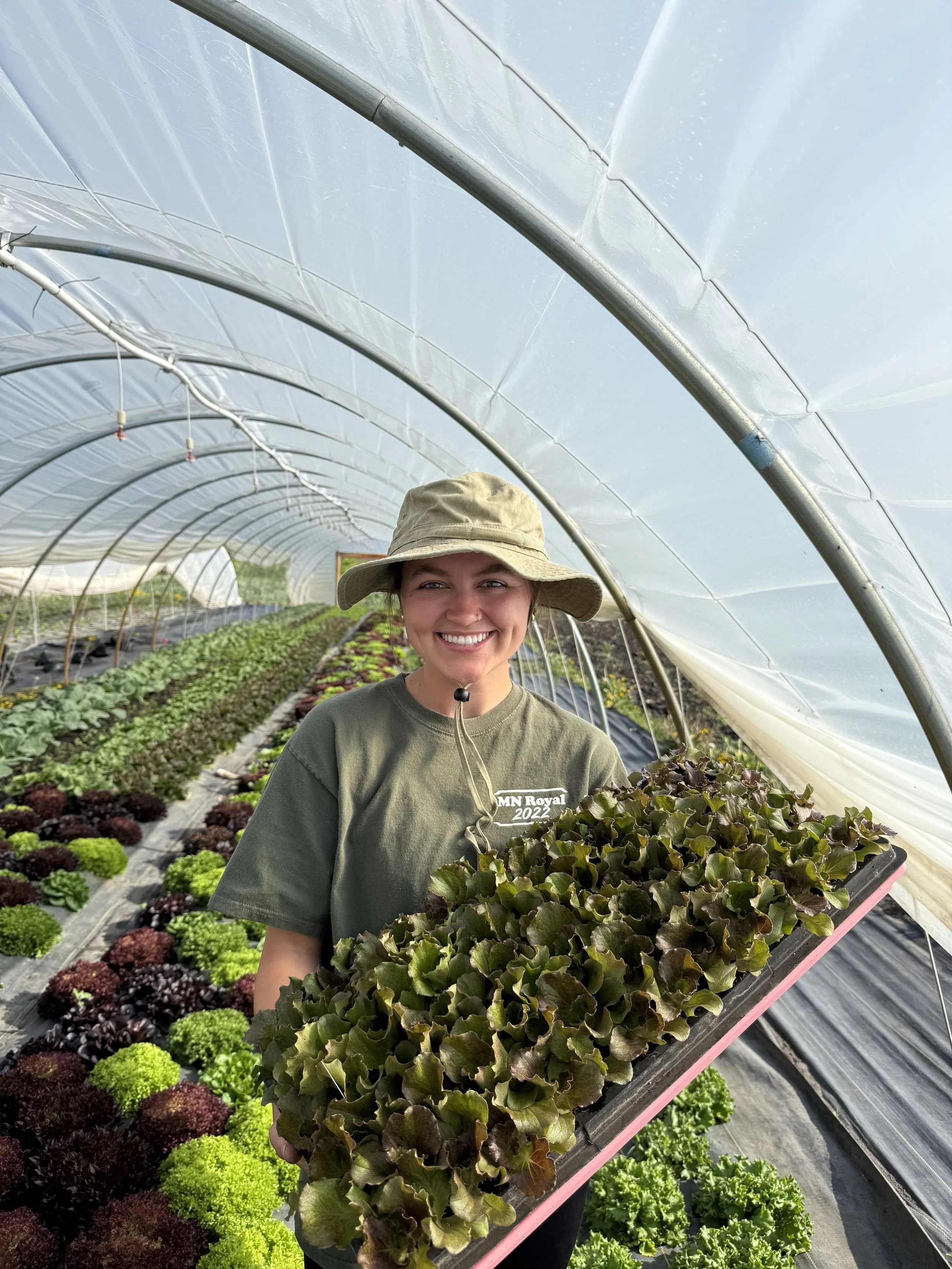
Our Farm Staff and Especially Our Farm Manager Katey. Overall, we had great staff this season. Our staff were great workers and worked well as a team. They were very reliable and they helped us make some efficiency improvements around the farm to boot. In particular, our Farm Manager position and Katey who is our Farm Manager this season worked well. The Farm Manager position is new to us this season but our goal was to offload some of the managerial duties from my (Dan’s) plate so I could focus more on the farm and the business. It also allowed us more flexibility with the farmers market and allowed us to leave the farm without much stress at all!
GrownBy. The jump from Harvie to GrownBy was one of the biggest changes we’ve made to our CSA in years but we are so glad we chose GrownBy as our CSA management platform. GrownBy has allowed our CSA members more flexibility and made our management simpler as well. Plus GrownBy is a co-op and we are part owners so we get a say in the direction GrownBy takes in the years to come. We especially love the way vacation weeks work in GrownBy which offers our CSA members much more flexibility on the weeks they’re unable to pick up their shares.
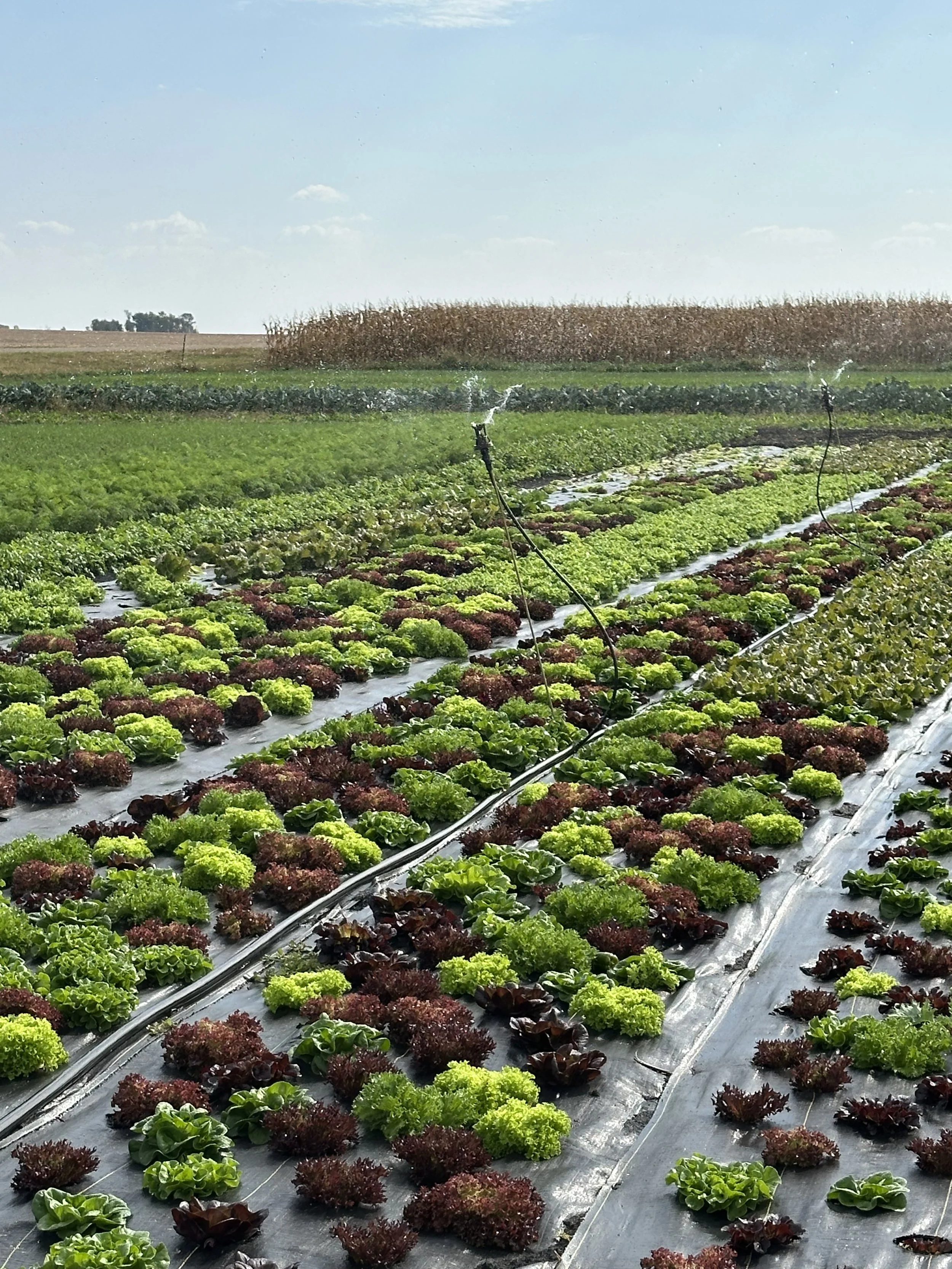
Lettuce. I think this season is our best season yet for lettuce. We’ve had a very consistent supply throughout the entire season which has always been our goal. Even during the hardest time of year from about July 20 through September 1 we had a steady supply.
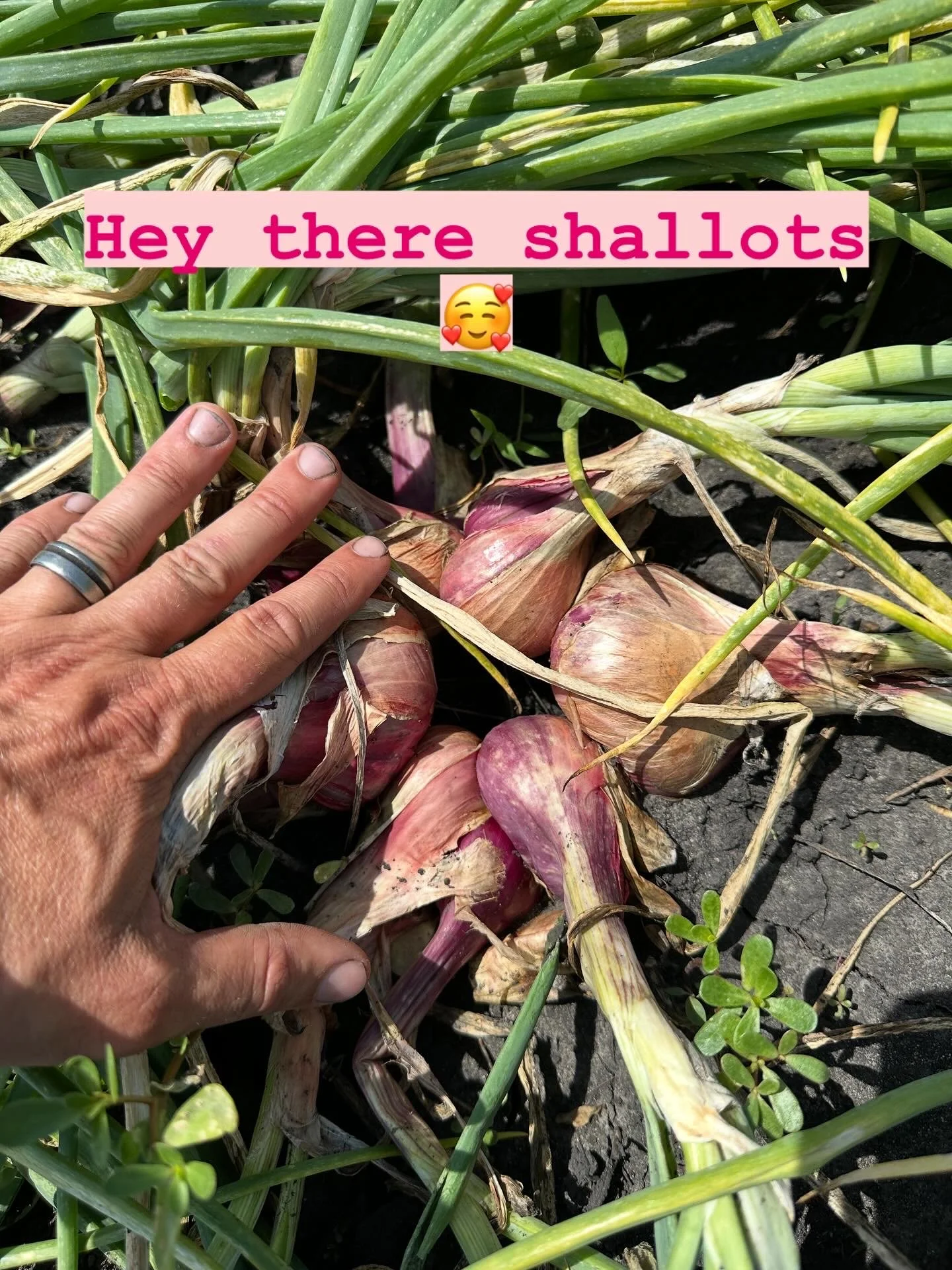
Shallots. I don’t know about you but I love having a stash of shallots at the ready for eggs, fried rice, sauces & whatever else. We’re definitely growing shallots again!
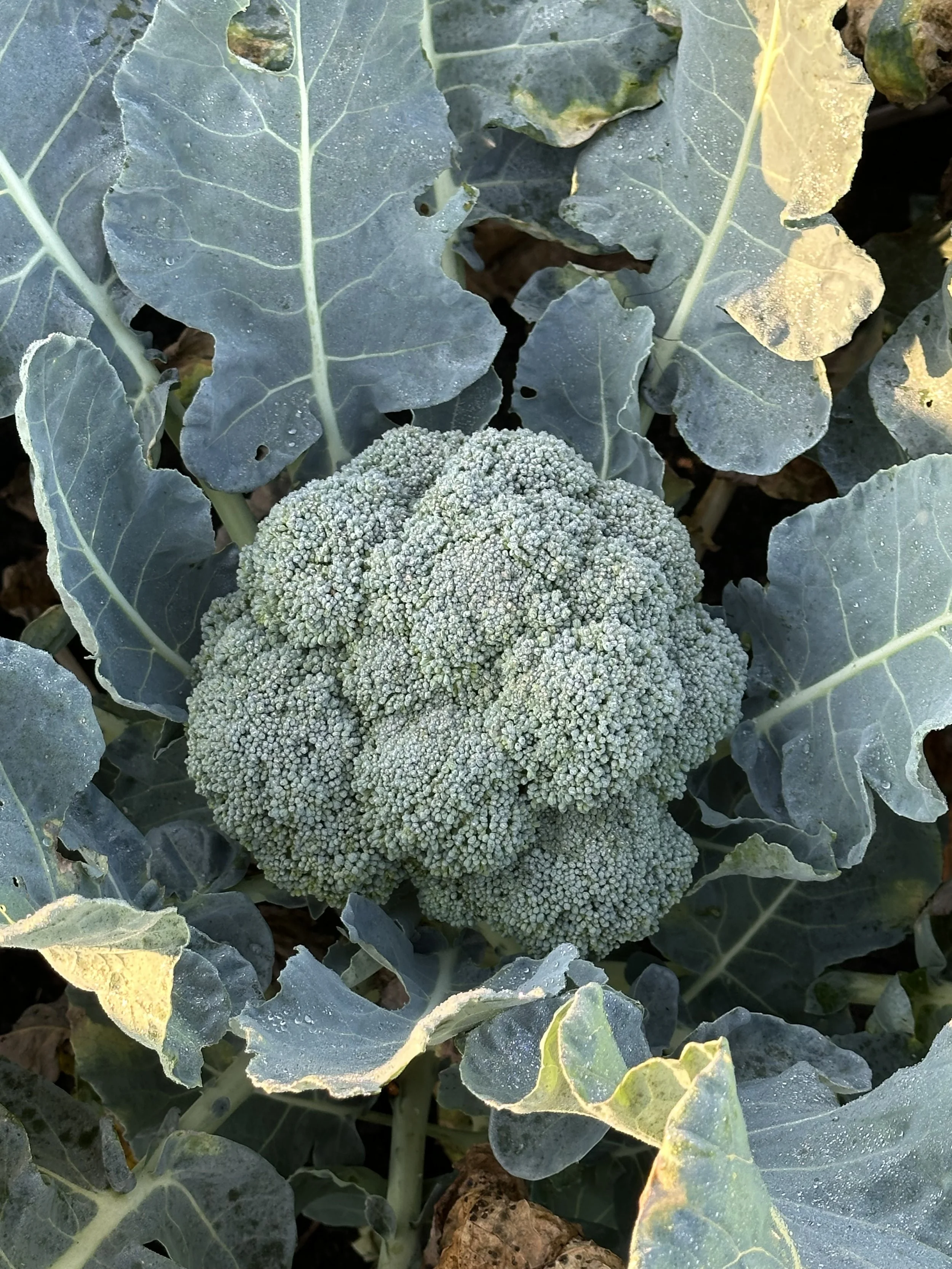
Fall Broccoli. We’ve had so much broccoli this fall and it’s been great. I think we’ve finally settled in on some varieties and a production cadence that works for us.
Carrots. This season has been a good carrot season for us. Our early tunnel plantings were just phenomenal and our field plantings were great too. Our biggest trouble with carrots this season was finding a time in between all the rain to dig them! Our storage carrot plantings are looking amazing too so we’re anticipating having literal tons of carrots available. After a dismal carrot year last season this is a welcome change!
Scallions. Both the purple and white scallions will be back next season. We just love these - they’re so flavorful and versatile and we have them available for so much of the season.
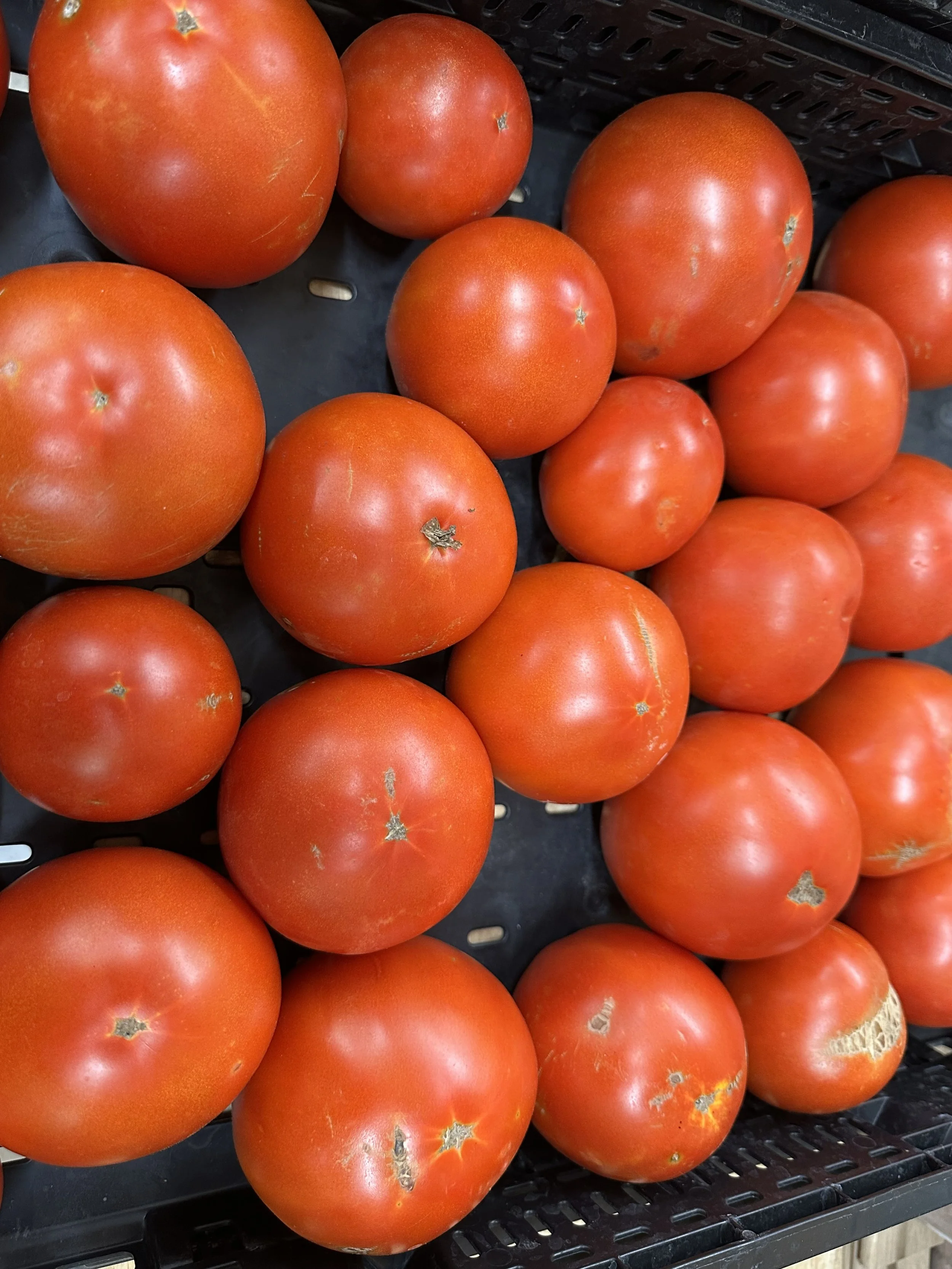
Tunnel Tomatoes. I hesitated for a moment because there’s a lot of room for improvement here but overall I’m happy with how our tunnel tomatoes went this season. They yielded a bit better than last season and we have been selling through them as fast as we can pick them. We’ll be looking to double or maybe even triple our tunnel tomato production for next season!
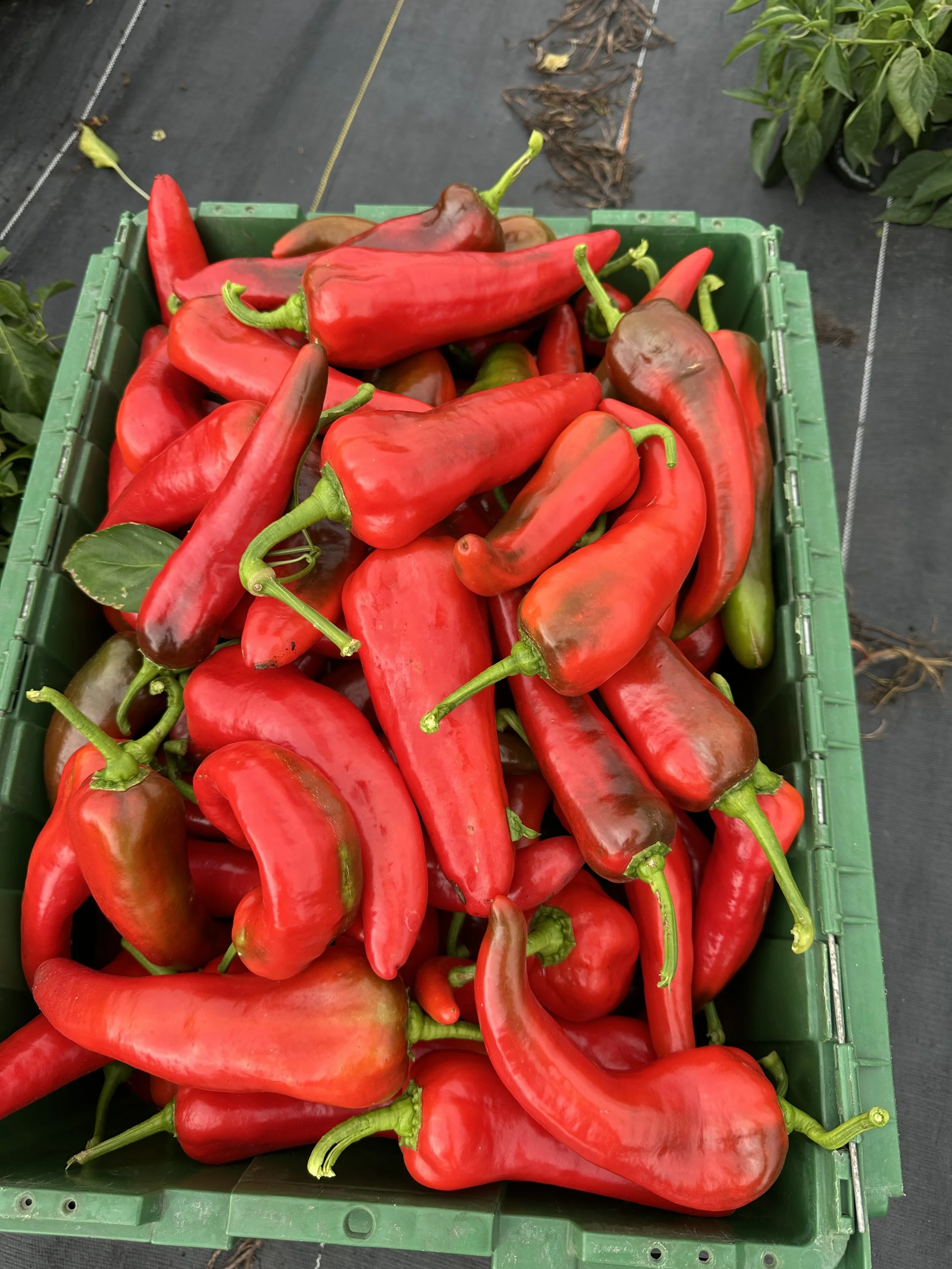
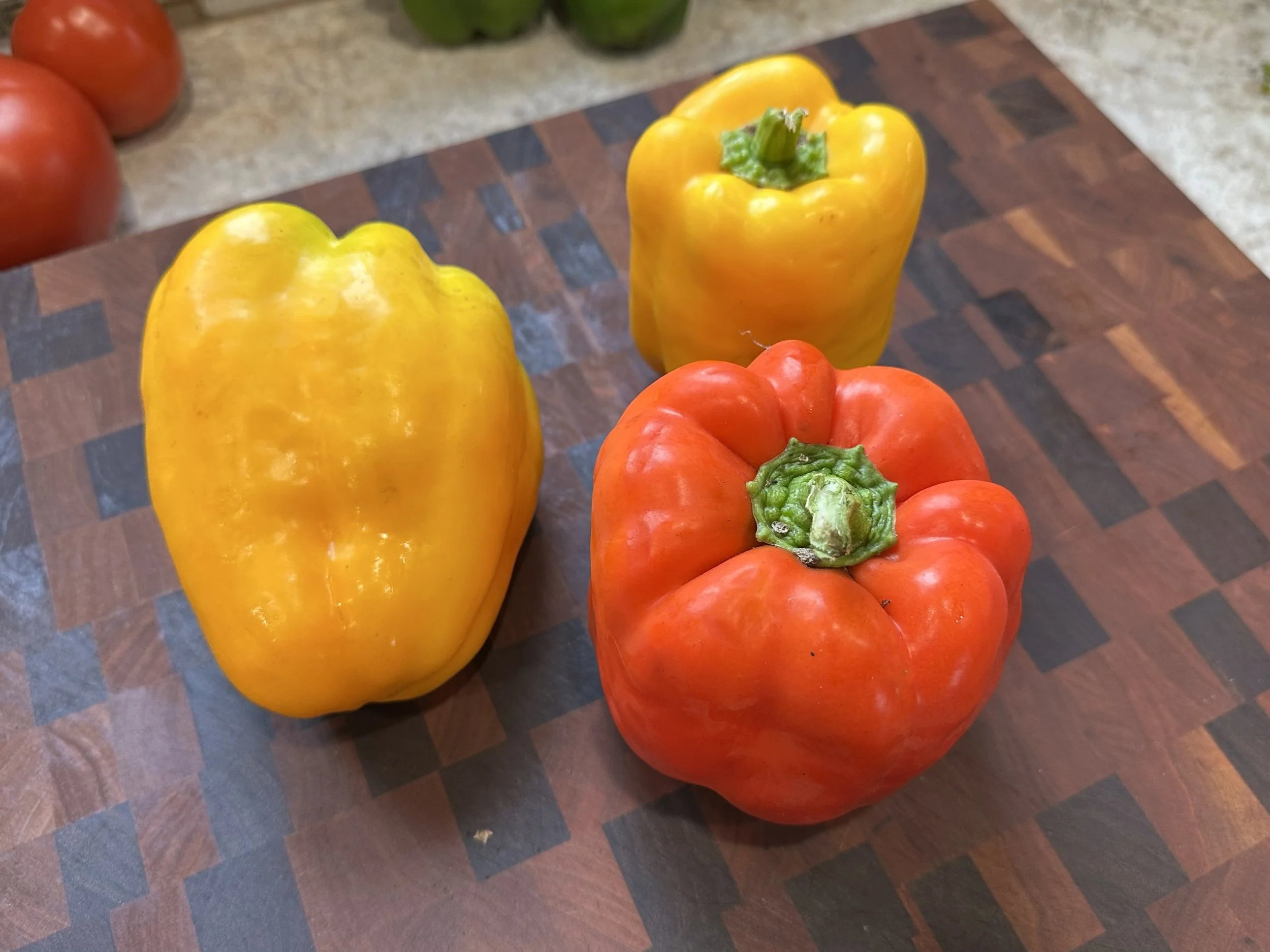
Peppers. They took their sweet time this year but our peppers have been yielding really well this season and they taste incredible. In particular, we really liked the addition of the yellow carmen pepper and Serrano peppers. The yellow carmens are just as good as red carmen and are beautiful. The Serrano peppers have been one of my favorites with their steady heat and fruity flavor.
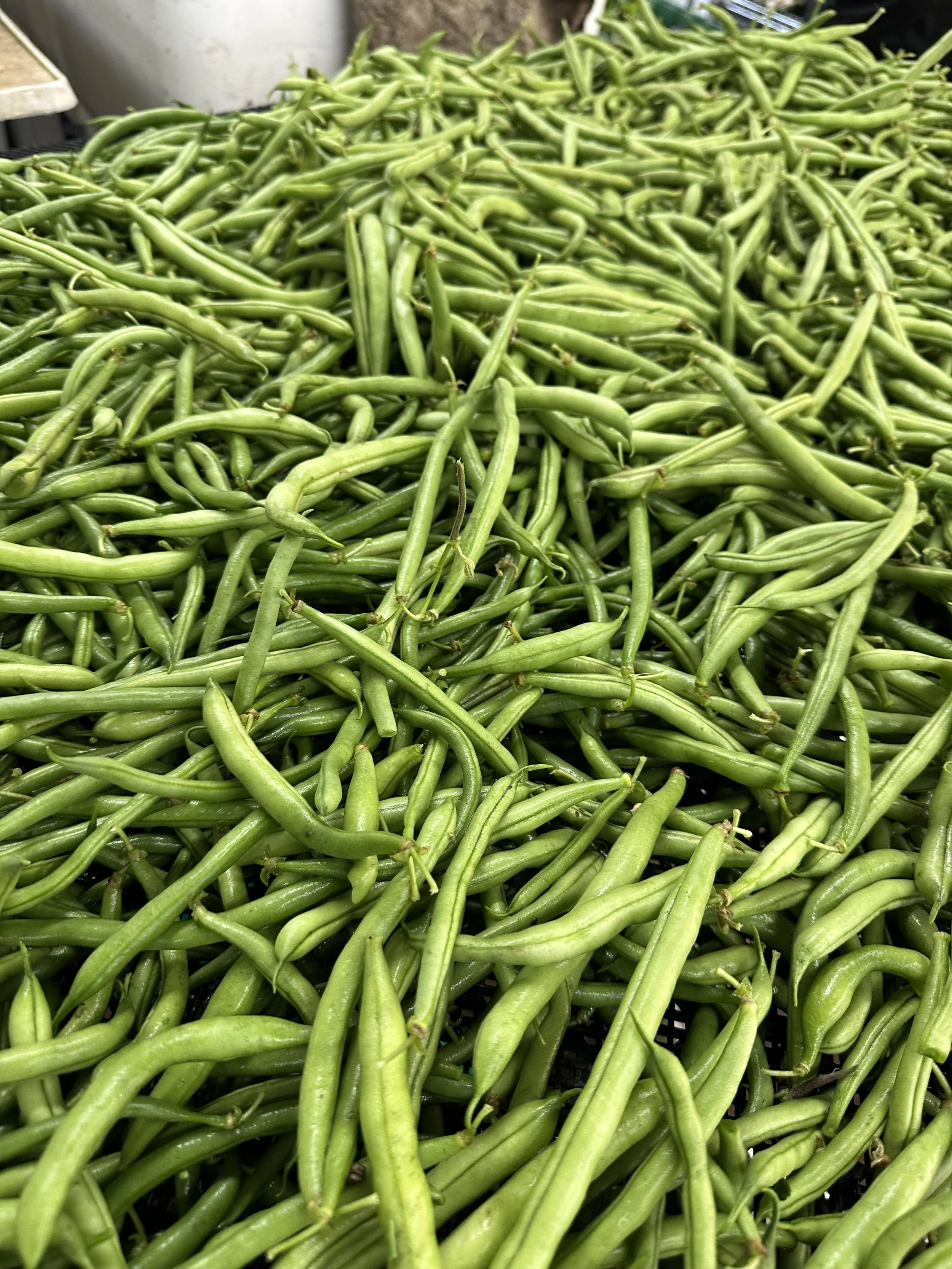
Green Beans. I’m really proud of the fairly steady supply of green beans we’ve had available this season and they’ve been really tasty.
Home Delivery. Lastly, home delivery was a success this year. We were nervous going in about the costs and the time but after we settled in on our route and added new customers it became a really great way to sell our produce.
There are other wins we had this season but those are some of my favorites. We would love to hear from you about anything you thought really stood out this season!
What Didn’t Go So Well?
Ok. Now for the less fun part: talking about the things that didn’t go as well as we hoped. A combination of human error and unpredictable weather inevitably leads to crop failures or mistakes of some kind. Here are some that are front of mind for me.
Storage Onions. We’ve heard from a few CSA members about poor quality storage onions. This is sort of a problem on multiple fronts. First, is the weather. Not a lot we can do about the weather but it was too wet for obtaining top quality storage onions. Second, we had about twice as many onions planted as we needed. This ended up meaning that they needed one more weeding pass that we didn’t have time to get to. Removing the weeds would have helped them dry out faster and reduced disease pressure. Third, sorting onions. We did our best to sort out the bad ones in the field and when we pack your shares but things still fell through the cracks.
We’re going to be doing a big revision on our onion planting plan and we hope to incorporate some new varieties of onions and streamline this a bit more. Stay tuned!2nd Sweet Corn Planting. This one was a doozy. First, it was ripening while I was on vacation off grid in the boundary waters. Second, we saw intense raccoon pressure more than we’ve ever seen in 10 years of farming here by an order of magnitude. Couple those two things with staff that weren’t quite trained in/experienced enough (still my fault) and we ended up with way under ripe corn being picked and distributed.
Luckily, our subsequent plantings were some of the best corn we’ve ever grown!Strawberries. We planted twice as many strawberry plants as last season but they yielded half as much. I hate to admit it but it was mismanagement on my part. We needed to pluck the first flowers which we didn’t do. We needed to keep them weeded better which happened too late in the season. Finally, we needed to pull the runners on them which didn’t get done frequently enough. We’ll be re-prioritizing these tasks for next season because we know you all love fresh strawberries!
Red Potatoes. We had an extremely poor yield on our red potatoes this season. Red potatoes are typically ready about mid-July so my theory here is that it was just too wet when the potatoes were sizing up. Our white potatoes were planted and managed the same way and they yielded much better.
Peas. We just didn’t have as many peas as we wanted this year. We planted these a bit too early and ended up with a poor stand of peas. Couple that with our main pickings of peas falling on our July 4 break week and the wet weather and we just didn’t have peas available for CSA members anywhere near as much as we’d like.
Acorn Squash. We had poor germination on our acorn squash this year. It was so poor that we ended up terminating the planting.
Beets. We had something like 4 consecutive plantings get washed out by heavy rain which has caused a huge 2 month gap in our beet availability this season.
Cilantro. Similar to beets, we had 3-4 plantings of cilantro get washed away by heavy rain. Further, this was during peak salsa and tomato season meaning we missed a critical window for cilantro availability!
Field Tomatoes. We had a terrible field tomato crop this season. The harvest was very small and the tomatoes that were there were very small. We think this was a combination of a somewhat late planting, wild fire smoke, excessive rain and potential carry over disease pressure from last season. We’ll be making some changes to our field tomato planting plan for next season so we have a better harvest.
Ultimately, every year is different from the year before. Every year we learn a lot. Every year we try some new things. Every year we make mistakes. Every year we learn and grow. I think that’s part of the joy of farming produce. The elusive perfect season always seems within grasp but never fully materializes. I now look forward to dreaming about how next season will be the best season yet!
First Frost Of The Season!
As I sat down to write this latest farm blog post I noticed my most recent post was about the fall heatwave. Funny that less than a week later we experienced the first frost of the season! That’s a nearly 60 degree temperature swing from our high of 90 on Friday to the low of 32 overnight on Tuesday night/Wednesday morning. Crazy!
We actually managed to save our bell peppers and sweet peppers from the frost using a irrigation method we read about that orchards sometimes use in the spring. We got up in the middle of the night and turned on our overhead irrigation on our peppers on Tuesday night and let that run through until the next morning. The idea being that because it takes a lot of energy to do the phase change from liquid to ice you can protect your plants from the cold temps. It seems to have worked! With a rather pleasant forecast for the next week or two we should continue to have bell and sweet peppers available!
This first frost was not unexpected - we typically plan for about October 1 for the first frost so that’s about on schedule. We didn’t lose any crops we weren’t prepared to lose and it actually helps improve some of our fall crops flavor. Crops like lettuce, carrots, cabbage, broccoli & kale all benefit from a light frost. It makes them sweeter and can improve texture as well. This happens as a defensive function from these crops: increasing the sugar content in the plant cells decreases the temperature at which the cells will freeze and burst potentially killing the plant. Pretty neat!
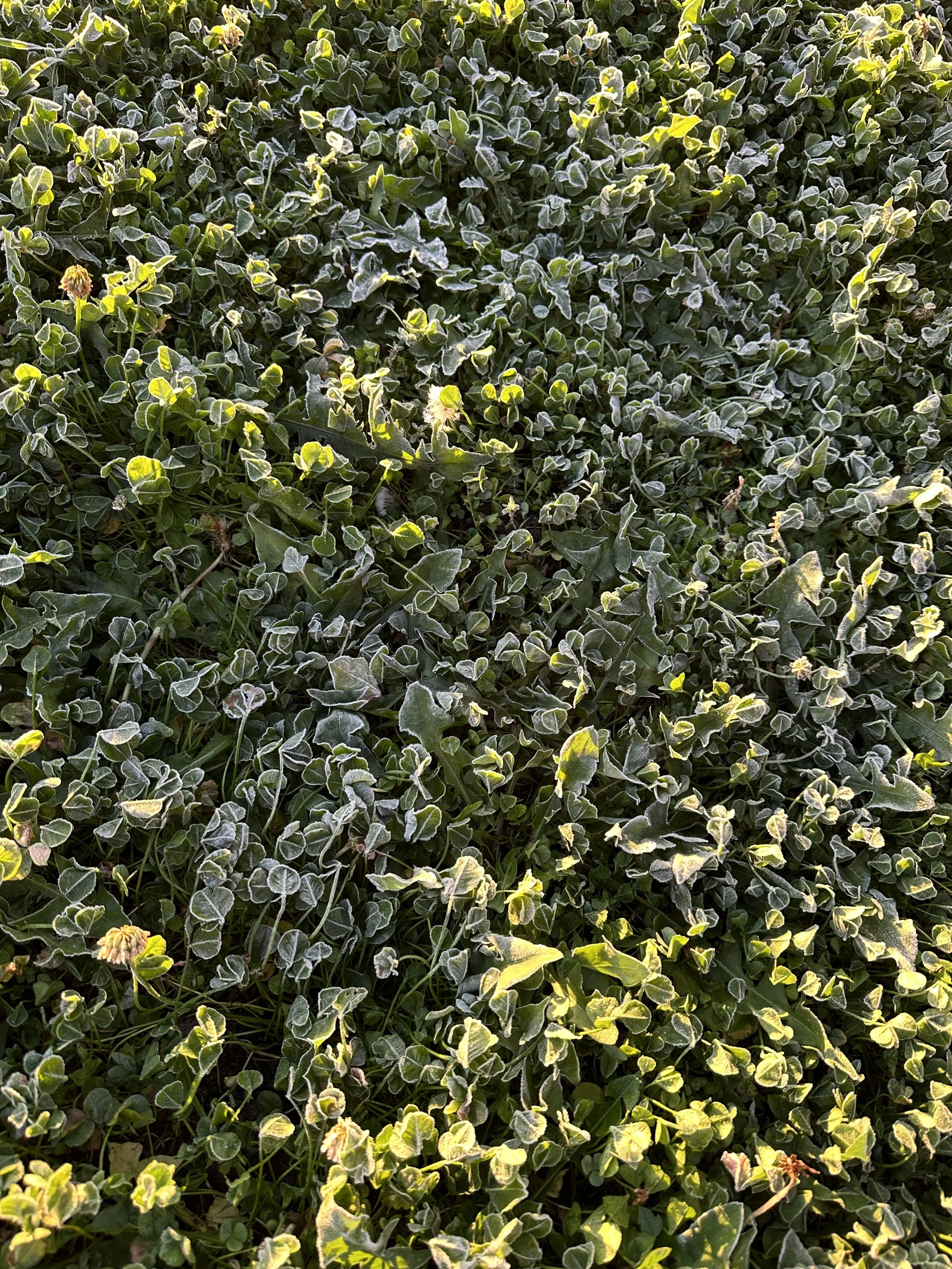
A frosty morning last Wednesday, October 8th!
Fall Heatwave And Its Effects
We’re in the midst of a fall heatwave here on the farm and basically everywhere in the upper Midwest. Highs today and tomorrow are forecast to be in the low 90s and it’s the first week of October. That’s around 20-25 degrees above the average. This kind of heat has an effect on our crops here on the farm and it’s a bit of a mixed bag. Some crops benefit from this heat while others suffer. Let’s break it down.
Crops That Benefit
Our summer-loving crops like green beans & peppers benefit from this heat. The green beans continue to produce as do the peppers. In fact, this heat is a bit of a blessing for the peppers. Our peppers were a bit delayed this season in ripening and since our average first frost is around October 1 (but could come sooner!), this heat has really moved along our peppers in terms of ripening. We’re picking pecks of perfect peppers weekly and they are just stunning this season!
Crops That Suffer
In particular the crop that we’re having the hardest time with during the heatwave is our winter spinach. We seed spinach from roughly late August through early October with the intention of having spinach available for CSAs, online orders, and our farmers market stand from Early October all the way through winter into early next spring. Our first planting of spinach didn’t germinate well at all. So much so that we had to terminate that planting. This is because spinach is very sensitive to soil temperate: it prefers cool soils for optimal germination. Our second planting from early September came in a bit better but we needed to interseed additional spinach to justify the space in our winter tunnel. Our late September planting of spinach came in much better and we’re excited about that planting.
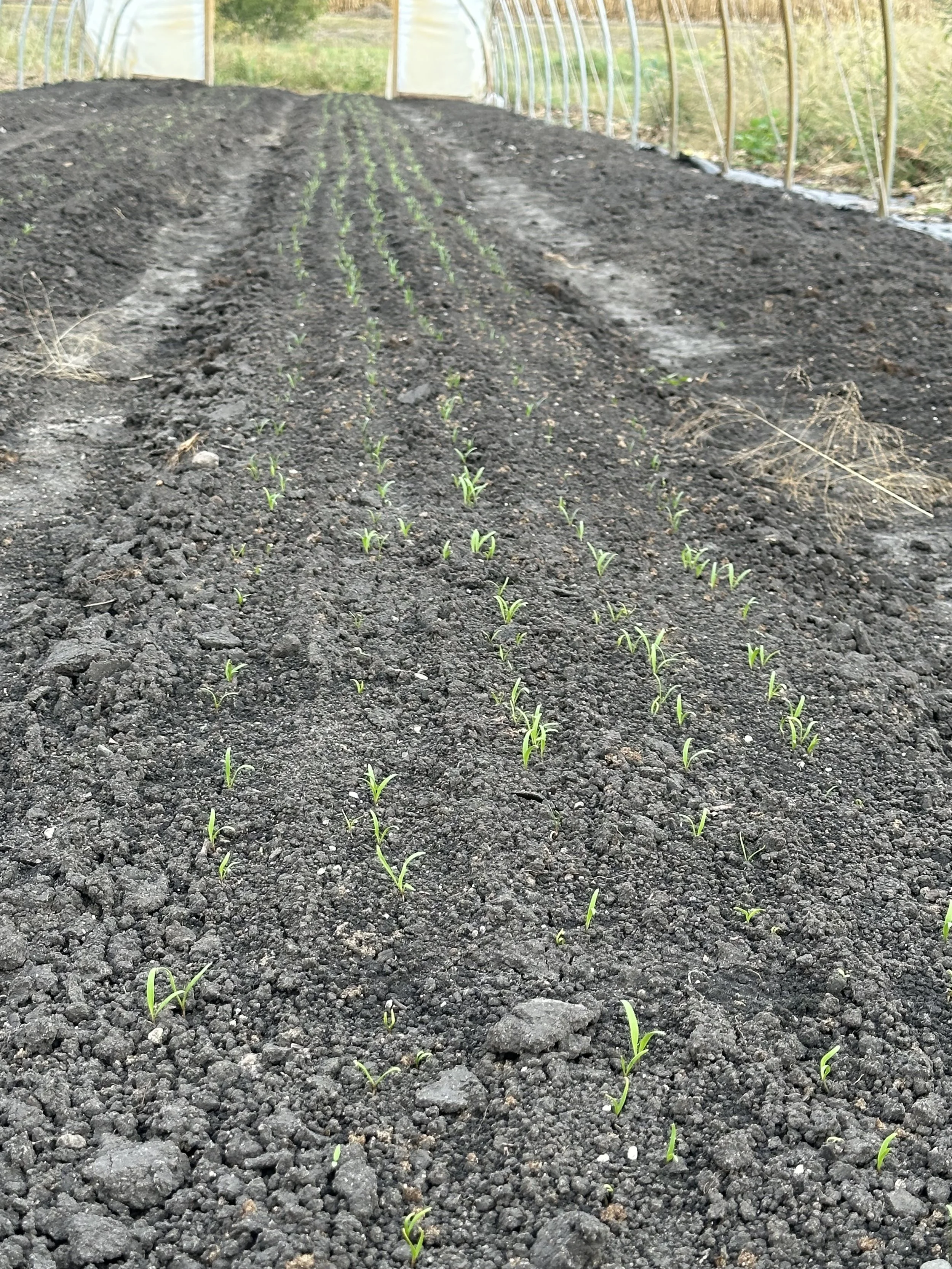
Our 3rd planting of spinach came in well!
Fall Cover Crops Emerge!
Healthy soil is the foundation of our farm. We believe healthy soil = healthy food = healthy people. One of the ways we make sure our soil is healthy is by planting cover crops. Cover crops have a variety of benefits including protecting the soil from erosion, adding organic matter to the soil which feeds the soil, providing habitat for insects and scavenging nutrients that future cash crops can use.
We had a very nice rain last week totaling just over a half inch just a couple days after I had planted our fall cover crops. This combined with nice weather caused our cover crops to emerge quickly. The forecasted continued warm weather will ensure our cover crops get off to a good start and provide maximum benefit before they succumb to the inevitable cold.
Our fall cover crop mix consists of oats, peas and faba beans. This mix of cover crops main benefits are preventing soil erosion, adding organic matter to the soil and fixating nitrogen, a critical plant nutrient, from the air. The oats are great for protecting the soil and breaking up any compaction. The faba beans will fix some nitrogen and have a tap root that can penetrate hard pan. Finally, the peas will fix nitrogen so we have more nutrients available for next seasons crops!
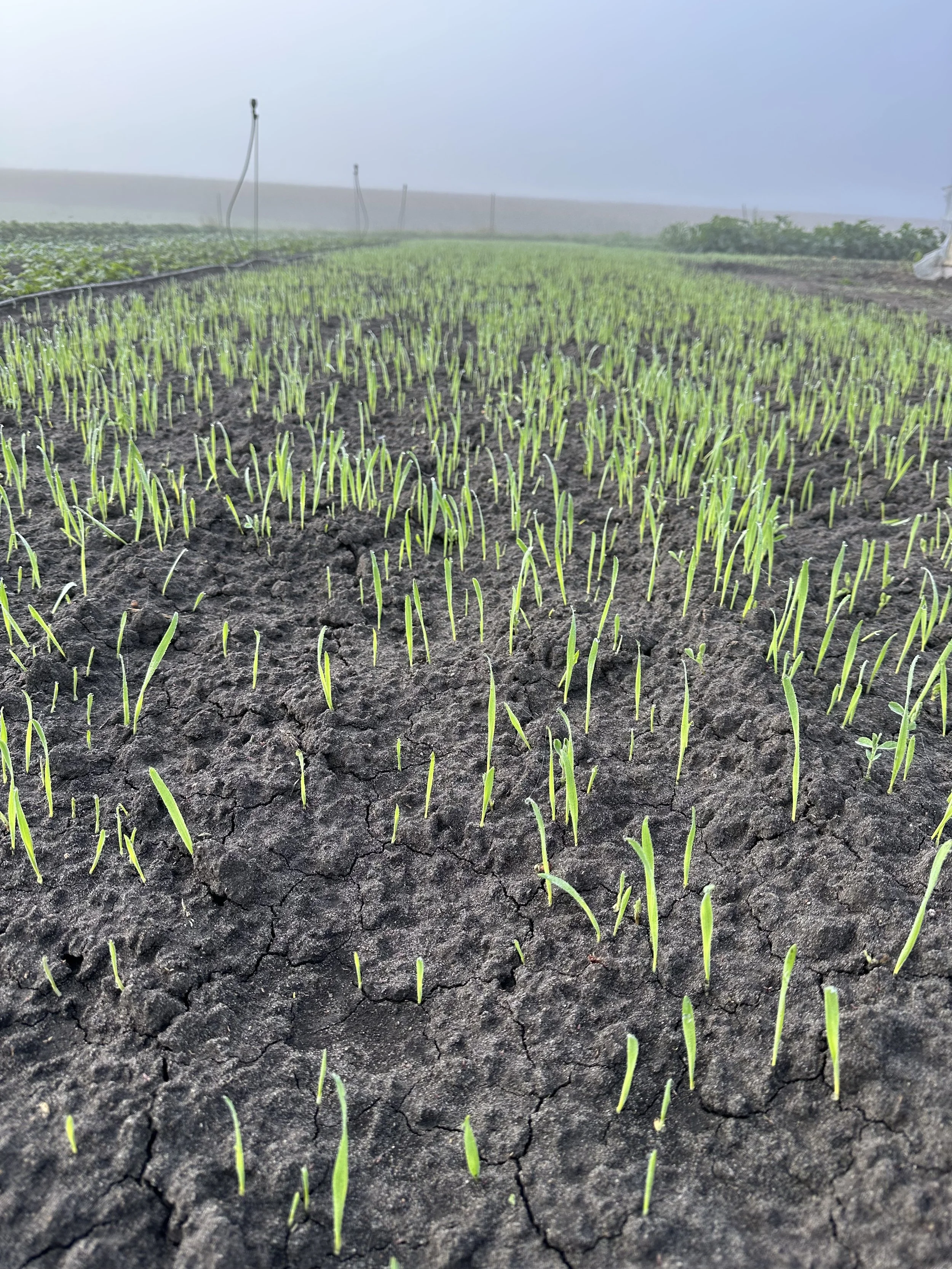
Cover crops emerge!
Topping Tunnel Tomatoes
The signs of the inevitable season change are mounting. One of those signs - the topping of our tunnel tomatoes - came this past week. What is topping tomatoes? Why is it important and what is it’s purpose? We’ll go over the reason we top the tomatoes and the results we hope to see.
As a refresher, the tomatoes we grow in our tunnels are an “indeterminate” variety meaning that they will continue to grow until either the frost gets them or they succumb to disease. We’ve written about how we manage that growth in several blog posts over the course of the season.
So what is topping tomatoes? It’s basically exactly like it sounds: we cut the top of the main stem completely off so that no further vegetative growth is possible. Why would we do such a thing?!
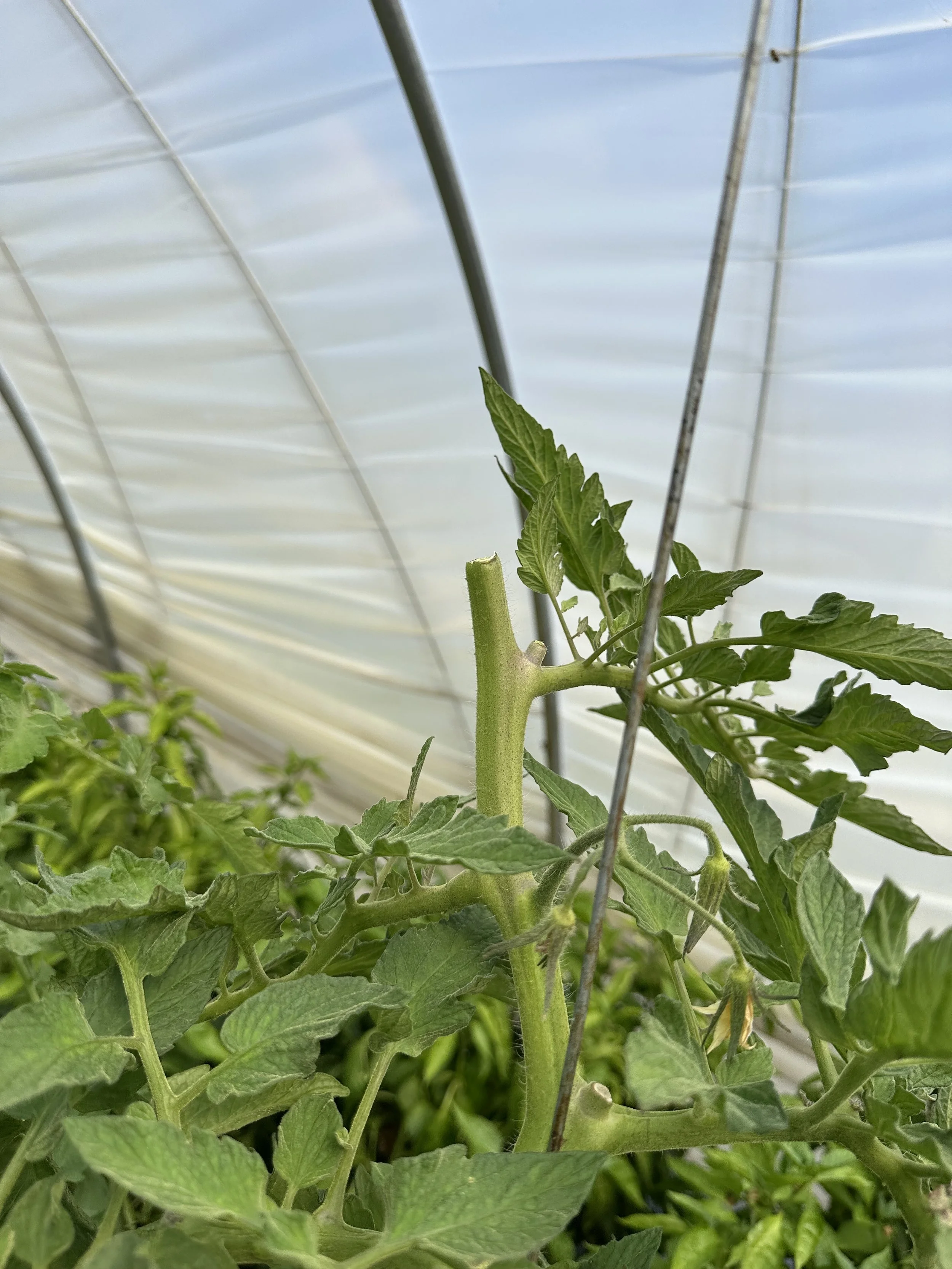
A topped tomato plant. Notice the flowers (fruit truss) just below the cut stem.
We know that the first frost is approaching. Most years we see that happen in the first half of October and usually closer to the beginning of October than the middle. Because of that, we waste plant energy and vigor in trying to continue the vegetative growth. By topping the tomato plants, we force the plants to focus their remaining energy on growing out the last of the tomatoes for the season.
We’ve left enough tomato fruit trusses to allow about 4-5 weeks worth of tomatoes. We figure we will get about one truss worth of tomatoes per week per plant. It’s a little bit of a moving target as the daylight decreases day after day and the temperatures fluctuate more so this time of year. Both of these, have an impact on how fast tomatoes will ripen!
So while the signs of seasonal change mount we will still have about a month of tomatoes left. Summer isn’t quite over yet!